
Home
Mainstreaming Climate Change Development Cooperation: Theory, Practice and Implications for the European Union
Barnes and Noble
Loading Inventory...
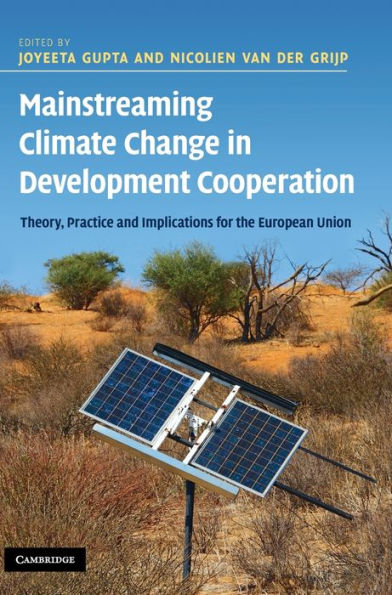
Mainstreaming Climate Change Development Cooperation: Theory, Practice and Implications for the European Union in Chattanooga, TN
Current price: $186.00
Barnes and Noble
Mainstreaming Climate Change Development Cooperation: Theory, Practice and Implications for the European Union in Chattanooga, TN
Current price: $186.00
Loading Inventory...
Size: Hardcover
Climate change, development and development cooperation are, individually and jointly, three politically sensitive, complex issues, especially in the context of relations between developed and developing countries. This book tackles these issues by combining theoretical, political, and practical perspectives, analysing the dominant paradigms and exploring the meaning of the concept of mainstreaming. At the practical level, it presents the results of case studies focusing on assistance provided by the European Union and key member states and the climate needs articulated by developing countries. At the political level, it highlights the sensitivities between developed and developing countries and examines the mainstreaming debate in various fora. This book is valuable for policymakers, academics, politicians and non-state actors working in the fields of development studies, international law, politics, international relations, economics, climate change, and environmental studies.
Climate change, development and development cooperation are, individually and jointly, three politically sensitive, complex issues, especially in the context of relations between developed and developing countries. This book tackles these issues by combining theoretical, political, and practical perspectives, analysing the dominant paradigms and exploring the meaning of the concept of mainstreaming. At the practical level, it presents the results of case studies focusing on assistance provided by the European Union and key member states and the climate needs articulated by developing countries. At the political level, it highlights the sensitivities between developed and developing countries and examines the mainstreaming debate in various fora. This book is valuable for policymakers, academics, politicians and non-state actors working in the fields of development studies, international law, politics, international relations, economics, climate change, and environmental studies.
You May Also Like














More About Barnes and Noble at Hamilton Place
Barnes & Noble is the world’s largest retail bookseller and a leading retailer of content, digital media and educational products. Our Nook Digital business offers a lineup of NOOK® tablets and e-Readers and an expansive collection of digital reading content through the NOOK Store®. Barnes & Noble’s mission is to operate the best omni-channel specialty retail business in America, helping both our customers and booksellers reach their aspirations, while being a credit to the communities we serve.
2100 Hamilton Pl Blvd, Chattanooga, TN 37421, United States
Find Barnes and Noble at Hamilton Place in Chattanooga, TN
Visit Barnes and Noble at Hamilton Place in Chattanooga, TN
