
Home
Locked in the Family Cell: Gender, Sexuality, and Political Agency in Irish National Discourse
Barnes and Noble
Loading Inventory...
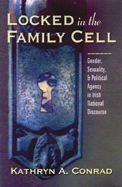
Locked in the Family Cell: Gender, Sexuality, and Political Agency in Irish National Discourse in Chattanooga, TN
Current price: $45.00
Barnes and Noble
Locked in the Family Cell: Gender, Sexuality, and Political Agency in Irish National Discourse in Chattanooga, TN
Current price: $45.00
Loading Inventory...
Size: OS
Locked in the Family Cell
is the first book on Ireland to provide a sustained and interdisciplinary analysis of gender, sexuality, nationalism, the public and private spheres, and the relationship between these categories of analysis and action. Kathryn Conrad examines the writers and activists who are resistant to simplistic nationalist constructions of Ireland and its subjects. She exposes the assumptions and the effects of national discourses in Ireland and their reliance on a limited and limiting vision of the family: the heterosexual family cell.
By actively situating theoretical readings and concerns in practice, Conrad follows the lead of scholars such as Lauren Berlant, Gloria Anzaldua, Ailbhe Smyth, and others who have encouraged dialogue not only among scholars in different academic disciplines but between scholars and activists. In doing so she provides not only a critique of interest to scholars in a variety of fields but also a productive political intervention.
is the first book on Ireland to provide a sustained and interdisciplinary analysis of gender, sexuality, nationalism, the public and private spheres, and the relationship between these categories of analysis and action. Kathryn Conrad examines the writers and activists who are resistant to simplistic nationalist constructions of Ireland and its subjects. She exposes the assumptions and the effects of national discourses in Ireland and their reliance on a limited and limiting vision of the family: the heterosexual family cell.
By actively situating theoretical readings and concerns in practice, Conrad follows the lead of scholars such as Lauren Berlant, Gloria Anzaldua, Ailbhe Smyth, and others who have encouraged dialogue not only among scholars in different academic disciplines but between scholars and activists. In doing so she provides not only a critique of interest to scholars in a variety of fields but also a productive political intervention.
Locked in the Family Cell
is the first book on Ireland to provide a sustained and interdisciplinary analysis of gender, sexuality, nationalism, the public and private spheres, and the relationship between these categories of analysis and action. Kathryn Conrad examines the writers and activists who are resistant to simplistic nationalist constructions of Ireland and its subjects. She exposes the assumptions and the effects of national discourses in Ireland and their reliance on a limited and limiting vision of the family: the heterosexual family cell.
By actively situating theoretical readings and concerns in practice, Conrad follows the lead of scholars such as Lauren Berlant, Gloria Anzaldua, Ailbhe Smyth, and others who have encouraged dialogue not only among scholars in different academic disciplines but between scholars and activists. In doing so she provides not only a critique of interest to scholars in a variety of fields but also a productive political intervention.
is the first book on Ireland to provide a sustained and interdisciplinary analysis of gender, sexuality, nationalism, the public and private spheres, and the relationship between these categories of analysis and action. Kathryn Conrad examines the writers and activists who are resistant to simplistic nationalist constructions of Ireland and its subjects. She exposes the assumptions and the effects of national discourses in Ireland and their reliance on a limited and limiting vision of the family: the heterosexual family cell.
By actively situating theoretical readings and concerns in practice, Conrad follows the lead of scholars such as Lauren Berlant, Gloria Anzaldua, Ailbhe Smyth, and others who have encouraged dialogue not only among scholars in different academic disciplines but between scholars and activists. In doing so she provides not only a critique of interest to scholars in a variety of fields but also a productive political intervention.
You May Also Like












More About Barnes and Noble at Hamilton Place
Barnes & Noble is the world’s largest retail bookseller and a leading retailer of content, digital media and educational products. Our Nook Digital business offers a lineup of NOOK® tablets and e-Readers and an expansive collection of digital reading content through the NOOK Store®. Barnes & Noble’s mission is to operate the best omni-channel specialty retail business in America, helping both our customers and booksellers reach their aspirations, while being a credit to the communities we serve.
2100 Hamilton Pl Blvd, Chattanooga, TN 37421, United States
Find Barnes and Noble at Hamilton Place in Chattanooga, TN
Visit Barnes and Noble at Hamilton Place in Chattanooga, TN