
Home
Lived Experiences of Resilience Disaster: Riding the Waves Survival and Making Meaning
Barnes and Noble
Loading Inventory...
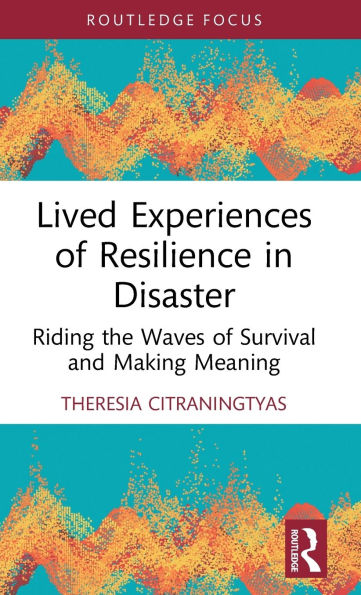
Lived Experiences of Resilience Disaster: Riding the Waves Survival and Making Meaning in Chattanooga, TN
Current price: $68.99
Barnes and Noble
Lived Experiences of Resilience Disaster: Riding the Waves Survival and Making Meaning in Chattanooga, TN
Current price: $68.99
Loading Inventory...
Size: Hardcover
Capturing new waves of thought on resilience and recovery, Citraningtyas explores how people survive and make meaning in disasters by bringing together survivor experiences from natural disaster events in two vastly different cultural contexts.
By presenting a holistic model of conceptualising people’s experiences of dealing with disastrous situations, this book transcends psychiatric approaches of trauma recovery. It uses metaphors to present harrowing and inspiring survivor narratives from the 2004 tsunami in Aceh and the 2003 Canberra bushfires and analyzes the ways in which survivors tried to cope and make sense of their experiences as well as their own lives, in order to cope. Through embodied metaphors to unravel different aspects of meaning‑making following disasters, Citraningtyas provides insights into how culture can shape our experiences and responses to disaster, and brings forth deep commonalities in inherently human experiences.
This book will appeal to researchers interested in understanding trauma resilience and recovery as well as mental health practitioners and disaster survivors.
By presenting a holistic model of conceptualising people’s experiences of dealing with disastrous situations, this book transcends psychiatric approaches of trauma recovery. It uses metaphors to present harrowing and inspiring survivor narratives from the 2004 tsunami in Aceh and the 2003 Canberra bushfires and analyzes the ways in which survivors tried to cope and make sense of their experiences as well as their own lives, in order to cope. Through embodied metaphors to unravel different aspects of meaning‑making following disasters, Citraningtyas provides insights into how culture can shape our experiences and responses to disaster, and brings forth deep commonalities in inherently human experiences.
This book will appeal to researchers interested in understanding trauma resilience and recovery as well as mental health practitioners and disaster survivors.
Capturing new waves of thought on resilience and recovery, Citraningtyas explores how people survive and make meaning in disasters by bringing together survivor experiences from natural disaster events in two vastly different cultural contexts.
By presenting a holistic model of conceptualising people’s experiences of dealing with disastrous situations, this book transcends psychiatric approaches of trauma recovery. It uses metaphors to present harrowing and inspiring survivor narratives from the 2004 tsunami in Aceh and the 2003 Canberra bushfires and analyzes the ways in which survivors tried to cope and make sense of their experiences as well as their own lives, in order to cope. Through embodied metaphors to unravel different aspects of meaning‑making following disasters, Citraningtyas provides insights into how culture can shape our experiences and responses to disaster, and brings forth deep commonalities in inherently human experiences.
This book will appeal to researchers interested in understanding trauma resilience and recovery as well as mental health practitioners and disaster survivors.
By presenting a holistic model of conceptualising people’s experiences of dealing with disastrous situations, this book transcends psychiatric approaches of trauma recovery. It uses metaphors to present harrowing and inspiring survivor narratives from the 2004 tsunami in Aceh and the 2003 Canberra bushfires and analyzes the ways in which survivors tried to cope and make sense of their experiences as well as their own lives, in order to cope. Through embodied metaphors to unravel different aspects of meaning‑making following disasters, Citraningtyas provides insights into how culture can shape our experiences and responses to disaster, and brings forth deep commonalities in inherently human experiences.
This book will appeal to researchers interested in understanding trauma resilience and recovery as well as mental health practitioners and disaster survivors.
You May Also Like








More About Barnes and Noble at Hamilton Place
Barnes & Noble is the world’s largest retail bookseller and a leading retailer of content, digital media and educational products. Our Nook Digital business offers a lineup of NOOK® tablets and e-Readers and an expansive collection of digital reading content through the NOOK Store®. Barnes & Noble’s mission is to operate the best omni-channel specialty retail business in America, helping both our customers and booksellers reach their aspirations, while being a credit to the communities we serve.
2100 Hamilton Pl Blvd, Chattanooga, TN 37421, United States
Find Barnes and Noble at Hamilton Place in Chattanooga, TN
Visit Barnes and Noble at Hamilton Place in Chattanooga, TN
