
Home
Literacy and Advocacy Adolescent Family, Gang, School, Juvenile Court Communities: Crip 4 Life
Barnes and Noble
Loading Inventory...
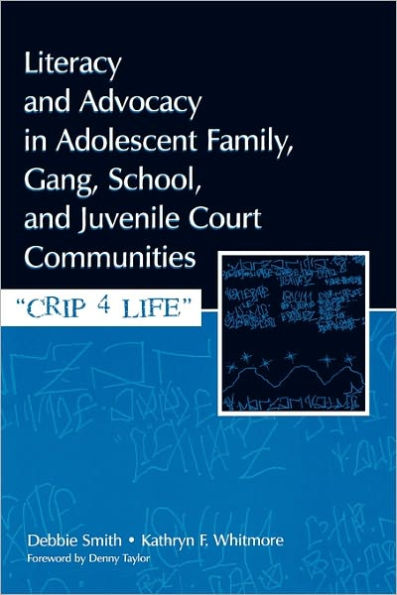
Literacy and Advocacy Adolescent Family, Gang, School, Juvenile Court Communities: Crip 4 Life in Chattanooga, TN
Current price: $54.99
Barnes and Noble
Literacy and Advocacy Adolescent Family, Gang, School, Juvenile Court Communities: Crip 4 Life in Chattanooga, TN
Current price: $54.99
Loading Inventory...
Size: Hardcover
The goal of this book is to encourage educators and researchers to understand the complexities of adolescent gang members' lives in order to rethink their assumptions about these students in school. The particular objective is to situate four gang members as literate, caring students from loving families whose identities and literacy keep them on the margins of school. The research described in this book suggests that advocacy is a particularly effective form of critical ethnography. Smith and Whitmore argue that until schools, as communities of practice, enable children and adolescents to retain identities from the communities in which they are full community members, frightening numbers of students are destined to fail.
The stories of four Mexican American male adolescents, who were active members of a gang and Smith's students in an alternative high school program, portray the complicated, multiple worlds in which these boys live. As sons and teenage parents they live in a family community; as CRIP members they live in a gang community; as "at risk" students, drop-outs, and graduates they live in a school community, and as a result of their illegal activities they live in the juvenile court community. The authors theorize about the boys' literacy in each of their communities. Literacy is viewed as ideological, related to power, and embedded in a sociocultural context. Vivid examples of conversation, art, tagging, rap, poetry, and other language and literacy events bring the narratives to life in figures and photographs in all the chapters. Readers will find this book engaging and readable, yet thought provoking and challenging.
Audiences for
Literacy and Advocacy in Adolescent Family, Gang, School, and Juvenile Court Communities
include education researchers, professionals, and students in the areas of middle/high school education, at-risk adolescent psychology, and alternative community programs--specifically those interested in literacy education, sociocultural theory, and popular culture.
The stories of four Mexican American male adolescents, who were active members of a gang and Smith's students in an alternative high school program, portray the complicated, multiple worlds in which these boys live. As sons and teenage parents they live in a family community; as CRIP members they live in a gang community; as "at risk" students, drop-outs, and graduates they live in a school community, and as a result of their illegal activities they live in the juvenile court community. The authors theorize about the boys' literacy in each of their communities. Literacy is viewed as ideological, related to power, and embedded in a sociocultural context. Vivid examples of conversation, art, tagging, rap, poetry, and other language and literacy events bring the narratives to life in figures and photographs in all the chapters. Readers will find this book engaging and readable, yet thought provoking and challenging.
Audiences for
Literacy and Advocacy in Adolescent Family, Gang, School, and Juvenile Court Communities
include education researchers, professionals, and students in the areas of middle/high school education, at-risk adolescent psychology, and alternative community programs--specifically those interested in literacy education, sociocultural theory, and popular culture.
The goal of this book is to encourage educators and researchers to understand the complexities of adolescent gang members' lives in order to rethink their assumptions about these students in school. The particular objective is to situate four gang members as literate, caring students from loving families whose identities and literacy keep them on the margins of school. The research described in this book suggests that advocacy is a particularly effective form of critical ethnography. Smith and Whitmore argue that until schools, as communities of practice, enable children and adolescents to retain identities from the communities in which they are full community members, frightening numbers of students are destined to fail.
The stories of four Mexican American male adolescents, who were active members of a gang and Smith's students in an alternative high school program, portray the complicated, multiple worlds in which these boys live. As sons and teenage parents they live in a family community; as CRIP members they live in a gang community; as "at risk" students, drop-outs, and graduates they live in a school community, and as a result of their illegal activities they live in the juvenile court community. The authors theorize about the boys' literacy in each of their communities. Literacy is viewed as ideological, related to power, and embedded in a sociocultural context. Vivid examples of conversation, art, tagging, rap, poetry, and other language and literacy events bring the narratives to life in figures and photographs in all the chapters. Readers will find this book engaging and readable, yet thought provoking and challenging.
Audiences for
Literacy and Advocacy in Adolescent Family, Gang, School, and Juvenile Court Communities
include education researchers, professionals, and students in the areas of middle/high school education, at-risk adolescent psychology, and alternative community programs--specifically those interested in literacy education, sociocultural theory, and popular culture.
The stories of four Mexican American male adolescents, who were active members of a gang and Smith's students in an alternative high school program, portray the complicated, multiple worlds in which these boys live. As sons and teenage parents they live in a family community; as CRIP members they live in a gang community; as "at risk" students, drop-outs, and graduates they live in a school community, and as a result of their illegal activities they live in the juvenile court community. The authors theorize about the boys' literacy in each of their communities. Literacy is viewed as ideological, related to power, and embedded in a sociocultural context. Vivid examples of conversation, art, tagging, rap, poetry, and other language and literacy events bring the narratives to life in figures and photographs in all the chapters. Readers will find this book engaging and readable, yet thought provoking and challenging.
Audiences for
Literacy and Advocacy in Adolescent Family, Gang, School, and Juvenile Court Communities
include education researchers, professionals, and students in the areas of middle/high school education, at-risk adolescent psychology, and alternative community programs--specifically those interested in literacy education, sociocultural theory, and popular culture.
You May Also Like










More About Barnes and Noble at Hamilton Place
Barnes & Noble is the world’s largest retail bookseller and a leading retailer of content, digital media and educational products. Our Nook Digital business offers a lineup of NOOK® tablets and e-Readers and an expansive collection of digital reading content through the NOOK Store®. Barnes & Noble’s mission is to operate the best omni-channel specialty retail business in America, helping both our customers and booksellers reach their aspirations, while being a credit to the communities we serve.
2100 Hamilton Pl Blvd, Chattanooga, TN 37421, United States
Find Barnes and Noble at Hamilton Place in Chattanooga, TN
Visit Barnes and Noble at Hamilton Place in Chattanooga, TN
