
Home
László Moholy-Nagy: Painting, Photography, Film: Bauhausbücher 8
Barnes and Noble
Loading Inventory...
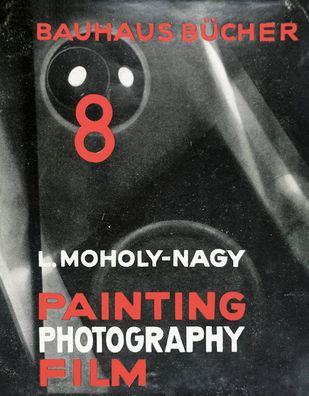
László Moholy-Nagy: Painting, Photography, Film: Bauhausbücher 8 in Chattanooga, TN
Current price: $45.00
Barnes and Noble
László Moholy-Nagy: Painting, Photography, Film: Bauhausbücher 8 in Chattanooga, TN
Current price: $45.00
Loading Inventory...
Size: OS
Offered a position at the Weimar Bauhaus in 1923, László Moholy-Nagy (1895–1946) soon belonged to the inner circle of Bauhaus masters. When the school moved to Dessau, Moholy-Nagy and Walter Gropius began a fruitful collaboration as joint publishers of the
Bauhausbücher
series.
In addition to designing and editing the
, Moholy-Nagy produced a title of his own: the legendary
Painting, Photography, Film
. In this book, Moholy-Nagy’s efforts to have photography and filmmaking recognized as art forms on the same level as painting are propounded and explained at length. The artist makes the case for a radical rethinking of the visual arts and the further development of photographic design to keep pace with a radically changing technological modernity.
Alongside theoretical and technical approaches and forays into the nature of the medium, Moholy-Nagy uses an extensive appendix of illustrations to provide a thorough survey of the numerous possibilities that photography and film could offerfrom press photography and scientific imagery to Moholy-Nagy’s own abstract photograms and New Vision photographs.
This English translation of
is based in content and design on the 1925 German first edition, making the latter available to an international readership for the first time. The publication includes a brief scholarly text providing crucial contextual information and reflecting on the history and legacy of Moholy-Nagy’s book.
Bauhausbücher
series.
In addition to designing and editing the
, Moholy-Nagy produced a title of his own: the legendary
Painting, Photography, Film
. In this book, Moholy-Nagy’s efforts to have photography and filmmaking recognized as art forms on the same level as painting are propounded and explained at length. The artist makes the case for a radical rethinking of the visual arts and the further development of photographic design to keep pace with a radically changing technological modernity.
Alongside theoretical and technical approaches and forays into the nature of the medium, Moholy-Nagy uses an extensive appendix of illustrations to provide a thorough survey of the numerous possibilities that photography and film could offerfrom press photography and scientific imagery to Moholy-Nagy’s own abstract photograms and New Vision photographs.
This English translation of
is based in content and design on the 1925 German first edition, making the latter available to an international readership for the first time. The publication includes a brief scholarly text providing crucial contextual information and reflecting on the history and legacy of Moholy-Nagy’s book.
Offered a position at the Weimar Bauhaus in 1923, László Moholy-Nagy (1895–1946) soon belonged to the inner circle of Bauhaus masters. When the school moved to Dessau, Moholy-Nagy and Walter Gropius began a fruitful collaboration as joint publishers of the
Bauhausbücher
series.
In addition to designing and editing the
, Moholy-Nagy produced a title of his own: the legendary
Painting, Photography, Film
. In this book, Moholy-Nagy’s efforts to have photography and filmmaking recognized as art forms on the same level as painting are propounded and explained at length. The artist makes the case for a radical rethinking of the visual arts and the further development of photographic design to keep pace with a radically changing technological modernity.
Alongside theoretical and technical approaches and forays into the nature of the medium, Moholy-Nagy uses an extensive appendix of illustrations to provide a thorough survey of the numerous possibilities that photography and film could offerfrom press photography and scientific imagery to Moholy-Nagy’s own abstract photograms and New Vision photographs.
This English translation of
is based in content and design on the 1925 German first edition, making the latter available to an international readership for the first time. The publication includes a brief scholarly text providing crucial contextual information and reflecting on the history and legacy of Moholy-Nagy’s book.
Bauhausbücher
series.
In addition to designing and editing the
, Moholy-Nagy produced a title of his own: the legendary
Painting, Photography, Film
. In this book, Moholy-Nagy’s efforts to have photography and filmmaking recognized as art forms on the same level as painting are propounded and explained at length. The artist makes the case for a radical rethinking of the visual arts and the further development of photographic design to keep pace with a radically changing technological modernity.
Alongside theoretical and technical approaches and forays into the nature of the medium, Moholy-Nagy uses an extensive appendix of illustrations to provide a thorough survey of the numerous possibilities that photography and film could offerfrom press photography and scientific imagery to Moholy-Nagy’s own abstract photograms and New Vision photographs.
This English translation of
is based in content and design on the 1925 German first edition, making the latter available to an international readership for the first time. The publication includes a brief scholarly text providing crucial contextual information and reflecting on the history and legacy of Moholy-Nagy’s book.
You May Also Like













More About Barnes and Noble at Hamilton Place
Barnes & Noble is the world’s largest retail bookseller and a leading retailer of content, digital media and educational products. Our Nook Digital business offers a lineup of NOOK® tablets and e-Readers and an expansive collection of digital reading content through the NOOK Store®. Barnes & Noble’s mission is to operate the best omni-channel specialty retail business in America, helping both our customers and booksellers reach their aspirations, while being a credit to the communities we serve.
2100 Hamilton Pl Blvd, Chattanooga, TN 37421, United States
Find Barnes and Noble at Hamilton Place in Chattanooga, TN
Visit Barnes and Noble at Hamilton Place in Chattanooga, TN
