
Home
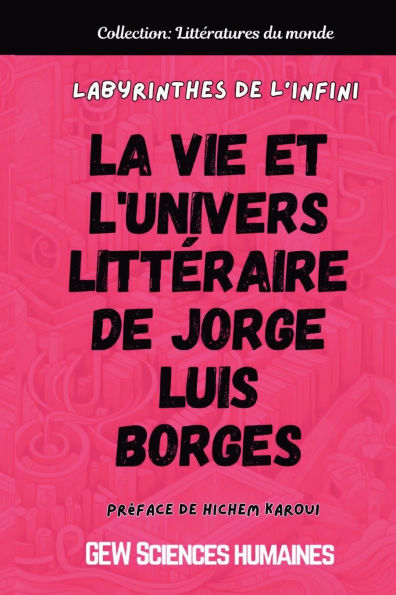
Labyrinths Of Infinity: The Life And Literary Universe Jorge Luis Borges
Barnes and Noble
Loading Inventory...
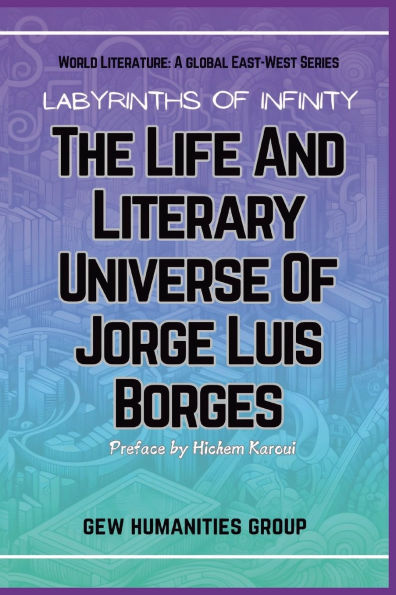
Labyrinths Of Infinity: The Life And Literary Universe Jorge Luis Borges in Chattanooga, TN
Current price: $49.99
Barnes and Noble
Labyrinths Of Infinity: The Life And Literary Universe Jorge Luis Borges in Chattanooga, TN
Current price: $49.99
Loading Inventory...
Size: Paperback
Jorge Luis Borges (1899-1986), the Argentine literary titan, redefined the boundaries of fiction, philosophy, and poetry with his labyrinthine narratives and metaphysical inquiries. A master of concision and paradox, Borges transformed the short story into a vehicle for exploring the infinite, the illusory, and the enigmatic nature of existence.
This book delves into the life, mind, and enduring legacy of a writer whose works continue to captivate scholars and readers alike, bridging the realms of myth, mathematics, and metaphysics. Born in Buenos Aires to an intellectual family, Borges was immersed in literature from childhood. A pivotal period in Europe during World War I exposed him to avant-garde movements like Spanish Ultraism, which later influenced his sparse, symbolic style.
Though his early poetry celebrated Argentine identity, his prose evolved into cerebral, genre-defying tales that questioned reality itself. His gradual blindness, diagnosed in his 50s, paradoxically sharpened his visionary voice, leading him to "see" literature as a mental architecture of symbols and echoes. Central to this exploration are Borges' landmark collections: *Ficciones* (1944) and *El Aleph* (1949). In stories such as "The Library of Babel"-a universe of hexagonal galleries housing every possible book-he grapples with humanity's quest for meaning in a chaotic cosmos. "The Garden of Forking Paths" intertwines time and choice, presaging modern multiverse theory, while "Tlön, Uqbar, Orbis Tertius" crafts a fictional planet that infiltrates reality, blurring the lines between invention and truth. Borges' essays, like "The Analytical Language of John Wilkins," dissect language's power to shape perception, and his poetry, rich in Argentine history and personal mythmaking, reveals a nostalgic counterpoint to his cerebral fiction. Borges' genius lies in his ability to condense vast philosophical ideas into haunting, lyrical brevity. Themes of mirrors (symbolizing identity and recursion), labyrinths (representing existential quests), and circular time permeate his work, inviting readers to question the very fabric of reality. His influence extends beyond literature, inspiring fields as diverse as quantum physics, cognitive science, and postmodern theory. Writers like Gabriel García Márquez, Italo Calvino, and Umberto Eco credit him as a pioneer of magical realism and metafiction, while his conceptual daring resonates in films (*Inception*), video games (*The Witness*), and internet-era musings on infinity. This book examines Borges' paradoxes: a traditionalist who revolutionized narrative form, a cosmopolitan steeped in Argentine lore, and a blind sage who envisioned universes. Through analysis of his key works, intellectual influences (from Kafka to Schopenhauer), and cultural impact, it illuminates how Borges' "fictiones" became a mirror for the 20th century's existential anxieties-and a beacon for creative daring.
More than a biography, this volume is a guide to Borges' kaleidoscopic imagination, offering readers a map to navigate his literary labyrinths. It invites both newcomers and aficionados to rediscover a writer who turned libraries into universes and metaphors into keys for unlocking the enigma of existence. In an age of information overload, Borges' timeless question-"Is this universe a puzzle or a dream?"-remains as urgent as ever.
This book delves into the life, mind, and enduring legacy of a writer whose works continue to captivate scholars and readers alike, bridging the realms of myth, mathematics, and metaphysics. Born in Buenos Aires to an intellectual family, Borges was immersed in literature from childhood. A pivotal period in Europe during World War I exposed him to avant-garde movements like Spanish Ultraism, which later influenced his sparse, symbolic style.
Though his early poetry celebrated Argentine identity, his prose evolved into cerebral, genre-defying tales that questioned reality itself. His gradual blindness, diagnosed in his 50s, paradoxically sharpened his visionary voice, leading him to "see" literature as a mental architecture of symbols and echoes. Central to this exploration are Borges' landmark collections: *Ficciones* (1944) and *El Aleph* (1949). In stories such as "The Library of Babel"-a universe of hexagonal galleries housing every possible book-he grapples with humanity's quest for meaning in a chaotic cosmos. "The Garden of Forking Paths" intertwines time and choice, presaging modern multiverse theory, while "Tlön, Uqbar, Orbis Tertius" crafts a fictional planet that infiltrates reality, blurring the lines between invention and truth. Borges' essays, like "The Analytical Language of John Wilkins," dissect language's power to shape perception, and his poetry, rich in Argentine history and personal mythmaking, reveals a nostalgic counterpoint to his cerebral fiction. Borges' genius lies in his ability to condense vast philosophical ideas into haunting, lyrical brevity. Themes of mirrors (symbolizing identity and recursion), labyrinths (representing existential quests), and circular time permeate his work, inviting readers to question the very fabric of reality. His influence extends beyond literature, inspiring fields as diverse as quantum physics, cognitive science, and postmodern theory. Writers like Gabriel García Márquez, Italo Calvino, and Umberto Eco credit him as a pioneer of magical realism and metafiction, while his conceptual daring resonates in films (*Inception*), video games (*The Witness*), and internet-era musings on infinity. This book examines Borges' paradoxes: a traditionalist who revolutionized narrative form, a cosmopolitan steeped in Argentine lore, and a blind sage who envisioned universes. Through analysis of his key works, intellectual influences (from Kafka to Schopenhauer), and cultural impact, it illuminates how Borges' "fictiones" became a mirror for the 20th century's existential anxieties-and a beacon for creative daring.
More than a biography, this volume is a guide to Borges' kaleidoscopic imagination, offering readers a map to navigate his literary labyrinths. It invites both newcomers and aficionados to rediscover a writer who turned libraries into universes and metaphors into keys for unlocking the enigma of existence. In an age of information overload, Borges' timeless question-"Is this universe a puzzle or a dream?"-remains as urgent as ever.
Jorge Luis Borges (1899-1986), the Argentine literary titan, redefined the boundaries of fiction, philosophy, and poetry with his labyrinthine narratives and metaphysical inquiries. A master of concision and paradox, Borges transformed the short story into a vehicle for exploring the infinite, the illusory, and the enigmatic nature of existence.
This book delves into the life, mind, and enduring legacy of a writer whose works continue to captivate scholars and readers alike, bridging the realms of myth, mathematics, and metaphysics. Born in Buenos Aires to an intellectual family, Borges was immersed in literature from childhood. A pivotal period in Europe during World War I exposed him to avant-garde movements like Spanish Ultraism, which later influenced his sparse, symbolic style.
Though his early poetry celebrated Argentine identity, his prose evolved into cerebral, genre-defying tales that questioned reality itself. His gradual blindness, diagnosed in his 50s, paradoxically sharpened his visionary voice, leading him to "see" literature as a mental architecture of symbols and echoes. Central to this exploration are Borges' landmark collections: *Ficciones* (1944) and *El Aleph* (1949). In stories such as "The Library of Babel"-a universe of hexagonal galleries housing every possible book-he grapples with humanity's quest for meaning in a chaotic cosmos. "The Garden of Forking Paths" intertwines time and choice, presaging modern multiverse theory, while "Tlön, Uqbar, Orbis Tertius" crafts a fictional planet that infiltrates reality, blurring the lines between invention and truth. Borges' essays, like "The Analytical Language of John Wilkins," dissect language's power to shape perception, and his poetry, rich in Argentine history and personal mythmaking, reveals a nostalgic counterpoint to his cerebral fiction. Borges' genius lies in his ability to condense vast philosophical ideas into haunting, lyrical brevity. Themes of mirrors (symbolizing identity and recursion), labyrinths (representing existential quests), and circular time permeate his work, inviting readers to question the very fabric of reality. His influence extends beyond literature, inspiring fields as diverse as quantum physics, cognitive science, and postmodern theory. Writers like Gabriel García Márquez, Italo Calvino, and Umberto Eco credit him as a pioneer of magical realism and metafiction, while his conceptual daring resonates in films (*Inception*), video games (*The Witness*), and internet-era musings on infinity. This book examines Borges' paradoxes: a traditionalist who revolutionized narrative form, a cosmopolitan steeped in Argentine lore, and a blind sage who envisioned universes. Through analysis of his key works, intellectual influences (from Kafka to Schopenhauer), and cultural impact, it illuminates how Borges' "fictiones" became a mirror for the 20th century's existential anxieties-and a beacon for creative daring.
More than a biography, this volume is a guide to Borges' kaleidoscopic imagination, offering readers a map to navigate his literary labyrinths. It invites both newcomers and aficionados to rediscover a writer who turned libraries into universes and metaphors into keys for unlocking the enigma of existence. In an age of information overload, Borges' timeless question-"Is this universe a puzzle or a dream?"-remains as urgent as ever.
This book delves into the life, mind, and enduring legacy of a writer whose works continue to captivate scholars and readers alike, bridging the realms of myth, mathematics, and metaphysics. Born in Buenos Aires to an intellectual family, Borges was immersed in literature from childhood. A pivotal period in Europe during World War I exposed him to avant-garde movements like Spanish Ultraism, which later influenced his sparse, symbolic style.
Though his early poetry celebrated Argentine identity, his prose evolved into cerebral, genre-defying tales that questioned reality itself. His gradual blindness, diagnosed in his 50s, paradoxically sharpened his visionary voice, leading him to "see" literature as a mental architecture of symbols and echoes. Central to this exploration are Borges' landmark collections: *Ficciones* (1944) and *El Aleph* (1949). In stories such as "The Library of Babel"-a universe of hexagonal galleries housing every possible book-he grapples with humanity's quest for meaning in a chaotic cosmos. "The Garden of Forking Paths" intertwines time and choice, presaging modern multiverse theory, while "Tlön, Uqbar, Orbis Tertius" crafts a fictional planet that infiltrates reality, blurring the lines between invention and truth. Borges' essays, like "The Analytical Language of John Wilkins," dissect language's power to shape perception, and his poetry, rich in Argentine history and personal mythmaking, reveals a nostalgic counterpoint to his cerebral fiction. Borges' genius lies in his ability to condense vast philosophical ideas into haunting, lyrical brevity. Themes of mirrors (symbolizing identity and recursion), labyrinths (representing existential quests), and circular time permeate his work, inviting readers to question the very fabric of reality. His influence extends beyond literature, inspiring fields as diverse as quantum physics, cognitive science, and postmodern theory. Writers like Gabriel García Márquez, Italo Calvino, and Umberto Eco credit him as a pioneer of magical realism and metafiction, while his conceptual daring resonates in films (*Inception*), video games (*The Witness*), and internet-era musings on infinity. This book examines Borges' paradoxes: a traditionalist who revolutionized narrative form, a cosmopolitan steeped in Argentine lore, and a blind sage who envisioned universes. Through analysis of his key works, intellectual influences (from Kafka to Schopenhauer), and cultural impact, it illuminates how Borges' "fictiones" became a mirror for the 20th century's existential anxieties-and a beacon for creative daring.
More than a biography, this volume is a guide to Borges' kaleidoscopic imagination, offering readers a map to navigate his literary labyrinths. It invites both newcomers and aficionados to rediscover a writer who turned libraries into universes and metaphors into keys for unlocking the enigma of existence. In an age of information overload, Borges' timeless question-"Is this universe a puzzle or a dream?"-remains as urgent as ever.
You May Also Like











More About Barnes and Noble at Hamilton Place
Barnes & Noble is the world’s largest retail bookseller and a leading retailer of content, digital media and educational products. Our Nook Digital business offers a lineup of NOOK® tablets and e-Readers and an expansive collection of digital reading content through the NOOK Store®. Barnes & Noble’s mission is to operate the best omni-channel specialty retail business in America, helping both our customers and booksellers reach their aspirations, while being a credit to the communities we serve.
2100 Hamilton Pl Blvd, Chattanooga, TN 37421, United States
Find Barnes and Noble at Hamilton Place in Chattanooga, TN
Visit Barnes and Noble at Hamilton Place in Chattanooga, TN