
Home
Knowledge for Social Change: Bacon, Dewey, and the Revolutionary Transformation of Research Universities in the Twenty-First Century
Barnes and Noble
Loading Inventory...
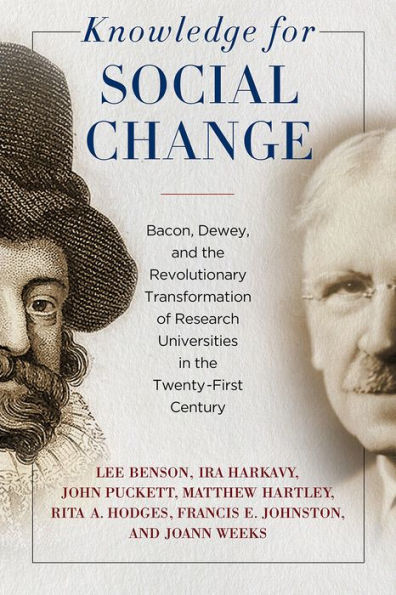
Knowledge for Social Change: Bacon, Dewey, and the Revolutionary Transformation of Research Universities in the Twenty-First Century in Chattanooga, TN
Current price: $14.95
Barnes and Noble
Knowledge for Social Change: Bacon, Dewey, and the Revolutionary Transformation of Research Universities in the Twenty-First Century in Chattanooga, TN
Current price: $14.95
Loading Inventory...
Size: OS
Employing history, social theory, and a detailed contemporary case study
, Knowledge for Social Change
argues for fundamentally reshaping research universities to function as democratic, civic, and community-engaged institutions dedicated to advancing learning and knowledge for social change. The authors focus on significant contributions to learning made by Francis Bacon, Benjamin Franklin, Seth Low, Jane Addams, William Rainey Harper, and John Deweyas well as their own work at Penn’s Netter Center for Community Partnershipsto help create and sustain democratically-engaged colleges and universities for the public good.
Knowledge for Social Change
highlights university-assisted community schools to effect a thoroughgoing change of research universities that will contribute to more democratic schools, communities, and societies. The authors also call on democratic-minded academics to create and sustain a global movement dedicated to advancing learning for the “relief of man’s estate”an iconic phrase by Francis Bacon that emphasized the continued betterment of the human conditionand to realize Dewey’s vision of an organic “Great Community” composed of participatory, democratic, collaborative, and interdependent societies.
, Knowledge for Social Change
argues for fundamentally reshaping research universities to function as democratic, civic, and community-engaged institutions dedicated to advancing learning and knowledge for social change. The authors focus on significant contributions to learning made by Francis Bacon, Benjamin Franklin, Seth Low, Jane Addams, William Rainey Harper, and John Deweyas well as their own work at Penn’s Netter Center for Community Partnershipsto help create and sustain democratically-engaged colleges and universities for the public good.
Knowledge for Social Change
highlights university-assisted community schools to effect a thoroughgoing change of research universities that will contribute to more democratic schools, communities, and societies. The authors also call on democratic-minded academics to create and sustain a global movement dedicated to advancing learning for the “relief of man’s estate”an iconic phrase by Francis Bacon that emphasized the continued betterment of the human conditionand to realize Dewey’s vision of an organic “Great Community” composed of participatory, democratic, collaborative, and interdependent societies.
Employing history, social theory, and a detailed contemporary case study
, Knowledge for Social Change
argues for fundamentally reshaping research universities to function as democratic, civic, and community-engaged institutions dedicated to advancing learning and knowledge for social change. The authors focus on significant contributions to learning made by Francis Bacon, Benjamin Franklin, Seth Low, Jane Addams, William Rainey Harper, and John Deweyas well as their own work at Penn’s Netter Center for Community Partnershipsto help create and sustain democratically-engaged colleges and universities for the public good.
Knowledge for Social Change
highlights university-assisted community schools to effect a thoroughgoing change of research universities that will contribute to more democratic schools, communities, and societies. The authors also call on democratic-minded academics to create and sustain a global movement dedicated to advancing learning for the “relief of man’s estate”an iconic phrase by Francis Bacon that emphasized the continued betterment of the human conditionand to realize Dewey’s vision of an organic “Great Community” composed of participatory, democratic, collaborative, and interdependent societies.
, Knowledge for Social Change
argues for fundamentally reshaping research universities to function as democratic, civic, and community-engaged institutions dedicated to advancing learning and knowledge for social change. The authors focus on significant contributions to learning made by Francis Bacon, Benjamin Franklin, Seth Low, Jane Addams, William Rainey Harper, and John Deweyas well as their own work at Penn’s Netter Center for Community Partnershipsto help create and sustain democratically-engaged colleges and universities for the public good.
Knowledge for Social Change
highlights university-assisted community schools to effect a thoroughgoing change of research universities that will contribute to more democratic schools, communities, and societies. The authors also call on democratic-minded academics to create and sustain a global movement dedicated to advancing learning for the “relief of man’s estate”an iconic phrase by Francis Bacon that emphasized the continued betterment of the human conditionand to realize Dewey’s vision of an organic “Great Community” composed of participatory, democratic, collaborative, and interdependent societies.
You May Also Like
















More About Barnes and Noble at Hamilton Place
Barnes & Noble is the world’s largest retail bookseller and a leading retailer of content, digital media and educational products. Our Nook Digital business offers a lineup of NOOK® tablets and e-Readers and an expansive collection of digital reading content through the NOOK Store®. Barnes & Noble’s mission is to operate the best omni-channel specialty retail business in America, helping both our customers and booksellers reach their aspirations, while being a credit to the communities we serve.
2100 Hamilton Pl Blvd, Chattanooga, TN 37421, United States
Find Barnes and Noble at Hamilton Place in Chattanooga, TN
Visit Barnes and Noble at Hamilton Place in Chattanooga, TN
