
Home
Knowledge Capitalism and State Theory: A "Space-Time" Approach Explaining Development Outcomes the Global Economy
Barnes and Noble
Loading Inventory...
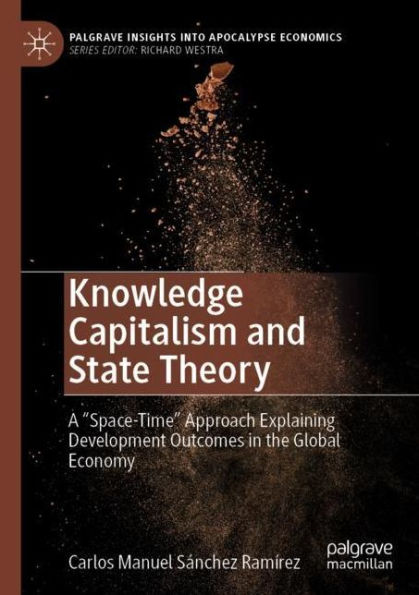
Knowledge Capitalism and State Theory: A "Space-Time" Approach Explaining Development Outcomes the Global Economy in Chattanooga, TN
Current price: $129.99
Barnes and Noble
Knowledge Capitalism and State Theory: A "Space-Time" Approach Explaining Development Outcomes the Global Economy in Chattanooga, TN
Current price: $129.99
Loading Inventory...
Size: Hardcover
The book builds on an important emergent body of discussion which questions, both empirically and theoretically, the conventional neoclassical doctrine that economies are more efficient if the state withdraws from it. It develops a “space-time” approach to state theory as a way of explaining development outcomes in the global economy as the latter increasingly shifts to what is referred to as “knowledge capitalism”. It examines two global cases – Finland and China – as expressions of two broad models of successful development punctuated most recently by successful responses to the Covid-19 pandemic. It also contrasts both cases with the unsuccessful development of Brazil and Argentina toward “knowledge capitalism” and the ramifications of that for their efforts to combat Covid-19. This book will be of interest to academics in economics, politics and international relations.
The book builds on an important emergent body of discussion which questions, both empirically and theoretically, the conventional neoclassical doctrine that economies are more efficient if the state withdraws from it. It develops a “space-time” approach to state theory as a way of explaining development outcomes in the global economy as the latter increasingly shifts to what is referred to as “knowledge capitalism”. It examines two global cases – Finland and China – as expressions of two broad models of successful development punctuated most recently by successful responses to the Covid-19 pandemic. It also contrasts both cases with the unsuccessful development of Brazil and Argentina toward “knowledge capitalism” and the ramifications of that for their efforts to combat Covid-19. This book will be of interest to academics in economics, politics and international relations.
You May Also Like








More About Barnes and Noble at Hamilton Place
Barnes & Noble is the world’s largest retail bookseller and a leading retailer of content, digital media and educational products. Our Nook Digital business offers a lineup of NOOK® tablets and e-Readers and an expansive collection of digital reading content through the NOOK Store®. Barnes & Noble’s mission is to operate the best omni-channel specialty retail business in America, helping both our customers and booksellers reach their aspirations, while being a credit to the communities we serve.
2100 Hamilton Pl Blvd, Chattanooga, TN 37421, United States
Find Barnes and Noble at Hamilton Place in Chattanooga, TN
Visit Barnes and Noble at Hamilton Place in Chattanooga, TN
