
Home
Knowing China: A Twenty-First Century Guide
Barnes and Noble
Loading Inventory...
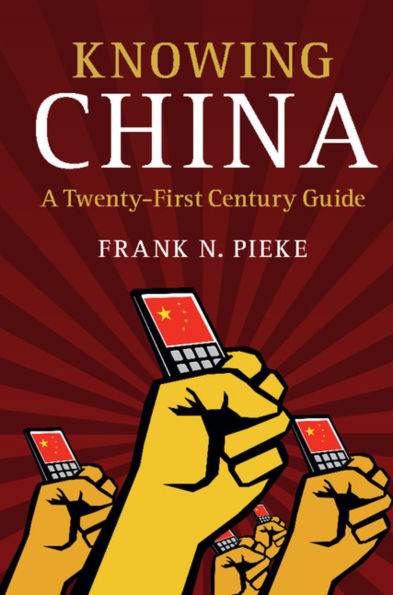
Knowing China: A Twenty-First Century Guide in Chattanooga, TN
Current price: $101.00
Barnes and Noble
Knowing China: A Twenty-First Century Guide in Chattanooga, TN
Current price: $101.00
Loading Inventory...
Size: Hardcover
Contemporary China appears both deceptively familiar and inexplicably different. China is a cauldron of forms of entrepreneurship, social organization, ways of life and governance that are at once new and unique, recognizably Chinese and generically modern. In analyzing and interpreting these developments, Frank N. Pieke adopts a China-centric perspective to move beyond western preoccupations, desires, or fears. Each chapter starts with a key question about China, showing that such questions and assumptions are often based on a misunderstanding or misconstruction of what China is today. Pieke explores twenty-first-century China as a unique kind of neo-socialist society, combining features of state socialism, neoliberal governance, capitalism and rapid globalization. Understanding this society not only helps us to know China better, but takes us beyond the old dichotomies of West versus East, developed versus developing, tradition versus modernity, democracy versus dictatorship, and capitalism versus socialism.
Contemporary China appears both deceptively familiar and inexplicably different. China is a cauldron of forms of entrepreneurship, social organization, ways of life and governance that are at once new and unique, recognizably Chinese and generically modern. In analyzing and interpreting these developments, Frank N. Pieke adopts a China-centric perspective to move beyond western preoccupations, desires, or fears. Each chapter starts with a key question about China, showing that such questions and assumptions are often based on a misunderstanding or misconstruction of what China is today. Pieke explores twenty-first-century China as a unique kind of neo-socialist society, combining features of state socialism, neoliberal governance, capitalism and rapid globalization. Understanding this society not only helps us to know China better, but takes us beyond the old dichotomies of West versus East, developed versus developing, tradition versus modernity, democracy versus dictatorship, and capitalism versus socialism.
You May Also Like














More About Barnes and Noble at Hamilton Place
Barnes & Noble is the world’s largest retail bookseller and a leading retailer of content, digital media and educational products. Our Nook Digital business offers a lineup of NOOK® tablets and e-Readers and an expansive collection of digital reading content through the NOOK Store®. Barnes & Noble’s mission is to operate the best omni-channel specialty retail business in America, helping both our customers and booksellers reach their aspirations, while being a credit to the communities we serve.
2100 Hamilton Pl Blvd, Chattanooga, TN 37421, United States
Find Barnes and Noble at Hamilton Place in Chattanooga, TN
Visit Barnes and Noble at Hamilton Place in Chattanooga, TN
