
Home
Kissing Christians: Ritual and Community in the Late Ancient Church
Barnes and Noble
Loading Inventory...
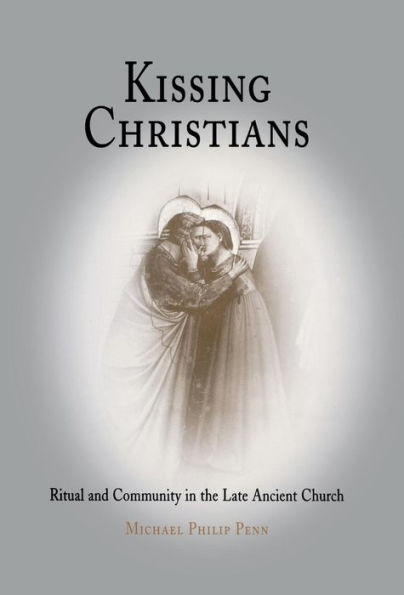
Kissing Christians: Ritual and Community in the Late Ancient Church in Chattanooga, TN
Current price: $69.95
Barnes and Noble
Kissing Christians: Ritual and Community in the Late Ancient Church in Chattanooga, TN
Current price: $69.95
Loading Inventory...
Size: OS
In the first five centuries of the common era, the kiss was a distinctive and near-ubiquitous marker of Christianity. Although Christians did not invent the kiss—Jewish and pagan literature is filled with references to kisses between lovers, family members, and individuals in relationships of power and subordination—Christians kissed one another in highly specific settings and in ways that set them off from the non-Christian population.
Christians kissed each other during prayer, Eucharist, baptism, and ordination and in connection with greeting, funerals, monastic vows, and martyrdom. As Michael Philip Penn shows in
Kissing Christians
, this ritual kiss played a key role in defining group membership and strengthening the social bond between the communal body and its individual members.
presents the first comprehensive study of the ritual kiss and how controversies surrounding it became part of larger debates regarding the internal structure of Christian communities and their relations with outsiders. Penn traces how Christian writers exalted those who kissed only fellow Christians, proclaimed that Jews did not have a kiss, prohibited exchanging the kiss with potential heretics, privileged the confessor's kiss, prohibited Christian men and women from kissing each other, and forbade laity from kissing clergy.
also investigates connections between kissing and group cohesion, kissing practices and purity concerns, and how Christian leaders used the motif of the kiss of Judas to examine theological notions of loyalty, unity, forgiveness, hierarchy, and subversion.
Exploring connections between bodies, power, and performance,
bridges the gap between cultural and liturgical approaches to antiquity. It breaks significant new ground in its application of literary and sociological theory to liturgical history and will have a profound impact on these fields.
Christians kissed each other during prayer, Eucharist, baptism, and ordination and in connection with greeting, funerals, monastic vows, and martyrdom. As Michael Philip Penn shows in
Kissing Christians
, this ritual kiss played a key role in defining group membership and strengthening the social bond between the communal body and its individual members.
presents the first comprehensive study of the ritual kiss and how controversies surrounding it became part of larger debates regarding the internal structure of Christian communities and their relations with outsiders. Penn traces how Christian writers exalted those who kissed only fellow Christians, proclaimed that Jews did not have a kiss, prohibited exchanging the kiss with potential heretics, privileged the confessor's kiss, prohibited Christian men and women from kissing each other, and forbade laity from kissing clergy.
also investigates connections between kissing and group cohesion, kissing practices and purity concerns, and how Christian leaders used the motif of the kiss of Judas to examine theological notions of loyalty, unity, forgiveness, hierarchy, and subversion.
Exploring connections between bodies, power, and performance,
bridges the gap between cultural and liturgical approaches to antiquity. It breaks significant new ground in its application of literary and sociological theory to liturgical history and will have a profound impact on these fields.
In the first five centuries of the common era, the kiss was a distinctive and near-ubiquitous marker of Christianity. Although Christians did not invent the kiss—Jewish and pagan literature is filled with references to kisses between lovers, family members, and individuals in relationships of power and subordination—Christians kissed one another in highly specific settings and in ways that set them off from the non-Christian population.
Christians kissed each other during prayer, Eucharist, baptism, and ordination and in connection with greeting, funerals, monastic vows, and martyrdom. As Michael Philip Penn shows in
Kissing Christians
, this ritual kiss played a key role in defining group membership and strengthening the social bond between the communal body and its individual members.
presents the first comprehensive study of the ritual kiss and how controversies surrounding it became part of larger debates regarding the internal structure of Christian communities and their relations with outsiders. Penn traces how Christian writers exalted those who kissed only fellow Christians, proclaimed that Jews did not have a kiss, prohibited exchanging the kiss with potential heretics, privileged the confessor's kiss, prohibited Christian men and women from kissing each other, and forbade laity from kissing clergy.
also investigates connections between kissing and group cohesion, kissing practices and purity concerns, and how Christian leaders used the motif of the kiss of Judas to examine theological notions of loyalty, unity, forgiveness, hierarchy, and subversion.
Exploring connections between bodies, power, and performance,
bridges the gap between cultural and liturgical approaches to antiquity. It breaks significant new ground in its application of literary and sociological theory to liturgical history and will have a profound impact on these fields.
Christians kissed each other during prayer, Eucharist, baptism, and ordination and in connection with greeting, funerals, monastic vows, and martyrdom. As Michael Philip Penn shows in
Kissing Christians
, this ritual kiss played a key role in defining group membership and strengthening the social bond between the communal body and its individual members.
presents the first comprehensive study of the ritual kiss and how controversies surrounding it became part of larger debates regarding the internal structure of Christian communities and their relations with outsiders. Penn traces how Christian writers exalted those who kissed only fellow Christians, proclaimed that Jews did not have a kiss, prohibited exchanging the kiss with potential heretics, privileged the confessor's kiss, prohibited Christian men and women from kissing each other, and forbade laity from kissing clergy.
also investigates connections between kissing and group cohesion, kissing practices and purity concerns, and how Christian leaders used the motif of the kiss of Judas to examine theological notions of loyalty, unity, forgiveness, hierarchy, and subversion.
Exploring connections between bodies, power, and performance,
bridges the gap between cultural and liturgical approaches to antiquity. It breaks significant new ground in its application of literary and sociological theory to liturgical history and will have a profound impact on these fields.
You May Also Like









More About Barnes and Noble at Hamilton Place
Barnes & Noble is the world’s largest retail bookseller and a leading retailer of content, digital media and educational products. Our Nook Digital business offers a lineup of NOOK® tablets and e-Readers and an expansive collection of digital reading content through the NOOK Store®. Barnes & Noble’s mission is to operate the best omni-channel specialty retail business in America, helping both our customers and booksellers reach their aspirations, while being a credit to the communities we serve.
2100 Hamilton Pl Blvd, Chattanooga, TN 37421, United States
Find Barnes and Noble at Hamilton Place in Chattanooga, TN
Visit Barnes and Noble at Hamilton Place in Chattanooga, TN
