
Home
Kanji Memorization Drills
Barnes and Noble
Loading Inventory...
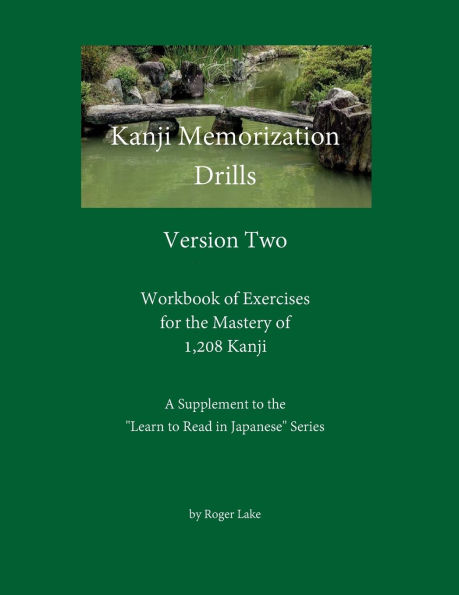
Kanji Memorization Drills in Chattanooga, TN
Current price: $14.95
Barnes and Noble
Kanji Memorization Drills in Chattanooga, TN
Current price: $14.95
Loading Inventory...
Size: OS
This is the second version of our series
Kanji Memorization Drills
. It consists of drills that teach 1,208 kanji and their pronunciations. Before you start using it, I suggest that you complete our first two Japanese Readers,
Learn to Read in Japanese,
Volumes I and II. After that, please consider alternating between the books, first drilling yourself on the kanji and then re-reading the text in the Readers. On each of the pages in this book, you will see three columns. In the
first column
, there is a
kanji character
followed by a small number that indicates the number of
pronunciations
that you should try to learn for that character. In the
second column
, you will see the kanji's unique
listing number
, taken from the Kanji Catalogue in the Reader. Also in the second column, there are
mnemonics
(which we also call Cues
in the Catalogue) that are designed to approximate the Japanese pronunciations and help you to remember them. Finally, in the
third column
, there are
sample
Japanese words
that contain the actual kanji readings. Where feasible, I have sorted the kanji into informal groups of similar characters and arranged these characters so that they fit within the confines of a single page, to make it easier for students to compare them. In order to use this book effectively, I suggest that you use
three tools
: 1) an index card, about 3 x 5 inches in size, 2) a pen with a fine point and 3) an eraser tool. The purpose of the index card is to conceal the second and third columns while you test yourself on the pronunciations of the kanji characters in the first column. The purpose of the pen is to make small erasable dots in the margin to the left of any kanji whose pronunciations you cannot readily recall. Finally, the purpose of the eraser tool is to erase those dots after you have successfully re-tested yourself on the missed kanji. I recommend that you use the "Pentel Presto Jumbo Correction Pen Fine Point" for the eraser tool. Studying kanji through memorization drills can have a calming effect on the mind. Sitting away from electronic screens, one holds a drill book and an index card, focusing on a single isolated kanji character while trying to recall its shape and its various pronunciations. When an error is made, the only consequence is a small dot in the margin - a gentle prompt to come back and review the character later. In contrast, the correct identification of a kanji and its readings delivers a brief rush of energy and a renewed sense of confidence. I hope that the drills in this volume will help you to achieve Japanese reading fluency.
Kanji Memorization Drills
. It consists of drills that teach 1,208 kanji and their pronunciations. Before you start using it, I suggest that you complete our first two Japanese Readers,
Learn to Read in Japanese,
Volumes I and II. After that, please consider alternating between the books, first drilling yourself on the kanji and then re-reading the text in the Readers. On each of the pages in this book, you will see three columns. In the
first column
, there is a
kanji character
followed by a small number that indicates the number of
pronunciations
that you should try to learn for that character. In the
second column
, you will see the kanji's unique
listing number
, taken from the Kanji Catalogue in the Reader. Also in the second column, there are
mnemonics
(which we also call Cues
in the Catalogue) that are designed to approximate the Japanese pronunciations and help you to remember them. Finally, in the
third column
, there are
sample
Japanese words
that contain the actual kanji readings. Where feasible, I have sorted the kanji into informal groups of similar characters and arranged these characters so that they fit within the confines of a single page, to make it easier for students to compare them. In order to use this book effectively, I suggest that you use
three tools
: 1) an index card, about 3 x 5 inches in size, 2) a pen with a fine point and 3) an eraser tool. The purpose of the index card is to conceal the second and third columns while you test yourself on the pronunciations of the kanji characters in the first column. The purpose of the pen is to make small erasable dots in the margin to the left of any kanji whose pronunciations you cannot readily recall. Finally, the purpose of the eraser tool is to erase those dots after you have successfully re-tested yourself on the missed kanji. I recommend that you use the "Pentel Presto Jumbo Correction Pen Fine Point" for the eraser tool. Studying kanji through memorization drills can have a calming effect on the mind. Sitting away from electronic screens, one holds a drill book and an index card, focusing on a single isolated kanji character while trying to recall its shape and its various pronunciations. When an error is made, the only consequence is a small dot in the margin - a gentle prompt to come back and review the character later. In contrast, the correct identification of a kanji and its readings delivers a brief rush of energy and a renewed sense of confidence. I hope that the drills in this volume will help you to achieve Japanese reading fluency.
This is the second version of our series
Kanji Memorization Drills
. It consists of drills that teach 1,208 kanji and their pronunciations. Before you start using it, I suggest that you complete our first two Japanese Readers,
Learn to Read in Japanese,
Volumes I and II. After that, please consider alternating between the books, first drilling yourself on the kanji and then re-reading the text in the Readers. On each of the pages in this book, you will see three columns. In the
first column
, there is a
kanji character
followed by a small number that indicates the number of
pronunciations
that you should try to learn for that character. In the
second column
, you will see the kanji's unique
listing number
, taken from the Kanji Catalogue in the Reader. Also in the second column, there are
mnemonics
(which we also call Cues
in the Catalogue) that are designed to approximate the Japanese pronunciations and help you to remember them. Finally, in the
third column
, there are
sample
Japanese words
that contain the actual kanji readings. Where feasible, I have sorted the kanji into informal groups of similar characters and arranged these characters so that they fit within the confines of a single page, to make it easier for students to compare them. In order to use this book effectively, I suggest that you use
three tools
: 1) an index card, about 3 x 5 inches in size, 2) a pen with a fine point and 3) an eraser tool. The purpose of the index card is to conceal the second and third columns while you test yourself on the pronunciations of the kanji characters in the first column. The purpose of the pen is to make small erasable dots in the margin to the left of any kanji whose pronunciations you cannot readily recall. Finally, the purpose of the eraser tool is to erase those dots after you have successfully re-tested yourself on the missed kanji. I recommend that you use the "Pentel Presto Jumbo Correction Pen Fine Point" for the eraser tool. Studying kanji through memorization drills can have a calming effect on the mind. Sitting away from electronic screens, one holds a drill book and an index card, focusing on a single isolated kanji character while trying to recall its shape and its various pronunciations. When an error is made, the only consequence is a small dot in the margin - a gentle prompt to come back and review the character later. In contrast, the correct identification of a kanji and its readings delivers a brief rush of energy and a renewed sense of confidence. I hope that the drills in this volume will help you to achieve Japanese reading fluency.
Kanji Memorization Drills
. It consists of drills that teach 1,208 kanji and their pronunciations. Before you start using it, I suggest that you complete our first two Japanese Readers,
Learn to Read in Japanese,
Volumes I and II. After that, please consider alternating between the books, first drilling yourself on the kanji and then re-reading the text in the Readers. On each of the pages in this book, you will see three columns. In the
first column
, there is a
kanji character
followed by a small number that indicates the number of
pronunciations
that you should try to learn for that character. In the
second column
, you will see the kanji's unique
listing number
, taken from the Kanji Catalogue in the Reader. Also in the second column, there are
mnemonics
(which we also call Cues
in the Catalogue) that are designed to approximate the Japanese pronunciations and help you to remember them. Finally, in the
third column
, there are
sample
Japanese words
that contain the actual kanji readings. Where feasible, I have sorted the kanji into informal groups of similar characters and arranged these characters so that they fit within the confines of a single page, to make it easier for students to compare them. In order to use this book effectively, I suggest that you use
three tools
: 1) an index card, about 3 x 5 inches in size, 2) a pen with a fine point and 3) an eraser tool. The purpose of the index card is to conceal the second and third columns while you test yourself on the pronunciations of the kanji characters in the first column. The purpose of the pen is to make small erasable dots in the margin to the left of any kanji whose pronunciations you cannot readily recall. Finally, the purpose of the eraser tool is to erase those dots after you have successfully re-tested yourself on the missed kanji. I recommend that you use the "Pentel Presto Jumbo Correction Pen Fine Point" for the eraser tool. Studying kanji through memorization drills can have a calming effect on the mind. Sitting away from electronic screens, one holds a drill book and an index card, focusing on a single isolated kanji character while trying to recall its shape and its various pronunciations. When an error is made, the only consequence is a small dot in the margin - a gentle prompt to come back and review the character later. In contrast, the correct identification of a kanji and its readings delivers a brief rush of energy and a renewed sense of confidence. I hope that the drills in this volume will help you to achieve Japanese reading fluency.
You May Also Like
















More About Barnes and Noble at Hamilton Place
Barnes & Noble is the world’s largest retail bookseller and a leading retailer of content, digital media and educational products. Our Nook Digital business offers a lineup of NOOK® tablets and e-Readers and an expansive collection of digital reading content through the NOOK Store®. Barnes & Noble’s mission is to operate the best omni-channel specialty retail business in America, helping both our customers and booksellers reach their aspirations, while being a credit to the communities we serve.
2100 Hamilton Pl Blvd, Chattanooga, TN 37421, United States
Find Barnes and Noble at Hamilton Place in Chattanooga, TN
Visit Barnes and Noble at Hamilton Place in Chattanooga, TN
