
Home
Islamic Finance and Sustainable Development: Balancing Spirituality, Values Profit
Barnes and Noble
Loading Inventory...
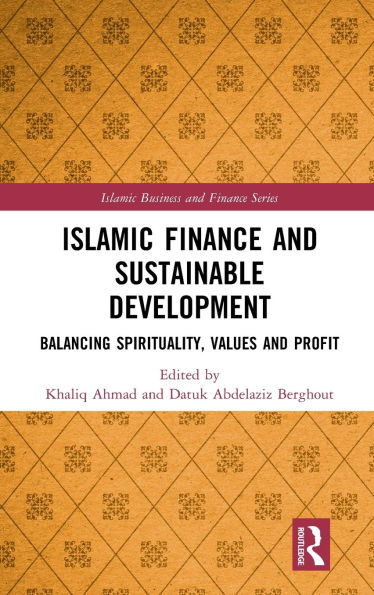
Islamic Finance and Sustainable Development: Balancing Spirituality, Values Profit in Chattanooga, TN
Current price: $190.00
Barnes and Noble
Islamic Finance and Sustainable Development: Balancing Spirituality, Values Profit in Chattanooga, TN
Current price: $190.00
Loading Inventory...
Size: Hardcover
This book uncovers a new dimension in the study of sustainability, offering balanced development from a spiritual and cultural values perspective. The authors of this edited volume investigate the role of religion in the debate concerning the Sustainable Development Goals (SDGs) and offer an Islamic perspective to environment, social and governance (ESG) issues.
Applying a multidimensional approach to socio-economic development, this book contends that Islam offers a unique perspective and framework for sustainable development that is holistic and rooted in spirituality, morality and ethics. For example, the book explains how Islam lays emphasis on human talents development (SDGs 3 and 4), which is a key element in accelerating socio-economic growth (SDG-8). It also offers a wide range of social financial tools such as Zakat and Waqf that can be used to address SDGs 1 (poverty), 2 (hunger), 5 (gender equality) and 10 (reducing inequality). Islamic finance offers a number of tools for long-term financing such as sukuk that can masterfully be used for building sustainable infrastructure (SDG-9). The study also reviews some Islamic principles from the Holy Qur'an that can positively SDGs.
Students, scholars and researchers in the fields of Islamic economics and finance, sustainable development and socio-economic and environmental issues will find the book a valuable resource.
Applying a multidimensional approach to socio-economic development, this book contends that Islam offers a unique perspective and framework for sustainable development that is holistic and rooted in spirituality, morality and ethics. For example, the book explains how Islam lays emphasis on human talents development (SDGs 3 and 4), which is a key element in accelerating socio-economic growth (SDG-8). It also offers a wide range of social financial tools such as Zakat and Waqf that can be used to address SDGs 1 (poverty), 2 (hunger), 5 (gender equality) and 10 (reducing inequality). Islamic finance offers a number of tools for long-term financing such as sukuk that can masterfully be used for building sustainable infrastructure (SDG-9). The study also reviews some Islamic principles from the Holy Qur'an that can positively SDGs.
Students, scholars and researchers in the fields of Islamic economics and finance, sustainable development and socio-economic and environmental issues will find the book a valuable resource.
This book uncovers a new dimension in the study of sustainability, offering balanced development from a spiritual and cultural values perspective. The authors of this edited volume investigate the role of religion in the debate concerning the Sustainable Development Goals (SDGs) and offer an Islamic perspective to environment, social and governance (ESG) issues.
Applying a multidimensional approach to socio-economic development, this book contends that Islam offers a unique perspective and framework for sustainable development that is holistic and rooted in spirituality, morality and ethics. For example, the book explains how Islam lays emphasis on human talents development (SDGs 3 and 4), which is a key element in accelerating socio-economic growth (SDG-8). It also offers a wide range of social financial tools such as Zakat and Waqf that can be used to address SDGs 1 (poverty), 2 (hunger), 5 (gender equality) and 10 (reducing inequality). Islamic finance offers a number of tools for long-term financing such as sukuk that can masterfully be used for building sustainable infrastructure (SDG-9). The study also reviews some Islamic principles from the Holy Qur'an that can positively SDGs.
Students, scholars and researchers in the fields of Islamic economics and finance, sustainable development and socio-economic and environmental issues will find the book a valuable resource.
Applying a multidimensional approach to socio-economic development, this book contends that Islam offers a unique perspective and framework for sustainable development that is holistic and rooted in spirituality, morality and ethics. For example, the book explains how Islam lays emphasis on human talents development (SDGs 3 and 4), which is a key element in accelerating socio-economic growth (SDG-8). It also offers a wide range of social financial tools such as Zakat and Waqf that can be used to address SDGs 1 (poverty), 2 (hunger), 5 (gender equality) and 10 (reducing inequality). Islamic finance offers a number of tools for long-term financing such as sukuk that can masterfully be used for building sustainable infrastructure (SDG-9). The study also reviews some Islamic principles from the Holy Qur'an that can positively SDGs.
Students, scholars and researchers in the fields of Islamic economics and finance, sustainable development and socio-economic and environmental issues will find the book a valuable resource.
You May Also Like








More About Barnes and Noble at Hamilton Place
Barnes & Noble is the world’s largest retail bookseller and a leading retailer of content, digital media and educational products. Our Nook Digital business offers a lineup of NOOK® tablets and e-Readers and an expansive collection of digital reading content through the NOOK Store®. Barnes & Noble’s mission is to operate the best omni-channel specialty retail business in America, helping both our customers and booksellers reach their aspirations, while being a credit to the communities we serve.
2100 Hamilton Pl Blvd, Chattanooga, TN 37421, United States
Find Barnes and Noble at Hamilton Place in Chattanooga, TN
Visit Barnes and Noble at Hamilton Place in Chattanooga, TN
