
Home
Iranian Music and Popular Entertainment: From Motrebi to Losanjelesi Beyond
Barnes and Noble
Loading Inventory...
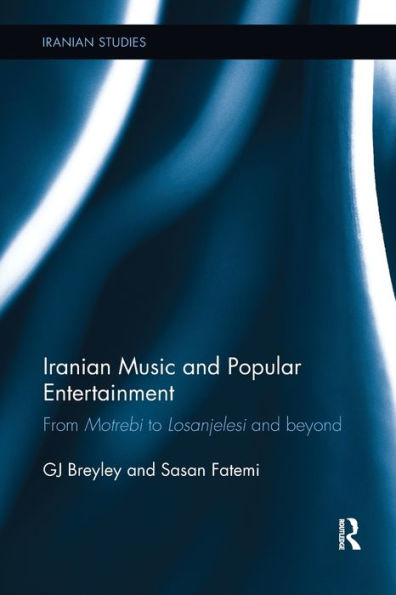
Iranian Music and Popular Entertainment: From Motrebi to Losanjelesi Beyond in Chattanooga, TN
Current price: $61.99
Barnes and Noble
Iranian Music and Popular Entertainment: From Motrebi to Losanjelesi Beyond in Chattanooga, TN
Current price: $61.99
Loading Inventory...
Size: Paperback
The word
motreb
finds its roots in the Arabic verb
taraba
, meaning ‘to make happy.’ Originally denoting all musicians in Iran,
motrebi
came to be associated, pejoratively, with the cheerful vulgarity of the lowbrow entertainer.
In
Iranian Music and Popular Entertainment,
GJ Breyley and Sasan Fatemi examine the historically overlooked
milieu, with its marginalized characters, from
luti
to
gardan koloft
and
mashti
, as well as the tenacity of
who continued their careers against all odds. They then turn to
losanjelesi
, the most pervasive form of Iranian popular music that developed as
declined, and related musical forms in Iran and its diasporic popular cultural centre, Los Angeles. For the first time in English, the book makes available musical transcriptions, analysis and lyrics that illustrate the complexities of this history. As it presents the findings of the authors’ years of ethnographic work with the history’s protagonists, from senior
to pop-rock stars, the book reveals parallels between the decline of
and the rise of ‘modernity.’ In the twentieth century, the fate of Tehran’s
music was shaped by the social and urban polarization that ensued from the modern market economy, and
would be similarly affected by transnational relations, revolution, war and migration.
Through its detailed and informed examination of Iranian popular music, this study reveals much about the values and anxieties of Iranian society, and is a valuable resource for students and scholars of Iranian society and history.
motreb
finds its roots in the Arabic verb
taraba
, meaning ‘to make happy.’ Originally denoting all musicians in Iran,
motrebi
came to be associated, pejoratively, with the cheerful vulgarity of the lowbrow entertainer.
In
Iranian Music and Popular Entertainment,
GJ Breyley and Sasan Fatemi examine the historically overlooked
milieu, with its marginalized characters, from
luti
to
gardan koloft
and
mashti
, as well as the tenacity of
who continued their careers against all odds. They then turn to
losanjelesi
, the most pervasive form of Iranian popular music that developed as
declined, and related musical forms in Iran and its diasporic popular cultural centre, Los Angeles. For the first time in English, the book makes available musical transcriptions, analysis and lyrics that illustrate the complexities of this history. As it presents the findings of the authors’ years of ethnographic work with the history’s protagonists, from senior
to pop-rock stars, the book reveals parallels between the decline of
and the rise of ‘modernity.’ In the twentieth century, the fate of Tehran’s
music was shaped by the social and urban polarization that ensued from the modern market economy, and
would be similarly affected by transnational relations, revolution, war and migration.
Through its detailed and informed examination of Iranian popular music, this study reveals much about the values and anxieties of Iranian society, and is a valuable resource for students and scholars of Iranian society and history.
The word
motreb
finds its roots in the Arabic verb
taraba
, meaning ‘to make happy.’ Originally denoting all musicians in Iran,
motrebi
came to be associated, pejoratively, with the cheerful vulgarity of the lowbrow entertainer.
In
Iranian Music and Popular Entertainment,
GJ Breyley and Sasan Fatemi examine the historically overlooked
milieu, with its marginalized characters, from
luti
to
gardan koloft
and
mashti
, as well as the tenacity of
who continued their careers against all odds. They then turn to
losanjelesi
, the most pervasive form of Iranian popular music that developed as
declined, and related musical forms in Iran and its diasporic popular cultural centre, Los Angeles. For the first time in English, the book makes available musical transcriptions, analysis and lyrics that illustrate the complexities of this history. As it presents the findings of the authors’ years of ethnographic work with the history’s protagonists, from senior
to pop-rock stars, the book reveals parallels between the decline of
and the rise of ‘modernity.’ In the twentieth century, the fate of Tehran’s
music was shaped by the social and urban polarization that ensued from the modern market economy, and
would be similarly affected by transnational relations, revolution, war and migration.
Through its detailed and informed examination of Iranian popular music, this study reveals much about the values and anxieties of Iranian society, and is a valuable resource for students and scholars of Iranian society and history.
motreb
finds its roots in the Arabic verb
taraba
, meaning ‘to make happy.’ Originally denoting all musicians in Iran,
motrebi
came to be associated, pejoratively, with the cheerful vulgarity of the lowbrow entertainer.
In
Iranian Music and Popular Entertainment,
GJ Breyley and Sasan Fatemi examine the historically overlooked
milieu, with its marginalized characters, from
luti
to
gardan koloft
and
mashti
, as well as the tenacity of
who continued their careers against all odds. They then turn to
losanjelesi
, the most pervasive form of Iranian popular music that developed as
declined, and related musical forms in Iran and its diasporic popular cultural centre, Los Angeles. For the first time in English, the book makes available musical transcriptions, analysis and lyrics that illustrate the complexities of this history. As it presents the findings of the authors’ years of ethnographic work with the history’s protagonists, from senior
to pop-rock stars, the book reveals parallels between the decline of
and the rise of ‘modernity.’ In the twentieth century, the fate of Tehran’s
music was shaped by the social and urban polarization that ensued from the modern market economy, and
would be similarly affected by transnational relations, revolution, war and migration.
Through its detailed and informed examination of Iranian popular music, this study reveals much about the values and anxieties of Iranian society, and is a valuable resource for students and scholars of Iranian society and history.
You May Also Like












More About Barnes and Noble at Hamilton Place
Barnes & Noble is the world’s largest retail bookseller and a leading retailer of content, digital media and educational products. Our Nook Digital business offers a lineup of NOOK® tablets and e-Readers and an expansive collection of digital reading content through the NOOK Store®. Barnes & Noble’s mission is to operate the best omni-channel specialty retail business in America, helping both our customers and booksellers reach their aspirations, while being a credit to the communities we serve.
2100 Hamilton Pl Blvd, Chattanooga, TN 37421, United States
Find Barnes and Noble at Hamilton Place in Chattanooga, TN
Visit Barnes and Noble at Hamilton Place in Chattanooga, TN