
Home
Interrogating Inequality: Essays on Class Analysis, Socialism and Marxism
Barnes and Noble
Loading Inventory...
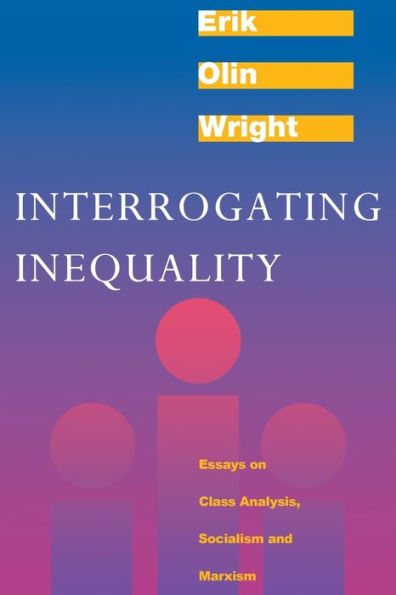
Interrogating Inequality: Essays on Class Analysis, Socialism and Marxism in Chattanooga, TN
Current price: $24.95
Barnes and Noble
Interrogating Inequality: Essays on Class Analysis, Socialism and Marxism in Chattanooga, TN
Current price: $24.95
Loading Inventory...
Size: OS
This lively new collection from one of America’s leading sociologists covers a wide range of theoretical problems of interest to radical social scientists and political activists.
The book opens with a fascinating autobiographical essay exploring the challenges and benefits of being a Marxist scholar in the present era. Following this is a discussion of various issues in class analysis, with particular attention being paid to two overarching themes: class and inequality, and the relationship between class and power.
The second section of the book engages the problem of socialism as a possible future to capitalism. Wright attempts to clarify the conceptual status of socialism, and discusses why certain reforms such as basic income grants may ultimately require the introduction of some form of socialism for their full realization.
Interrogating Inequality
concludes by examining the general problem of Marxism as a tradition of radical social theory. Three issues in particular are discussed: the central principles of “analytical Marxism” as a strategy for reconstructing Marxism as a social scientific theory; the relationship between Marxism and feminism as emancipatory social theories; and the prospects for Marxism in the aftermath of the collapse of communist regimes.
The book opens with a fascinating autobiographical essay exploring the challenges and benefits of being a Marxist scholar in the present era. Following this is a discussion of various issues in class analysis, with particular attention being paid to two overarching themes: class and inequality, and the relationship between class and power.
The second section of the book engages the problem of socialism as a possible future to capitalism. Wright attempts to clarify the conceptual status of socialism, and discusses why certain reforms such as basic income grants may ultimately require the introduction of some form of socialism for their full realization.
Interrogating Inequality
concludes by examining the general problem of Marxism as a tradition of radical social theory. Three issues in particular are discussed: the central principles of “analytical Marxism” as a strategy for reconstructing Marxism as a social scientific theory; the relationship between Marxism and feminism as emancipatory social theories; and the prospects for Marxism in the aftermath of the collapse of communist regimes.
This lively new collection from one of America’s leading sociologists covers a wide range of theoretical problems of interest to radical social scientists and political activists.
The book opens with a fascinating autobiographical essay exploring the challenges and benefits of being a Marxist scholar in the present era. Following this is a discussion of various issues in class analysis, with particular attention being paid to two overarching themes: class and inequality, and the relationship between class and power.
The second section of the book engages the problem of socialism as a possible future to capitalism. Wright attempts to clarify the conceptual status of socialism, and discusses why certain reforms such as basic income grants may ultimately require the introduction of some form of socialism for their full realization.
Interrogating Inequality
concludes by examining the general problem of Marxism as a tradition of radical social theory. Three issues in particular are discussed: the central principles of “analytical Marxism” as a strategy for reconstructing Marxism as a social scientific theory; the relationship between Marxism and feminism as emancipatory social theories; and the prospects for Marxism in the aftermath of the collapse of communist regimes.
The book opens with a fascinating autobiographical essay exploring the challenges and benefits of being a Marxist scholar in the present era. Following this is a discussion of various issues in class analysis, with particular attention being paid to two overarching themes: class and inequality, and the relationship between class and power.
The second section of the book engages the problem of socialism as a possible future to capitalism. Wright attempts to clarify the conceptual status of socialism, and discusses why certain reforms such as basic income grants may ultimately require the introduction of some form of socialism for their full realization.
Interrogating Inequality
concludes by examining the general problem of Marxism as a tradition of radical social theory. Three issues in particular are discussed: the central principles of “analytical Marxism” as a strategy for reconstructing Marxism as a social scientific theory; the relationship between Marxism and feminism as emancipatory social theories; and the prospects for Marxism in the aftermath of the collapse of communist regimes.
You May Also Like











More About Barnes and Noble at Hamilton Place
Barnes & Noble is the world’s largest retail bookseller and a leading retailer of content, digital media and educational products. Our Nook Digital business offers a lineup of NOOK® tablets and e-Readers and an expansive collection of digital reading content through the NOOK Store®. Barnes & Noble’s mission is to operate the best omni-channel specialty retail business in America, helping both our customers and booksellers reach their aspirations, while being a credit to the communities we serve.
2100 Hamilton Pl Blvd, Chattanooga, TN 37421, United States
Find Barnes and Noble at Hamilton Place in Chattanooga, TN
Visit Barnes and Noble at Hamilton Place in Chattanooga, TN
