
Home
Insects as Humans' Frenemies: From Friends to Foes
Barnes and Noble
Loading Inventory...
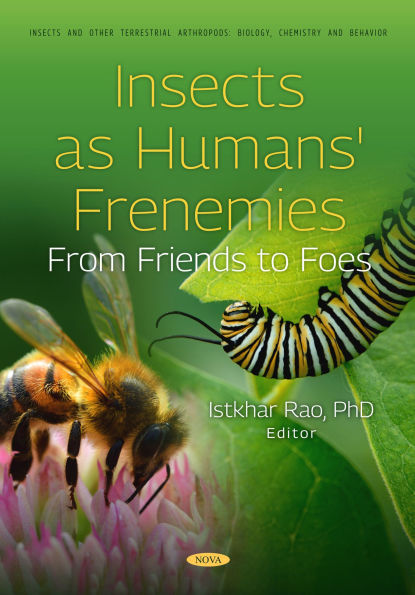
Insects as Humans' Frenemies: From Friends to Foes in Chattanooga, TN
Current price: $230.00
Barnes and Noble
Insects as Humans' Frenemies: From Friends to Foes in Chattanooga, TN
Current price: $230.00
Loading Inventory...
Size: OS
There are countless uses for insects in science, education, and research. They are animals that developed life on Earth before humans. Almost every type of environment is inhabited by insects, who rule the animal kingdom and are the primary rivals of humans for food, shelter, and other natural resources. They affect all species, including humans, whether directly or indirectly. Without insects, our lives would be drastically different. Insects pollinate a large number of our fruits, flowers, and vegetables, yet certain species damage crops by becoming pests. They are key predators, bioindicators, producers of valuable human goods, forensic assistance, and, of course, experimental models. They also destroy crops, taint food, and spread disease. The importance of insects in the food chain is often overlooked. For many birds, mammals, reptiles, and amphibians, they are their only source of food. In certain civilisations, people harvest and consume insects themselves. They are considered delicacies in many third-world nations and are rich in protein, vitamins, and minerals. It is hard to locate bugs that humans do not eat in one way or another. Thus, it is crucial to pay attention to the various roles that insects play in human existence. This book covers a wide range of issues, with an emphasis on both the positive and negative impacts of insects on humans. This book's contents are primarily concerned with insects as pests in horticulture, forestry, and agriculture, as well as their roles as predators, vectors of diseases, pollinators, and sources of goods important to humans. Along with these, there are also interesting chapters dedicated to the deterioration of plastic and the involvement of insects in the cosmetics industry. Due to its diverse range of topics, this book will be beneficial to students, researchers, and scientists in the domains of horticulture, forensic science, medical entomology, amateur scientists, and those who want to focus on the impact of insects on humans. This book offers a variety of ways that insects might be used.
There are countless uses for insects in science, education, and research. They are animals that developed life on Earth before humans. Almost every type of environment is inhabited by insects, who rule the animal kingdom and are the primary rivals of humans for food, shelter, and other natural resources. They affect all species, including humans, whether directly or indirectly. Without insects, our lives would be drastically different. Insects pollinate a large number of our fruits, flowers, and vegetables, yet certain species damage crops by becoming pests. They are key predators, bioindicators, producers of valuable human goods, forensic assistance, and, of course, experimental models. They also destroy crops, taint food, and spread disease. The importance of insects in the food chain is often overlooked. For many birds, mammals, reptiles, and amphibians, they are their only source of food. In certain civilisations, people harvest and consume insects themselves. They are considered delicacies in many third-world nations and are rich in protein, vitamins, and minerals. It is hard to locate bugs that humans do not eat in one way or another. Thus, it is crucial to pay attention to the various roles that insects play in human existence. This book covers a wide range of issues, with an emphasis on both the positive and negative impacts of insects on humans. This book's contents are primarily concerned with insects as pests in horticulture, forestry, and agriculture, as well as their roles as predators, vectors of diseases, pollinators, and sources of goods important to humans. Along with these, there are also interesting chapters dedicated to the deterioration of plastic and the involvement of insects in the cosmetics industry. Due to its diverse range of topics, this book will be beneficial to students, researchers, and scientists in the domains of horticulture, forensic science, medical entomology, amateur scientists, and those who want to focus on the impact of insects on humans. This book offers a variety of ways that insects might be used.
You May Also Like














More About Barnes and Noble at Hamilton Place
Barnes & Noble is the world’s largest retail bookseller and a leading retailer of content, digital media and educational products. Our Nook Digital business offers a lineup of NOOK® tablets and e-Readers and an expansive collection of digital reading content through the NOOK Store®. Barnes & Noble’s mission is to operate the best omni-channel specialty retail business in America, helping both our customers and booksellers reach their aspirations, while being a credit to the communities we serve.
2100 Hamilton Pl Blvd, Chattanooga, TN 37421, United States
Find Barnes and Noble at Hamilton Place in Chattanooga, TN
Visit Barnes and Noble at Hamilton Place in Chattanooga, TN
