
Home
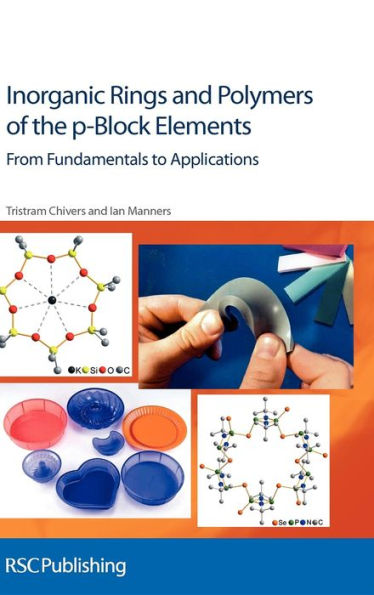
Inorganic Rings and Polymers of the p-Block Elements: From Fundamentals to Applications
Barnes and Noble
Loading Inventory...
Inorganic Rings and Polymers of the p-Block Elements: From Fundamentals to Applications in Chattanooga, TN
Current price: $70.00
Barnes and Noble
Inorganic Rings and Polymers of the p-Block Elements: From Fundamentals to Applications in Chattanooga, TN
Current price: $70.00
Loading Inventory...
Size: OS
Ring systems represent a very important branch of organic chemistry. Benzene is perhaps the pre-eminent example and provides the benchmark for the so-called aromatic character of cyclic systems. Cycloalkanes are another prominent class of organic compounds and these saturated ring systems form a homologous series known as alicyclics. Materials that are constructed from organic polymers such as polythene, polystyrene, polyisoprene (natural rubber) and polyvinyl chloride are common features of our daily lives. Most of these and related organic polymers are generated from acyclic precursors by free radical, anionic, cationic or organometallic polymerisation processes or by condensation reactions. The focus of this book is monocyclic inorganic ring systems of the p-block elements and the polymers that are, in many cases derived from them. Bicyclic or polycyclic arrangements are considered when they are closely related to those of monocyclic systems. Inorganic heterocycles that are more accurately described as coordination complexes of chelating inorganic ligands are included only when they are directly related to an inorganic homocycle or heterocycle by the replacement of one p-block element by a more metallic p-block element. After a short introductory chapter, the first half of the book is comprised of seven chapters that deal with the fundamentals of the subject intended for undergraduates or researchers who are unfamiliar with the topic, covering the following areas: - synthetic methods - characterisation techniques - delocalisation in inorganic rings - paramagnetic inorganic rings - inorganic macrocycles - ligand chemistry - inorganic polymers (general concepts including, synthesis, structure and bonding, characterisation methods, properties and applications) The final four chapters discuss in detail the chemistry of inorganic homo- and hetero-cycles involving the elements of groups 13-16 (the p-block elements). The focus is on relating the early seminal contributions to the field with exciting new developments. From the fundamental standpoint, novel structures and new bonding concepts are highlighted, in addition to synthetic approaches. This is the first book that addresses both the fundamental and applied aspects of inorganic ring systems through an emphasis of their use as precursors to inorganic polymers and other useful materials (e.g. semiconductors and ceramics). The book is intended primarily for senior undergraduates and graduate students in inorganic chemistry, as well research workers in the field of inorganic ring systems and polymers. At the undergraduate level it serves as a supplementary text to the more general inorganic chemistry text books and at the graduate level it would be the text of choice for a course in the area of inorganic rings and polymers.
Ring systems represent a very important branch of organic chemistry. Benzene is perhaps the pre-eminent example and provides the benchmark for the so-called aromatic character of cyclic systems. Cycloalkanes are another prominent class of organic compounds and these saturated ring systems form a homologous series known as alicyclics. Materials that are constructed from organic polymers such as polythene, polystyrene, polyisoprene (natural rubber) and polyvinyl chloride are common features of our daily lives. Most of these and related organic polymers are generated from acyclic precursors by free radical, anionic, cationic or organometallic polymerisation processes or by condensation reactions. The focus of this book is monocyclic inorganic ring systems of the p-block elements and the polymers that are, in many cases derived from them. Bicyclic or polycyclic arrangements are considered when they are closely related to those of monocyclic systems. Inorganic heterocycles that are more accurately described as coordination complexes of chelating inorganic ligands are included only when they are directly related to an inorganic homocycle or heterocycle by the replacement of one p-block element by a more metallic p-block element. After a short introductory chapter, the first half of the book is comprised of seven chapters that deal with the fundamentals of the subject intended for undergraduates or researchers who are unfamiliar with the topic, covering the following areas: - synthetic methods - characterisation techniques - delocalisation in inorganic rings - paramagnetic inorganic rings - inorganic macrocycles - ligand chemistry - inorganic polymers (general concepts including, synthesis, structure and bonding, characterisation methods, properties and applications) The final four chapters discuss in detail the chemistry of inorganic homo- and hetero-cycles involving the elements of groups 13-16 (the p-block elements). The focus is on relating the early seminal contributions to the field with exciting new developments. From the fundamental standpoint, novel structures and new bonding concepts are highlighted, in addition to synthetic approaches. This is the first book that addresses both the fundamental and applied aspects of inorganic ring systems through an emphasis of their use as precursors to inorganic polymers and other useful materials (e.g. semiconductors and ceramics). The book is intended primarily for senior undergraduates and graduate students in inorganic chemistry, as well research workers in the field of inorganic ring systems and polymers. At the undergraduate level it serves as a supplementary text to the more general inorganic chemistry text books and at the graduate level it would be the text of choice for a course in the area of inorganic rings and polymers.
You May Also Like











More About Barnes and Noble at Hamilton Place
Barnes & Noble is the world’s largest retail bookseller and a leading retailer of content, digital media and educational products. Our Nook Digital business offers a lineup of NOOK® tablets and e-Readers and an expansive collection of digital reading content through the NOOK Store®. Barnes & Noble’s mission is to operate the best omni-channel specialty retail business in America, helping both our customers and booksellers reach their aspirations, while being a credit to the communities we serve.
2100 Hamilton Pl Blvd, Chattanooga, TN 37421, United States
Find Barnes and Noble at Hamilton Place in Chattanooga, TN
Visit Barnes and Noble at Hamilton Place in Chattanooga, TN
