
Home
Inflammatory Mechanisms Mediating Hearing Loss
Barnes and Noble
Loading Inventory...
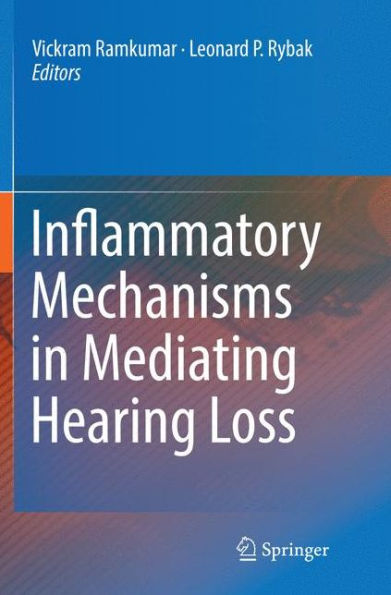
Inflammatory Mechanisms Mediating Hearing Loss in Chattanooga, TN
Current price: $109.99
Barnes and Noble
Inflammatory Mechanisms Mediating Hearing Loss in Chattanooga, TN
Current price: $109.99
Loading Inventory...
Size: Hardcover
Common forms of preventable hearing loss are drug and noise-induced hearing loss which are believed to be produced by a similar mechanism. The generation of reactive oxygen species appears to be a common mechanism mediating hearing loss produced by these different sources. As such, a number of laboratories have focused their research towards identifying the sources of ROS production in the cochlea following administration of chemotherapeutic agents or noise exposure. This led to the identification of ROS generating enzymes, such as xanthine oxidases, nitric oxide synthase, and NADPH oxidases which are activated and/or induced during the development of hearing loss. A consequence of these findings was the implementation of antioxidants in preclinical studies for the treatment of hearing loss. These antioxidants have provided different levels of protection in animal and human studies, but none of these have been approved by the US Food and Drug Administration for the treatmentof hearing loss.
More recently, it was shown that noise-induced hearing loss was associated with recruitment of inflammatory cells and mediators in the cochlea. This finding would suggest that noise could produce injury to the cochlea which stimulates local and/or circulating inflammatory cells. A similar finding was observed in the cochlea following administration of the anticancer drug, cisplatin. In addition, our laboratory and others have provided a plausible mechanism by which noise or chemotherapeutic agents could stimulate the inflammatory response. Surprisingly, this mechanism involves ROS activation of transcription factors linked to inflammatory processes in the cochlea. These studies have led to the use of anti-inflammatory agents for the treatment of hearing loss. Preliminary studies targeting inflammatory cytokines appear especially promising in preclinical studies.
A primary goal of this project is to describe our current understanding of theoxidant hypothesis of noise and drug-induced hearing loss and show how this relates to cochlear inflammation. Several different aspects of the cochlear inflammatory process will be discussed in detail, ranging from the sources of inflammatory cells, chemokines, inflammatory cytokines, and cochlea resident immune cells. Molecular pathways leading to activation of the local inflammatory process will be highlighted and treatment options will be discussed. The relevance of certain clinically used anti-inflammatory interventions, such as trans-typmanic steroids will also be discussed. Furthermore, we will examine recent patents focusing on the use of anti-inflammatory agents for the treatment of drug and noise-induced hearing loss.
More recently, it was shown that noise-induced hearing loss was associated with recruitment of inflammatory cells and mediators in the cochlea. This finding would suggest that noise could produce injury to the cochlea which stimulates local and/or circulating inflammatory cells. A similar finding was observed in the cochlea following administration of the anticancer drug, cisplatin. In addition, our laboratory and others have provided a plausible mechanism by which noise or chemotherapeutic agents could stimulate the inflammatory response. Surprisingly, this mechanism involves ROS activation of transcription factors linked to inflammatory processes in the cochlea. These studies have led to the use of anti-inflammatory agents for the treatment of hearing loss. Preliminary studies targeting inflammatory cytokines appear especially promising in preclinical studies.
A primary goal of this project is to describe our current understanding of theoxidant hypothesis of noise and drug-induced hearing loss and show how this relates to cochlear inflammation. Several different aspects of the cochlear inflammatory process will be discussed in detail, ranging from the sources of inflammatory cells, chemokines, inflammatory cytokines, and cochlea resident immune cells. Molecular pathways leading to activation of the local inflammatory process will be highlighted and treatment options will be discussed. The relevance of certain clinically used anti-inflammatory interventions, such as trans-typmanic steroids will also be discussed. Furthermore, we will examine recent patents focusing on the use of anti-inflammatory agents for the treatment of drug and noise-induced hearing loss.
Common forms of preventable hearing loss are drug and noise-induced hearing loss which are believed to be produced by a similar mechanism. The generation of reactive oxygen species appears to be a common mechanism mediating hearing loss produced by these different sources. As such, a number of laboratories have focused their research towards identifying the sources of ROS production in the cochlea following administration of chemotherapeutic agents or noise exposure. This led to the identification of ROS generating enzymes, such as xanthine oxidases, nitric oxide synthase, and NADPH oxidases which are activated and/or induced during the development of hearing loss. A consequence of these findings was the implementation of antioxidants in preclinical studies for the treatment of hearing loss. These antioxidants have provided different levels of protection in animal and human studies, but none of these have been approved by the US Food and Drug Administration for the treatmentof hearing loss.
More recently, it was shown that noise-induced hearing loss was associated with recruitment of inflammatory cells and mediators in the cochlea. This finding would suggest that noise could produce injury to the cochlea which stimulates local and/or circulating inflammatory cells. A similar finding was observed in the cochlea following administration of the anticancer drug, cisplatin. In addition, our laboratory and others have provided a plausible mechanism by which noise or chemotherapeutic agents could stimulate the inflammatory response. Surprisingly, this mechanism involves ROS activation of transcription factors linked to inflammatory processes in the cochlea. These studies have led to the use of anti-inflammatory agents for the treatment of hearing loss. Preliminary studies targeting inflammatory cytokines appear especially promising in preclinical studies.
A primary goal of this project is to describe our current understanding of theoxidant hypothesis of noise and drug-induced hearing loss and show how this relates to cochlear inflammation. Several different aspects of the cochlear inflammatory process will be discussed in detail, ranging from the sources of inflammatory cells, chemokines, inflammatory cytokines, and cochlea resident immune cells. Molecular pathways leading to activation of the local inflammatory process will be highlighted and treatment options will be discussed. The relevance of certain clinically used anti-inflammatory interventions, such as trans-typmanic steroids will also be discussed. Furthermore, we will examine recent patents focusing on the use of anti-inflammatory agents for the treatment of drug and noise-induced hearing loss.
More recently, it was shown that noise-induced hearing loss was associated with recruitment of inflammatory cells and mediators in the cochlea. This finding would suggest that noise could produce injury to the cochlea which stimulates local and/or circulating inflammatory cells. A similar finding was observed in the cochlea following administration of the anticancer drug, cisplatin. In addition, our laboratory and others have provided a plausible mechanism by which noise or chemotherapeutic agents could stimulate the inflammatory response. Surprisingly, this mechanism involves ROS activation of transcription factors linked to inflammatory processes in the cochlea. These studies have led to the use of anti-inflammatory agents for the treatment of hearing loss. Preliminary studies targeting inflammatory cytokines appear especially promising in preclinical studies.
A primary goal of this project is to describe our current understanding of theoxidant hypothesis of noise and drug-induced hearing loss and show how this relates to cochlear inflammation. Several different aspects of the cochlear inflammatory process will be discussed in detail, ranging from the sources of inflammatory cells, chemokines, inflammatory cytokines, and cochlea resident immune cells. Molecular pathways leading to activation of the local inflammatory process will be highlighted and treatment options will be discussed. The relevance of certain clinically used anti-inflammatory interventions, such as trans-typmanic steroids will also be discussed. Furthermore, we will examine recent patents focusing on the use of anti-inflammatory agents for the treatment of drug and noise-induced hearing loss.
You May Also Like













More About Barnes and Noble at Hamilton Place
Barnes & Noble is the world’s largest retail bookseller and a leading retailer of content, digital media and educational products. Our Nook Digital business offers a lineup of NOOK® tablets and e-Readers and an expansive collection of digital reading content through the NOOK Store®. Barnes & Noble’s mission is to operate the best omni-channel specialty retail business in America, helping both our customers and booksellers reach their aspirations, while being a credit to the communities we serve.
2100 Hamilton Pl Blvd, Chattanooga, TN 37421, United States
Find Barnes and Noble at Hamilton Place in Chattanooga, TN
Visit Barnes and Noble at Hamilton Place in Chattanooga, TN
