
Home
Inevitable Western
Barnes and Noble
Loading Inventory...
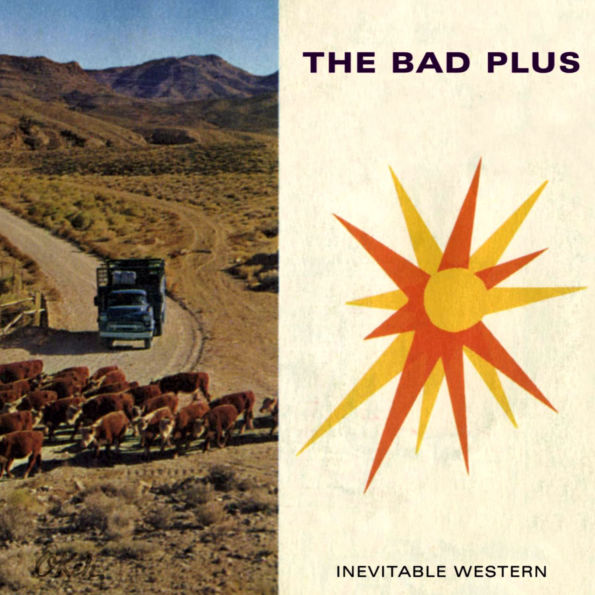
Inevitable Western in Chattanooga, TN
Current price: $14.99
Barnes and Noble
Inevitable Western in Chattanooga, TN
Current price: $14.99
Loading Inventory...
Size: OS
It's in the opening moments of "I Hear You," the first track on
Inevitable Western
: the mercurial, mysterious, yet utterly musical sense of adventure that lies at the heart of
the Bad Plus
' sound. After recording the rigorous, mathematically challenging score for
Igor Stravinsky
's
The Rite of Spring
-- released only six months prior to this -- one can almost hear relief in the trio's return to its own universe. These nine tracks are equally divided compositionally among bassist
Reid Anderson
, pianist
Ethan Iverson
, and drummer
Dave King
. The bassist's aforementioned opener is a seemingly simple lyric stated by the piano but given a slightly quirky yet nearly processional tilt in its meter as
Anderson
illustrates the time as the drummer's syncopated accents add drama and humor.
King
's "God Prisms Incorporated" is a marvelous cut-time jazz illustration of post-rock song form.
Iverson
's pulsing chord statement rides atop the minimal melody, offset by the rhythm section's inventive interplay. A piano solo commences halfway through, stretching the notion of time, though the tune never quite abandons its interlocking grooves.
's "Self Serve" is a knotty, almost swinging post-bop tune, with gorgeous harmonic statements by
. The mutant classicism in the bassist's "You Will Lose All Fear" feels like it was simultaneously influenced by both
Charles Ives
and
Aaron Copland
.
's solo, full of bright arpeggios and forceful dynamic chords, is adorned by
's hyperactive rolls and fills. The set's longest piece is the drummer's "Adopted Highway." Introduced by a shimmering crash cymbal and a single piano chord, all three members engage in measured, dissonant stop-and-start counterpoint.
rumbles along the lower and middle registers as
's pizzicato lines exhort
to use his brushes aggressively in response. The tune unfolds very gradually, as free-flowing improvisation alternates with intricately written lines, building to a taut climax before gradually whispering to a close.
's "Mr. Now" is almost funky in its intro. His sharp, labyrinthine head is offered in short statements with
playing double time and
holding the center. It becomes a meaty, hard-driving exercise in modern post-bop, as all three members engage in spirited dialogue.
delivers a bracing solo in the final third. The closing title number, by the pianist, seamlessly melds jazz, classical, blues, modal, and great American saloon-style music in dexterous and lyrical phrases and rhythmic frames.
is a reminder that
are not a "piano trio" in any ordinary sense of the term, but a unit of strikingly different voices acting as one in expanding the boundaries of jazz. ~ Thom Jurek
Inevitable Western
: the mercurial, mysterious, yet utterly musical sense of adventure that lies at the heart of
the Bad Plus
' sound. After recording the rigorous, mathematically challenging score for
Igor Stravinsky
's
The Rite of Spring
-- released only six months prior to this -- one can almost hear relief in the trio's return to its own universe. These nine tracks are equally divided compositionally among bassist
Reid Anderson
, pianist
Ethan Iverson
, and drummer
Dave King
. The bassist's aforementioned opener is a seemingly simple lyric stated by the piano but given a slightly quirky yet nearly processional tilt in its meter as
Anderson
illustrates the time as the drummer's syncopated accents add drama and humor.
King
's "God Prisms Incorporated" is a marvelous cut-time jazz illustration of post-rock song form.
Iverson
's pulsing chord statement rides atop the minimal melody, offset by the rhythm section's inventive interplay. A piano solo commences halfway through, stretching the notion of time, though the tune never quite abandons its interlocking grooves.
's "Self Serve" is a knotty, almost swinging post-bop tune, with gorgeous harmonic statements by
. The mutant classicism in the bassist's "You Will Lose All Fear" feels like it was simultaneously influenced by both
Charles Ives
and
Aaron Copland
.
's solo, full of bright arpeggios and forceful dynamic chords, is adorned by
's hyperactive rolls and fills. The set's longest piece is the drummer's "Adopted Highway." Introduced by a shimmering crash cymbal and a single piano chord, all three members engage in measured, dissonant stop-and-start counterpoint.
rumbles along the lower and middle registers as
's pizzicato lines exhort
to use his brushes aggressively in response. The tune unfolds very gradually, as free-flowing improvisation alternates with intricately written lines, building to a taut climax before gradually whispering to a close.
's "Mr. Now" is almost funky in its intro. His sharp, labyrinthine head is offered in short statements with
playing double time and
holding the center. It becomes a meaty, hard-driving exercise in modern post-bop, as all three members engage in spirited dialogue.
delivers a bracing solo in the final third. The closing title number, by the pianist, seamlessly melds jazz, classical, blues, modal, and great American saloon-style music in dexterous and lyrical phrases and rhythmic frames.
is a reminder that
are not a "piano trio" in any ordinary sense of the term, but a unit of strikingly different voices acting as one in expanding the boundaries of jazz. ~ Thom Jurek
It's in the opening moments of "I Hear You," the first track on
Inevitable Western
: the mercurial, mysterious, yet utterly musical sense of adventure that lies at the heart of
the Bad Plus
' sound. After recording the rigorous, mathematically challenging score for
Igor Stravinsky
's
The Rite of Spring
-- released only six months prior to this -- one can almost hear relief in the trio's return to its own universe. These nine tracks are equally divided compositionally among bassist
Reid Anderson
, pianist
Ethan Iverson
, and drummer
Dave King
. The bassist's aforementioned opener is a seemingly simple lyric stated by the piano but given a slightly quirky yet nearly processional tilt in its meter as
Anderson
illustrates the time as the drummer's syncopated accents add drama and humor.
King
's "God Prisms Incorporated" is a marvelous cut-time jazz illustration of post-rock song form.
Iverson
's pulsing chord statement rides atop the minimal melody, offset by the rhythm section's inventive interplay. A piano solo commences halfway through, stretching the notion of time, though the tune never quite abandons its interlocking grooves.
's "Self Serve" is a knotty, almost swinging post-bop tune, with gorgeous harmonic statements by
. The mutant classicism in the bassist's "You Will Lose All Fear" feels like it was simultaneously influenced by both
Charles Ives
and
Aaron Copland
.
's solo, full of bright arpeggios and forceful dynamic chords, is adorned by
's hyperactive rolls and fills. The set's longest piece is the drummer's "Adopted Highway." Introduced by a shimmering crash cymbal and a single piano chord, all three members engage in measured, dissonant stop-and-start counterpoint.
rumbles along the lower and middle registers as
's pizzicato lines exhort
to use his brushes aggressively in response. The tune unfolds very gradually, as free-flowing improvisation alternates with intricately written lines, building to a taut climax before gradually whispering to a close.
's "Mr. Now" is almost funky in its intro. His sharp, labyrinthine head is offered in short statements with
playing double time and
holding the center. It becomes a meaty, hard-driving exercise in modern post-bop, as all three members engage in spirited dialogue.
delivers a bracing solo in the final third. The closing title number, by the pianist, seamlessly melds jazz, classical, blues, modal, and great American saloon-style music in dexterous and lyrical phrases and rhythmic frames.
is a reminder that
are not a "piano trio" in any ordinary sense of the term, but a unit of strikingly different voices acting as one in expanding the boundaries of jazz. ~ Thom Jurek
Inevitable Western
: the mercurial, mysterious, yet utterly musical sense of adventure that lies at the heart of
the Bad Plus
' sound. After recording the rigorous, mathematically challenging score for
Igor Stravinsky
's
The Rite of Spring
-- released only six months prior to this -- one can almost hear relief in the trio's return to its own universe. These nine tracks are equally divided compositionally among bassist
Reid Anderson
, pianist
Ethan Iverson
, and drummer
Dave King
. The bassist's aforementioned opener is a seemingly simple lyric stated by the piano but given a slightly quirky yet nearly processional tilt in its meter as
Anderson
illustrates the time as the drummer's syncopated accents add drama and humor.
King
's "God Prisms Incorporated" is a marvelous cut-time jazz illustration of post-rock song form.
Iverson
's pulsing chord statement rides atop the minimal melody, offset by the rhythm section's inventive interplay. A piano solo commences halfway through, stretching the notion of time, though the tune never quite abandons its interlocking grooves.
's "Self Serve" is a knotty, almost swinging post-bop tune, with gorgeous harmonic statements by
. The mutant classicism in the bassist's "You Will Lose All Fear" feels like it was simultaneously influenced by both
Charles Ives
and
Aaron Copland
.
's solo, full of bright arpeggios and forceful dynamic chords, is adorned by
's hyperactive rolls and fills. The set's longest piece is the drummer's "Adopted Highway." Introduced by a shimmering crash cymbal and a single piano chord, all three members engage in measured, dissonant stop-and-start counterpoint.
rumbles along the lower and middle registers as
's pizzicato lines exhort
to use his brushes aggressively in response. The tune unfolds very gradually, as free-flowing improvisation alternates with intricately written lines, building to a taut climax before gradually whispering to a close.
's "Mr. Now" is almost funky in its intro. His sharp, labyrinthine head is offered in short statements with
playing double time and
holding the center. It becomes a meaty, hard-driving exercise in modern post-bop, as all three members engage in spirited dialogue.
delivers a bracing solo in the final third. The closing title number, by the pianist, seamlessly melds jazz, classical, blues, modal, and great American saloon-style music in dexterous and lyrical phrases and rhythmic frames.
is a reminder that
are not a "piano trio" in any ordinary sense of the term, but a unit of strikingly different voices acting as one in expanding the boundaries of jazz. ~ Thom Jurek
You May Also Like

![Modern Sounds Country And Western Music [Clear Red Smoke Vinyl] [Barnes & Noble Exclusive]](https://prodimage.images-bn.com/pimages/0708857204618_p0_v2_s600x595.jpg)









More About Barnes and Noble at Hamilton Place
Barnes & Noble is the world’s largest retail bookseller and a leading retailer of content, digital media and educational products. Our Nook Digital business offers a lineup of NOOK® tablets and e-Readers and an expansive collection of digital reading content through the NOOK Store®. Barnes & Noble’s mission is to operate the best omni-channel specialty retail business in America, helping both our customers and booksellers reach their aspirations, while being a credit to the communities we serve.
2100 Hamilton Pl Blvd, Chattanooga, TN 37421, United States
Find Barnes and Noble at Hamilton Place in Chattanooga, TN
Visit Barnes and Noble at Hamilton Place in Chattanooga, TN
