
Home
In the Light of Evolution: Volume II: Biodiversity and Extinction
Barnes and Noble
Loading Inventory...
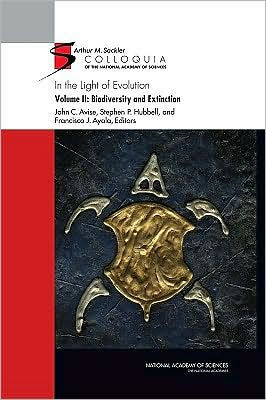
In the Light of Evolution: Volume II: Biodiversity and Extinction in Chattanooga, TN
Current price: $80.00
Barnes and Noble
In the Light of Evolution: Volume II: Biodiversity and Extinction in Chattanooga, TN
Current price: $80.00
Loading Inventory...
Size: OS
The current extinction crisis is of human making, and any favorable resolution of that biodiversity crisis—among the most dire in the 4-billion-year history of Earth—will have to be initiated by mankind. Little time remains for the public, corporations, and governments to awaken to the magnitude of what is at stake. This book aims to assist that critical educational mission, synthesizing recent scientific information and ideas about threats to biodiversity in the past, present, and projected future. This is the second volume from the
In the Light of Evolution
series, based on a series of Arthur M. Sackler colloquia, and designed to promote the evolutionary sciences. Each installment explores evolutionary perspectives on a particular biological topic that is scientifically intriguing but also has special relevance to contemporary societal issues or challenges. Individually and collectively, the ILE series aims to interpret phenomena in various areas of biology through the lens of evolution, address some of the most intellectually engaging as well as pragmatically important societal issues of our times, and foster a greater appreciation of evolutionary biology as a consolidating foundation for the life sciences.
In the Light of Evolution
series, based on a series of Arthur M. Sackler colloquia, and designed to promote the evolutionary sciences. Each installment explores evolutionary perspectives on a particular biological topic that is scientifically intriguing but also has special relevance to contemporary societal issues or challenges. Individually and collectively, the ILE series aims to interpret phenomena in various areas of biology through the lens of evolution, address some of the most intellectually engaging as well as pragmatically important societal issues of our times, and foster a greater appreciation of evolutionary biology as a consolidating foundation for the life sciences.
The current extinction crisis is of human making, and any favorable resolution of that biodiversity crisis—among the most dire in the 4-billion-year history of Earth—will have to be initiated by mankind. Little time remains for the public, corporations, and governments to awaken to the magnitude of what is at stake. This book aims to assist that critical educational mission, synthesizing recent scientific information and ideas about threats to biodiversity in the past, present, and projected future. This is the second volume from the
In the Light of Evolution
series, based on a series of Arthur M. Sackler colloquia, and designed to promote the evolutionary sciences. Each installment explores evolutionary perspectives on a particular biological topic that is scientifically intriguing but also has special relevance to contemporary societal issues or challenges. Individually and collectively, the ILE series aims to interpret phenomena in various areas of biology through the lens of evolution, address some of the most intellectually engaging as well as pragmatically important societal issues of our times, and foster a greater appreciation of evolutionary biology as a consolidating foundation for the life sciences.
In the Light of Evolution
series, based on a series of Arthur M. Sackler colloquia, and designed to promote the evolutionary sciences. Each installment explores evolutionary perspectives on a particular biological topic that is scientifically intriguing but also has special relevance to contemporary societal issues or challenges. Individually and collectively, the ILE series aims to interpret phenomena in various areas of biology through the lens of evolution, address some of the most intellectually engaging as well as pragmatically important societal issues of our times, and foster a greater appreciation of evolutionary biology as a consolidating foundation for the life sciences.
You May Also Like











More About Barnes and Noble at Hamilton Place
Barnes & Noble is the world’s largest retail bookseller and a leading retailer of content, digital media and educational products. Our Nook Digital business offers a lineup of NOOK® tablets and e-Readers and an expansive collection of digital reading content through the NOOK Store®. Barnes & Noble’s mission is to operate the best omni-channel specialty retail business in America, helping both our customers and booksellers reach their aspirations, while being a credit to the communities we serve.
2100 Hamilton Pl Blvd, Chattanooga, TN 37421, United States
Find Barnes and Noble at Hamilton Place in Chattanooga, TN
Visit Barnes and Noble at Hamilton Place in Chattanooga, TN
