
Home
Ideals as Interests Hobbes's Leviathan: The Power of Mind over Matter
Barnes and Noble
Loading Inventory...
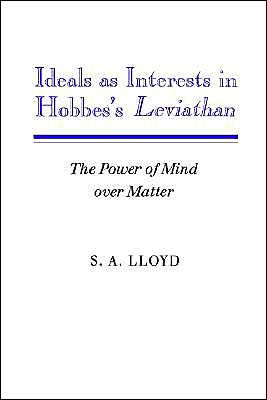
Ideals as Interests Hobbes's Leviathan: The Power of Mind over Matter in Chattanooga, TN
Current price: $125.00
Barnes and Noble
Ideals as Interests Hobbes's Leviathan: The Power of Mind over Matter in Chattanooga, TN
Current price: $125.00
Loading Inventory...
Size: Hardcover
S. A. Lloyd proposes a radically new interpretation of Hobbes's Leviathan that shows transcendent interests--interests that override the fear of death--to be crucial to both Hobbes's analysis of social disorder and his proposed remedy to it. Most previous commentators in the analytic philosophical tradition have argued that Hobbes thought that credible threats of physical force could be sufficient to deter people from political insurrection. Professor Lloyd convincingly shows that because Hobbes took the transcendence of religious and moral interests seriously, he never believed that mere physical force could ensure social order. Lloyd's interpretation demonstrates the ineliminability of that half of Leviathan devoted to religion, and attributes to Hobbes a much more plausible conception of human nature than the narrow psychological egoism traditionally attributed to Hobbes.
S. A. Lloyd proposes a radically new interpretation of Hobbes's Leviathan that shows transcendent interests--interests that override the fear of death--to be crucial to both Hobbes's analysis of social disorder and his proposed remedy to it. Most previous commentators in the analytic philosophical tradition have argued that Hobbes thought that credible threats of physical force could be sufficient to deter people from political insurrection. Professor Lloyd convincingly shows that because Hobbes took the transcendence of religious and moral interests seriously, he never believed that mere physical force could ensure social order. Lloyd's interpretation demonstrates the ineliminability of that half of Leviathan devoted to religion, and attributes to Hobbes a much more plausible conception of human nature than the narrow psychological egoism traditionally attributed to Hobbes.
You May Also Like














More About Barnes and Noble at Hamilton Place
Barnes & Noble is the world’s largest retail bookseller and a leading retailer of content, digital media and educational products. Our Nook Digital business offers a lineup of NOOK® tablets and e-Readers and an expansive collection of digital reading content through the NOOK Store®. Barnes & Noble’s mission is to operate the best omni-channel specialty retail business in America, helping both our customers and booksellers reach their aspirations, while being a credit to the communities we serve.
2100 Hamilton Pl Blvd, Chattanooga, TN 37421, United States
Find Barnes and Noble at Hamilton Place in Chattanooga, TN
Visit Barnes and Noble at Hamilton Place in Chattanooga, TN
