
Home
Hungry and Starving: Voices of the Great Soviet Famine, 1928-1934
Barnes and Noble
Loading Inventory...
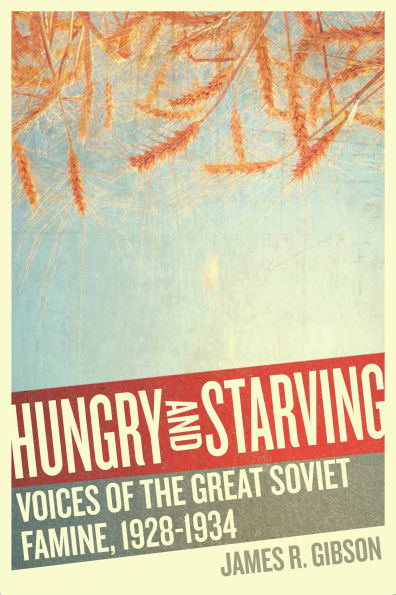
Hungry and Starving: Voices of the Great Soviet Famine, 1928-1934 in Chattanooga, TN
Current price: $49.95
Barnes and Noble
Hungry and Starving: Voices of the Great Soviet Famine, 1928-1934 in Chattanooga, TN
Current price: $49.95
Loading Inventory...
Size: Hardcover
In the wake of Vladimir Lenin’s death in 1924, various protagonists grappled to become his successor, but it was not until 1928 that Joseph Stalin emerged as leader of the Russian Marxists’ Bolshevik wing. Surrounded by an increasingly hostile capitalist world, Stalin reasoned that Soviet Russia had to industrialize in order to survive and prosper. But domestic capital was scarce, so the country’s minerals, timber, and grain were sold abroad for hard currency for funding the development of heavy industry. Claiming total control of agricultural management and production, Stalin implemented the collectivization of farming, consolidating small peasant holdings into large collective farms and controlling their output. The program was economically successful, but it came at a high social cost as the state encountered intense resistance, and between 1928 and 1934 collectivization led to the deaths of at least ten million people from starvation and associated diseases. Hungry and Starving elicits the voices of both the culprits and the victims at the centre of this horrific process. Through primary accounts of collectivization as well as the eyewitness observations of ambassadors, reporters, tourists, fellow travellers, Russian emigrés, tsarist officials, aristocrats, scientists, and technical specialists, James Gibson engages the crucial notions and actors in the academic discourse of the period. He finds that the famine lasted longer than is commonly supposed, that it took place on a national rather than a regional scale, and that while the famine was entirely man-made – the result of the ruthless manner in which collectivization was executed and enforced – it was neither deliberate nor ethnically motivated, given that it was not in the Soviet state’s economic or political interest to engage in genocide. Highlighting the experiences of life and death under Stalin’s ruthless regime, Hungry and Starving offers a broader understanding of the Great Soviet Famine.
In the wake of Vladimir Lenin’s death in 1924, various protagonists grappled to become his successor, but it was not until 1928 that Joseph Stalin emerged as leader of the Russian Marxists’ Bolshevik wing. Surrounded by an increasingly hostile capitalist world, Stalin reasoned that Soviet Russia had to industrialize in order to survive and prosper. But domestic capital was scarce, so the country’s minerals, timber, and grain were sold abroad for hard currency for funding the development of heavy industry. Claiming total control of agricultural management and production, Stalin implemented the collectivization of farming, consolidating small peasant holdings into large collective farms and controlling their output. The program was economically successful, but it came at a high social cost as the state encountered intense resistance, and between 1928 and 1934 collectivization led to the deaths of at least ten million people from starvation and associated diseases. Hungry and Starving elicits the voices of both the culprits and the victims at the centre of this horrific process. Through primary accounts of collectivization as well as the eyewitness observations of ambassadors, reporters, tourists, fellow travellers, Russian emigrés, tsarist officials, aristocrats, scientists, and technical specialists, James Gibson engages the crucial notions and actors in the academic discourse of the period. He finds that the famine lasted longer than is commonly supposed, that it took place on a national rather than a regional scale, and that while the famine was entirely man-made – the result of the ruthless manner in which collectivization was executed and enforced – it was neither deliberate nor ethnically motivated, given that it was not in the Soviet state’s economic or political interest to engage in genocide. Highlighting the experiences of life and death under Stalin’s ruthless regime, Hungry and Starving offers a broader understanding of the Great Soviet Famine.
You May Also Like









More About Barnes and Noble at Hamilton Place
Barnes & Noble is the world’s largest retail bookseller and a leading retailer of content, digital media and educational products. Our Nook Digital business offers a lineup of NOOK® tablets and e-Readers and an expansive collection of digital reading content through the NOOK Store®. Barnes & Noble’s mission is to operate the best omni-channel specialty retail business in America, helping both our customers and booksellers reach their aspirations, while being a credit to the communities we serve.
2100 Hamilton Pl Blvd, Chattanooga, TN 37421, United States
Find Barnes and Noble at Hamilton Place in Chattanooga, TN
Visit Barnes and Noble at Hamilton Place in Chattanooga, TN
