
Home
Humour, subjectivity and world politics: Everyday articulations of identity at the limits order
Barnes and Noble
Loading Inventory...
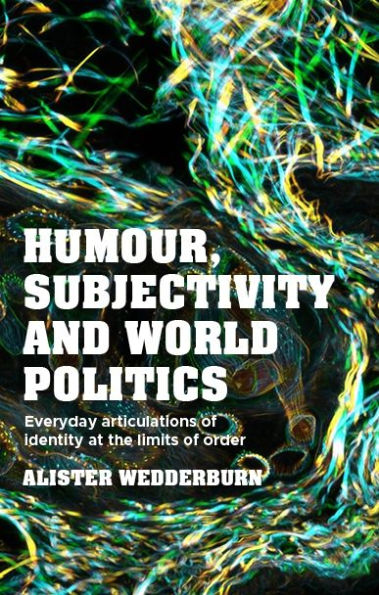
Humour, subjectivity and world politics: Everyday articulations of identity at the limits order in Chattanooga, TN
Current price: $120.00
Barnes and Noble
Humour, subjectivity and world politics: Everyday articulations of identity at the limits order in Chattanooga, TN
Current price: $120.00
Loading Inventory...
Size: Hardcover
Questions about the ethical and political boundaries of comedy, satire, or irony have inspired widespread anxiety in recent years, as with the 2015 shootings at the offices of Charlie Hebdo in Paris, or the so called ‘lockerroom banter’ that defined Donald Trump’s 2016 election campaign. What, then, can a turn to humour offer International Relations?
Drawing on literature across International Relations, literary theory, cultural studies and sociology, Alister Wedderburn argues that humour plays an underappreciated role in the making and unmaking of political subjectivities. The book recovers a historical understanding of humour as a way of making a claim to political subjectivity in the face of its denial. This function, Wedderburn argues, is embodied by the ambiguous figure of the parasite, a stock character of Greek comic drama. The book interrogates three separate sites where political actors have used humour ‘parasitically’ in order to make political claims and demands. In so doing, it not only outlines humour’s political potential and limitations, but also demonstrates how everyday practices can draw from, feed into, interrupt, and potentially transform globalpolitical relations.
Representing the first monographlength study on the politics of humour within International Relations, this book makes a timely contribution to debates about the politics of humour, subjectivity and everyday life.
Drawing on literature across International Relations, literary theory, cultural studies and sociology, Alister Wedderburn argues that humour plays an underappreciated role in the making and unmaking of political subjectivities. The book recovers a historical understanding of humour as a way of making a claim to political subjectivity in the face of its denial. This function, Wedderburn argues, is embodied by the ambiguous figure of the parasite, a stock character of Greek comic drama. The book interrogates three separate sites where political actors have used humour ‘parasitically’ in order to make political claims and demands. In so doing, it not only outlines humour’s political potential and limitations, but also demonstrates how everyday practices can draw from, feed into, interrupt, and potentially transform globalpolitical relations.
Representing the first monographlength study on the politics of humour within International Relations, this book makes a timely contribution to debates about the politics of humour, subjectivity and everyday life.
Questions about the ethical and political boundaries of comedy, satire, or irony have inspired widespread anxiety in recent years, as with the 2015 shootings at the offices of Charlie Hebdo in Paris, or the so called ‘lockerroom banter’ that defined Donald Trump’s 2016 election campaign. What, then, can a turn to humour offer International Relations?
Drawing on literature across International Relations, literary theory, cultural studies and sociology, Alister Wedderburn argues that humour plays an underappreciated role in the making and unmaking of political subjectivities. The book recovers a historical understanding of humour as a way of making a claim to political subjectivity in the face of its denial. This function, Wedderburn argues, is embodied by the ambiguous figure of the parasite, a stock character of Greek comic drama. The book interrogates three separate sites where political actors have used humour ‘parasitically’ in order to make political claims and demands. In so doing, it not only outlines humour’s political potential and limitations, but also demonstrates how everyday practices can draw from, feed into, interrupt, and potentially transform globalpolitical relations.
Representing the first monographlength study on the politics of humour within International Relations, this book makes a timely contribution to debates about the politics of humour, subjectivity and everyday life.
Drawing on literature across International Relations, literary theory, cultural studies and sociology, Alister Wedderburn argues that humour plays an underappreciated role in the making and unmaking of political subjectivities. The book recovers a historical understanding of humour as a way of making a claim to political subjectivity in the face of its denial. This function, Wedderburn argues, is embodied by the ambiguous figure of the parasite, a stock character of Greek comic drama. The book interrogates three separate sites where political actors have used humour ‘parasitically’ in order to make political claims and demands. In so doing, it not only outlines humour’s political potential and limitations, but also demonstrates how everyday practices can draw from, feed into, interrupt, and potentially transform globalpolitical relations.
Representing the first monographlength study on the politics of humour within International Relations, this book makes a timely contribution to debates about the politics of humour, subjectivity and everyday life.
You May Also Like











More About Barnes and Noble at Hamilton Place
Barnes & Noble is the world’s largest retail bookseller and a leading retailer of content, digital media and educational products. Our Nook Digital business offers a lineup of NOOK® tablets and e-Readers and an expansive collection of digital reading content through the NOOK Store®. Barnes & Noble’s mission is to operate the best omni-channel specialty retail business in America, helping both our customers and booksellers reach their aspirations, while being a credit to the communities we serve.
2100 Hamilton Pl Blvd, Chattanooga, TN 37421, United States
Find Barnes and Noble at Hamilton Place in Chattanooga, TN
Visit Barnes and Noble at Hamilton Place in Chattanooga, TN