
Home
Human Cannibalism Volume 5: Swallow the Blood: Ethnic and Cultural Cannibalism in Central America and the Caribbean
Barnes and Noble
Loading Inventory...
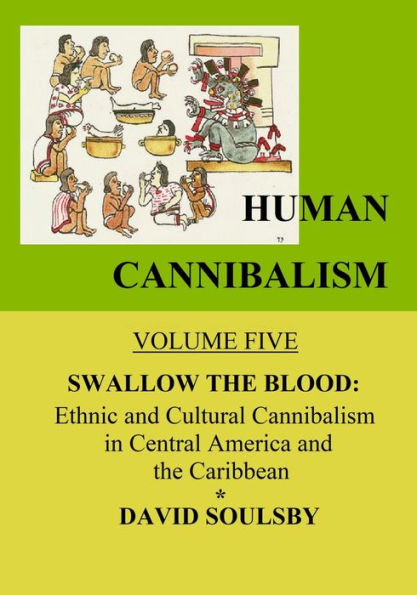
Human Cannibalism Volume 5: Swallow the Blood: Ethnic and Cultural Cannibalism in Central America and the Caribbean in Chattanooga, TN
Current price: $86.92
Barnes and Noble
Human Cannibalism Volume 5: Swallow the Blood: Ethnic and Cultural Cannibalism in Central America and the Caribbean in Chattanooga, TN
Current price: $86.92
Loading Inventory...
Size: OS
The proposed work is a study of ethnic and cultural cannibalism in Central America and the Caribbean from prehistoric times to the present day. This is the fifth volume in a series of books on human cannibalism world-wide. The work includes source material ranging from recent scientific publications and journalism to the older narratives of missionaries, explorers, and anthropologists.An approach of comparative analysis is adopted in which many ethno-historical and scientific sources are presented for comparison. The work is not intended to be strictly academic because primary, secondary, and popular sources are used, but it is intended to be thorough, accessible, and incorporates many interesting human stories. Recent historical and archaeological information is provided to further assist substantiation or refutation of accounts of human cannibalism. This is where it is hoped that the proposed work will differ from, and improve upon what has gone before. By virtue of the ethno-historical record, most information about cannibalism has come from the early modern and modern periods. The challenge has been to find a way of discussing a cultural practice that is odious to Western sensitivities, while paradoxically exerting a lurid attraction over the popular imagination.The work is founded upon scientific controversy over the actual existence or true extent of cannibalism among humans, which really began with publication of 'The Man-Eating Myth' by anthropologist Williams Arens in 1979. Over subsequent years archaeological discoveries have appeared to at least partly refute Arens' claims that stories of man-eating in the ethno-historical record are largely nonsense or fantasy. Debate on the subject among anthropologists has not ended, and incidents of cannibalism continue to occur in some of the world's most intractable trouble-spots. The proposed work predominantly covers beliefs, mythologies, and reports of assumed or actual cannibalistic practices in ethnic groups world-wide. The approach used compares and contrasts evidence to assess the veracity of reports of cannibalism among human societies. Written and verbal ethno-historical accounts (with many quotations) are combined and compared with modern anthropological and archaeological data where this is available. Wherever possible primary sources have been used. The structure of the work is mainly geographical, but there are also sections covering cannibalism in prehistory, from which some of the best evidence has emerged. Sensationalism has been deliberately avoided and no judgments are cast upon peoples reported to be man-eaters. The work simply aims to determine, as far as is possible, whether a particular group were cannibalistic, and if so, why.
The proposed work is a study of ethnic and cultural cannibalism in Central America and the Caribbean from prehistoric times to the present day. This is the fifth volume in a series of books on human cannibalism world-wide. The work includes source material ranging from recent scientific publications and journalism to the older narratives of missionaries, explorers, and anthropologists.An approach of comparative analysis is adopted in which many ethno-historical and scientific sources are presented for comparison. The work is not intended to be strictly academic because primary, secondary, and popular sources are used, but it is intended to be thorough, accessible, and incorporates many interesting human stories. Recent historical and archaeological information is provided to further assist substantiation or refutation of accounts of human cannibalism. This is where it is hoped that the proposed work will differ from, and improve upon what has gone before. By virtue of the ethno-historical record, most information about cannibalism has come from the early modern and modern periods. The challenge has been to find a way of discussing a cultural practice that is odious to Western sensitivities, while paradoxically exerting a lurid attraction over the popular imagination.The work is founded upon scientific controversy over the actual existence or true extent of cannibalism among humans, which really began with publication of 'The Man-Eating Myth' by anthropologist Williams Arens in 1979. Over subsequent years archaeological discoveries have appeared to at least partly refute Arens' claims that stories of man-eating in the ethno-historical record are largely nonsense or fantasy. Debate on the subject among anthropologists has not ended, and incidents of cannibalism continue to occur in some of the world's most intractable trouble-spots. The proposed work predominantly covers beliefs, mythologies, and reports of assumed or actual cannibalistic practices in ethnic groups world-wide. The approach used compares and contrasts evidence to assess the veracity of reports of cannibalism among human societies. Written and verbal ethno-historical accounts (with many quotations) are combined and compared with modern anthropological and archaeological data where this is available. Wherever possible primary sources have been used. The structure of the work is mainly geographical, but there are also sections covering cannibalism in prehistory, from which some of the best evidence has emerged. Sensationalism has been deliberately avoided and no judgments are cast upon peoples reported to be man-eaters. The work simply aims to determine, as far as is possible, whether a particular group were cannibalistic, and if so, why.
You May Also Like










More About Barnes and Noble at Hamilton Place
Barnes & Noble is the world’s largest retail bookseller and a leading retailer of content, digital media and educational products. Our Nook Digital business offers a lineup of NOOK® tablets and e-Readers and an expansive collection of digital reading content through the NOOK Store®. Barnes & Noble’s mission is to operate the best omni-channel specialty retail business in America, helping both our customers and booksellers reach their aspirations, while being a credit to the communities we serve.
2100 Hamilton Pl Blvd, Chattanooga, TN 37421, United States
Find Barnes and Noble at Hamilton Place in Chattanooga, TN
Visit Barnes and Noble at Hamilton Place in Chattanooga, TN
