
Home
How to Solve Our Human Problems, Pts. 1-3
Barnes and Noble
Loading Inventory...
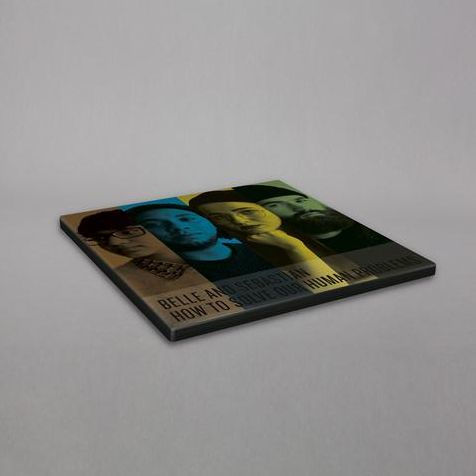
How to Solve Our Human Problems, Pts. 1-3 in Chattanooga, TN
Current price: $57.99
Barnes and Noble
How to Solve Our Human Problems, Pts. 1-3 in Chattanooga, TN
Current price: $57.99
Loading Inventory...
Size: OS
On the eve of launching
Belle and Sebastian
's project
How to Solve Our Human Problems
, leader
Stuart Murdoch
explained his band's decision to release a series of three interlocked EPs instead of a long-player with this: "I think these days when an LP comes out, it's kind of disappointing. Nothing seems to happen, and I thought, 'We've got to do something different.'"
Murdoch
's way to combat the digital grind harks back to
's earliest days, when the group released a series of three EPs between 1996's
If You're Feeling Sinister
and 1998's
The Boy with the Arab Strap
, but those releases were spaced out over the course of 1997, where each of the installments of
arrived in succession in the first months of 2018. Consequently, all three
Human Problems
EPs feel cut from the same cloth, all buzzing to a stylish good vibe pitched halfway between '60s modernism and '70s disco. Since this is a series of five-song EPs,
isn't paced like an LP, which is a benefit. Perhaps there are moments that drift, such as the mellow bachelor pad neo-instrumental "Everything Is Now," but they're designed that way, offering color and texture to music that already had a surplus of both. Like any good EPs, the mild throwaways wind up as endearing as the major items on
, since they keep the 20-plus minutes of music cooking and provide plenty of room for such fetching accents as oboes and analog synths. Taken as a whole piece, though, the striking thing about
is neither the finely honed sense of craft -- evident in both the compositions and sharp production -- nor how the group now excels in churning out a disco epic like the six-minute "Sweet Dew Lee." Rather, it's how
have completely devoted themselves to joy, squeezing out any remnants of melancholy that may have lingered in their music. In an era of darkness and confusion, such defiant positivity feels bracingly radical. ~ Stephen Thomas Erlewine
Belle and Sebastian
's project
How to Solve Our Human Problems
, leader
Stuart Murdoch
explained his band's decision to release a series of three interlocked EPs instead of a long-player with this: "I think these days when an LP comes out, it's kind of disappointing. Nothing seems to happen, and I thought, 'We've got to do something different.'"
Murdoch
's way to combat the digital grind harks back to
's earliest days, when the group released a series of three EPs between 1996's
If You're Feeling Sinister
and 1998's
The Boy with the Arab Strap
, but those releases were spaced out over the course of 1997, where each of the installments of
arrived in succession in the first months of 2018. Consequently, all three
Human Problems
EPs feel cut from the same cloth, all buzzing to a stylish good vibe pitched halfway between '60s modernism and '70s disco. Since this is a series of five-song EPs,
isn't paced like an LP, which is a benefit. Perhaps there are moments that drift, such as the mellow bachelor pad neo-instrumental "Everything Is Now," but they're designed that way, offering color and texture to music that already had a surplus of both. Like any good EPs, the mild throwaways wind up as endearing as the major items on
, since they keep the 20-plus minutes of music cooking and provide plenty of room for such fetching accents as oboes and analog synths. Taken as a whole piece, though, the striking thing about
is neither the finely honed sense of craft -- evident in both the compositions and sharp production -- nor how the group now excels in churning out a disco epic like the six-minute "Sweet Dew Lee." Rather, it's how
have completely devoted themselves to joy, squeezing out any remnants of melancholy that may have lingered in their music. In an era of darkness and confusion, such defiant positivity feels bracingly radical. ~ Stephen Thomas Erlewine
On the eve of launching
Belle and Sebastian
's project
How to Solve Our Human Problems
, leader
Stuart Murdoch
explained his band's decision to release a series of three interlocked EPs instead of a long-player with this: "I think these days when an LP comes out, it's kind of disappointing. Nothing seems to happen, and I thought, 'We've got to do something different.'"
Murdoch
's way to combat the digital grind harks back to
's earliest days, when the group released a series of three EPs between 1996's
If You're Feeling Sinister
and 1998's
The Boy with the Arab Strap
, but those releases were spaced out over the course of 1997, where each of the installments of
arrived in succession in the first months of 2018. Consequently, all three
Human Problems
EPs feel cut from the same cloth, all buzzing to a stylish good vibe pitched halfway between '60s modernism and '70s disco. Since this is a series of five-song EPs,
isn't paced like an LP, which is a benefit. Perhaps there are moments that drift, such as the mellow bachelor pad neo-instrumental "Everything Is Now," but they're designed that way, offering color and texture to music that already had a surplus of both. Like any good EPs, the mild throwaways wind up as endearing as the major items on
, since they keep the 20-plus minutes of music cooking and provide plenty of room for such fetching accents as oboes and analog synths. Taken as a whole piece, though, the striking thing about
is neither the finely honed sense of craft -- evident in both the compositions and sharp production -- nor how the group now excels in churning out a disco epic like the six-minute "Sweet Dew Lee." Rather, it's how
have completely devoted themselves to joy, squeezing out any remnants of melancholy that may have lingered in their music. In an era of darkness and confusion, such defiant positivity feels bracingly radical. ~ Stephen Thomas Erlewine
Belle and Sebastian
's project
How to Solve Our Human Problems
, leader
Stuart Murdoch
explained his band's decision to release a series of three interlocked EPs instead of a long-player with this: "I think these days when an LP comes out, it's kind of disappointing. Nothing seems to happen, and I thought, 'We've got to do something different.'"
Murdoch
's way to combat the digital grind harks back to
's earliest days, when the group released a series of three EPs between 1996's
If You're Feeling Sinister
and 1998's
The Boy with the Arab Strap
, but those releases were spaced out over the course of 1997, where each of the installments of
arrived in succession in the first months of 2018. Consequently, all three
Human Problems
EPs feel cut from the same cloth, all buzzing to a stylish good vibe pitched halfway between '60s modernism and '70s disco. Since this is a series of five-song EPs,
isn't paced like an LP, which is a benefit. Perhaps there are moments that drift, such as the mellow bachelor pad neo-instrumental "Everything Is Now," but they're designed that way, offering color and texture to music that already had a surplus of both. Like any good EPs, the mild throwaways wind up as endearing as the major items on
, since they keep the 20-plus minutes of music cooking and provide plenty of room for such fetching accents as oboes and analog synths. Taken as a whole piece, though, the striking thing about
is neither the finely honed sense of craft -- evident in both the compositions and sharp production -- nor how the group now excels in churning out a disco epic like the six-minute "Sweet Dew Lee." Rather, it's how
have completely devoted themselves to joy, squeezing out any remnants of melancholy that may have lingered in their music. In an era of darkness and confusion, such defiant positivity feels bracingly radical. ~ Stephen Thomas Erlewine
You May Also Like












More About Barnes and Noble at Hamilton Place
Barnes & Noble is the world’s largest retail bookseller and a leading retailer of content, digital media and educational products. Our Nook Digital business offers a lineup of NOOK® tablets and e-Readers and an expansive collection of digital reading content through the NOOK Store®. Barnes & Noble’s mission is to operate the best omni-channel specialty retail business in America, helping both our customers and booksellers reach their aspirations, while being a credit to the communities we serve.
2100 Hamilton Pl Blvd, Chattanooga, TN 37421, United States
Find Barnes and Noble at Hamilton Place in Chattanooga, TN
Visit Barnes and Noble at Hamilton Place in Chattanooga, TN
