
Home
Horizons in Neuroscience Research. Volume 51
Barnes and Noble
Loading Inventory...
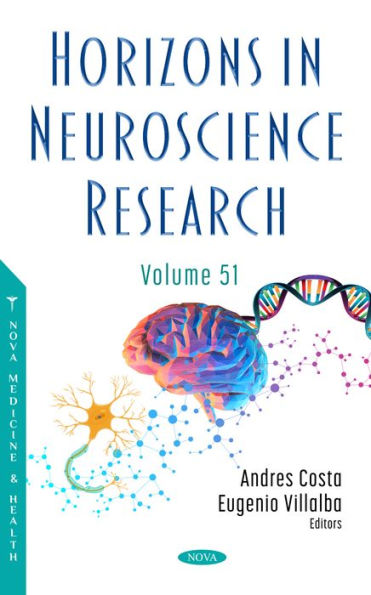
Horizons in Neuroscience Research. Volume 51 in Chattanooga, TN
Current price: $250.00
Barnes and Noble
Horizons in Neuroscience Research. Volume 51 in Chattanooga, TN
Current price: $250.00
Loading Inventory...
Size: OS
This volume consists of twelve chapters that detail the latest neuroscience research. Chapter one examines shunt fluid as a diagnostic procedure to evaluate ventriculoperitoneal shunt malfunction and infection. Chapter two investigates the effects of lycopene on neurodegenerative diseases. The purpose of chapter three is to diagnose the state of small vesicles in the paralyzed arm of the probant and try to find a way to activate them. The objective of chapter four is to compare the density and distribution of the ‘signature’ pathological lesions in the hippocampus and adjacent PHG in fourteen neurodegenerative disorders using a standardized quantitative protocol. Chapter five investigates the effects of electrical stimulation (ES) applied to the lateral cerebellar nucleus (LCN) in rats with early and fully developed pentylenetetrazol (PTZ)-kindled seizures. Chapter six provides a review on Down’s Syndrome. Chapter seven summarizes current knowledge on P2X receptor activation, focusing on the mechanisms underlying ATP binding, conformational changes in the extracellular domain, and channel gating and desensitization. Chapter eight highlights the need for balanced, ethical, and patient-centered approaches in the evolving landscape of ADHD treatment. Chapter nine hones in on historical discoveries derived and expanded from the Xenopus frogs and tadpoles as a model organism, explores the intricate processes underpinning neural circuit formation and focuses on insights gleaned from the developing tadpole visual system.
This volume consists of twelve chapters that detail the latest neuroscience research. Chapter one examines shunt fluid as a diagnostic procedure to evaluate ventriculoperitoneal shunt malfunction and infection. Chapter two investigates the effects of lycopene on neurodegenerative diseases. The purpose of chapter three is to diagnose the state of small vesicles in the paralyzed arm of the probant and try to find a way to activate them. The objective of chapter four is to compare the density and distribution of the ‘signature’ pathological lesions in the hippocampus and adjacent PHG in fourteen neurodegenerative disorders using a standardized quantitative protocol. Chapter five investigates the effects of electrical stimulation (ES) applied to the lateral cerebellar nucleus (LCN) in rats with early and fully developed pentylenetetrazol (PTZ)-kindled seizures. Chapter six provides a review on Down’s Syndrome. Chapter seven summarizes current knowledge on P2X receptor activation, focusing on the mechanisms underlying ATP binding, conformational changes in the extracellular domain, and channel gating and desensitization. Chapter eight highlights the need for balanced, ethical, and patient-centered approaches in the evolving landscape of ADHD treatment. Chapter nine hones in on historical discoveries derived and expanded from the Xenopus frogs and tadpoles as a model organism, explores the intricate processes underpinning neural circuit formation and focuses on insights gleaned from the developing tadpole visual system.
You May Also Like












More About Barnes and Noble at Hamilton Place
Barnes & Noble is the world’s largest retail bookseller and a leading retailer of content, digital media and educational products. Our Nook Digital business offers a lineup of NOOK® tablets and e-Readers and an expansive collection of digital reading content through the NOOK Store®. Barnes & Noble’s mission is to operate the best omni-channel specialty retail business in America, helping both our customers and booksellers reach their aspirations, while being a credit to the communities we serve.
2100 Hamilton Pl Blvd, Chattanooga, TN 37421, United States
Find Barnes and Noble at Hamilton Place in Chattanooga, TN
Visit Barnes and Noble at Hamilton Place in Chattanooga, TN
