
Home
Hitler's War Against the Partisans During Stalingrad Offensive: Spring 1942 to of 1943
Barnes and Noble
Loading Inventory...
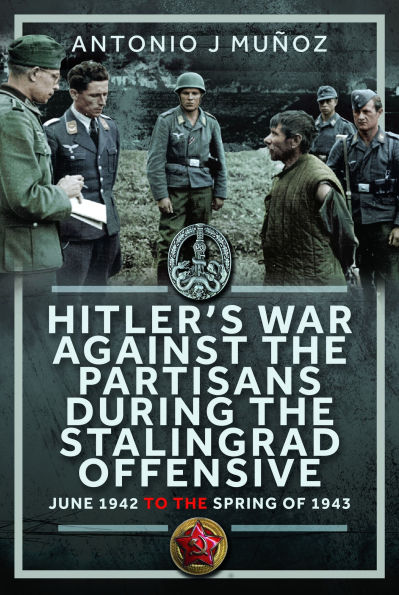
Hitler's War Against the Partisans During Stalingrad Offensive: Spring 1942 to of 1943 in Chattanooga, TN
Current price: $42.95
Barnes and Noble
Hitler's War Against the Partisans During Stalingrad Offensive: Spring 1942 to of 1943 in Chattanooga, TN
Current price: $42.95
Loading Inventory...
Size: Hardcover
Explores the brutal and widespread partisan warfare on the Eastern Front during 19421943, detailing the Axis forces' antipartisan efforts and the impact on the Soviet war effort.
From the start of the war on the Eastern Front, Hitler’s Ostheer, his Eastern Army, and its associated forces would wage a vernichtungskrieg, or war of annihilation, in the East. Never before had such a widereaching campaign been fought.
The preparations for the war against the partisans began before the launch of Operation Barbarossa, during which the Axis forces immediately put their plans into effect. The effects upon the newly conquered territories were soon being felt.
The end of the initial phase of the German invasion of the Soviet Union was met by a Red Army winter offensive which began on 5 December 1941. As the author shows, this had repercussions behind the German lines, where the nascent Soviet partisan movement was attempting to grow and gain a foothold. By the spring of 1942 those early Soviet partisan units were ready to expand. The Germans, aware of the military situation both on the frontlines and in the rear of their armies, also prepared to counter the growing partisan threat. The partisans undoubtedly made a significant contribution to Stalin’s war effort by countering Axis plans to exploit occupied Soviet territories economically, as well as providing valuable assistance to the Red Army by conducting systematic attacks against Hitler's rear communication network.
As the German military planned to continue the Russian campaign into the summer of 1942, new security forces were gathered together and sent to the Soviet Union, and a new headquarters specifically organized to fight the guerrilla menace, was established. In this followup study, author Antonio Muñoz picks up the partisan and antipartisan struggle in the East, where Hitler’s War Against the Partisans During Operation Barbarossa left off.
The struggle behind the frontlines in Russia proved to be as grand and epic as the fight along the front lines. Dr. Muñoz describes this war of attrition along the entire breath of the USSR. In 1942 the Ostheer, acting on Adolf Hitler’s orders, launched their 1942 summer offensive which was aimed at capturing the Caucasus Mountains and the Russian oil fields that lay there.
Dr. Muñoz not only covers the war behind the lines in every region of the occupied USSR, but also describes the German antipartisan effort behind the lines of Army Group South, as its forces drove into the Caucasus Mountains, the Volga River bend and Stalingrad. No other work has included the guerrilla and antipartisan struggle specific to the Stalingrad campaign. Muñoz manages to accomplish this, but also to convey the story of the rest of the partisan and antiguerrilla war in the rest of the USSR from the spring of 1942 to the spring of 1943.
From the start of the war on the Eastern Front, Hitler’s Ostheer, his Eastern Army, and its associated forces would wage a vernichtungskrieg, or war of annihilation, in the East. Never before had such a widereaching campaign been fought.
The preparations for the war against the partisans began before the launch of Operation Barbarossa, during which the Axis forces immediately put their plans into effect. The effects upon the newly conquered territories were soon being felt.
The end of the initial phase of the German invasion of the Soviet Union was met by a Red Army winter offensive which began on 5 December 1941. As the author shows, this had repercussions behind the German lines, where the nascent Soviet partisan movement was attempting to grow and gain a foothold. By the spring of 1942 those early Soviet partisan units were ready to expand. The Germans, aware of the military situation both on the frontlines and in the rear of their armies, also prepared to counter the growing partisan threat. The partisans undoubtedly made a significant contribution to Stalin’s war effort by countering Axis plans to exploit occupied Soviet territories economically, as well as providing valuable assistance to the Red Army by conducting systematic attacks against Hitler's rear communication network.
As the German military planned to continue the Russian campaign into the summer of 1942, new security forces were gathered together and sent to the Soviet Union, and a new headquarters specifically organized to fight the guerrilla menace, was established. In this followup study, author Antonio Muñoz picks up the partisan and antipartisan struggle in the East, where Hitler’s War Against the Partisans During Operation Barbarossa left off.
The struggle behind the frontlines in Russia proved to be as grand and epic as the fight along the front lines. Dr. Muñoz describes this war of attrition along the entire breath of the USSR. In 1942 the Ostheer, acting on Adolf Hitler’s orders, launched their 1942 summer offensive which was aimed at capturing the Caucasus Mountains and the Russian oil fields that lay there.
Dr. Muñoz not only covers the war behind the lines in every region of the occupied USSR, but also describes the German antipartisan effort behind the lines of Army Group South, as its forces drove into the Caucasus Mountains, the Volga River bend and Stalingrad. No other work has included the guerrilla and antipartisan struggle specific to the Stalingrad campaign. Muñoz manages to accomplish this, but also to convey the story of the rest of the partisan and antiguerrilla war in the rest of the USSR from the spring of 1942 to the spring of 1943.
Explores the brutal and widespread partisan warfare on the Eastern Front during 19421943, detailing the Axis forces' antipartisan efforts and the impact on the Soviet war effort.
From the start of the war on the Eastern Front, Hitler’s Ostheer, his Eastern Army, and its associated forces would wage a vernichtungskrieg, or war of annihilation, in the East. Never before had such a widereaching campaign been fought.
The preparations for the war against the partisans began before the launch of Operation Barbarossa, during which the Axis forces immediately put their plans into effect. The effects upon the newly conquered territories were soon being felt.
The end of the initial phase of the German invasion of the Soviet Union was met by a Red Army winter offensive which began on 5 December 1941. As the author shows, this had repercussions behind the German lines, where the nascent Soviet partisan movement was attempting to grow and gain a foothold. By the spring of 1942 those early Soviet partisan units were ready to expand. The Germans, aware of the military situation both on the frontlines and in the rear of their armies, also prepared to counter the growing partisan threat. The partisans undoubtedly made a significant contribution to Stalin’s war effort by countering Axis plans to exploit occupied Soviet territories economically, as well as providing valuable assistance to the Red Army by conducting systematic attacks against Hitler's rear communication network.
As the German military planned to continue the Russian campaign into the summer of 1942, new security forces were gathered together and sent to the Soviet Union, and a new headquarters specifically organized to fight the guerrilla menace, was established. In this followup study, author Antonio Muñoz picks up the partisan and antipartisan struggle in the East, where Hitler’s War Against the Partisans During Operation Barbarossa left off.
The struggle behind the frontlines in Russia proved to be as grand and epic as the fight along the front lines. Dr. Muñoz describes this war of attrition along the entire breath of the USSR. In 1942 the Ostheer, acting on Adolf Hitler’s orders, launched their 1942 summer offensive which was aimed at capturing the Caucasus Mountains and the Russian oil fields that lay there.
Dr. Muñoz not only covers the war behind the lines in every region of the occupied USSR, but also describes the German antipartisan effort behind the lines of Army Group South, as its forces drove into the Caucasus Mountains, the Volga River bend and Stalingrad. No other work has included the guerrilla and antipartisan struggle specific to the Stalingrad campaign. Muñoz manages to accomplish this, but also to convey the story of the rest of the partisan and antiguerrilla war in the rest of the USSR from the spring of 1942 to the spring of 1943.
From the start of the war on the Eastern Front, Hitler’s Ostheer, his Eastern Army, and its associated forces would wage a vernichtungskrieg, or war of annihilation, in the East. Never before had such a widereaching campaign been fought.
The preparations for the war against the partisans began before the launch of Operation Barbarossa, during which the Axis forces immediately put their plans into effect. The effects upon the newly conquered territories were soon being felt.
The end of the initial phase of the German invasion of the Soviet Union was met by a Red Army winter offensive which began on 5 December 1941. As the author shows, this had repercussions behind the German lines, where the nascent Soviet partisan movement was attempting to grow and gain a foothold. By the spring of 1942 those early Soviet partisan units were ready to expand. The Germans, aware of the military situation both on the frontlines and in the rear of their armies, also prepared to counter the growing partisan threat. The partisans undoubtedly made a significant contribution to Stalin’s war effort by countering Axis plans to exploit occupied Soviet territories economically, as well as providing valuable assistance to the Red Army by conducting systematic attacks against Hitler's rear communication network.
As the German military planned to continue the Russian campaign into the summer of 1942, new security forces were gathered together and sent to the Soviet Union, and a new headquarters specifically organized to fight the guerrilla menace, was established. In this followup study, author Antonio Muñoz picks up the partisan and antipartisan struggle in the East, where Hitler’s War Against the Partisans During Operation Barbarossa left off.
The struggle behind the frontlines in Russia proved to be as grand and epic as the fight along the front lines. Dr. Muñoz describes this war of attrition along the entire breath of the USSR. In 1942 the Ostheer, acting on Adolf Hitler’s orders, launched their 1942 summer offensive which was aimed at capturing the Caucasus Mountains and the Russian oil fields that lay there.
Dr. Muñoz not only covers the war behind the lines in every region of the occupied USSR, but also describes the German antipartisan effort behind the lines of Army Group South, as its forces drove into the Caucasus Mountains, the Volga River bend and Stalingrad. No other work has included the guerrilla and antipartisan struggle specific to the Stalingrad campaign. Muñoz manages to accomplish this, but also to convey the story of the rest of the partisan and antiguerrilla war in the rest of the USSR from the spring of 1942 to the spring of 1943.
You May Also Like















More About Barnes and Noble at Hamilton Place
Barnes & Noble is the world’s largest retail bookseller and a leading retailer of content, digital media and educational products. Our Nook Digital business offers a lineup of NOOK® tablets and e-Readers and an expansive collection of digital reading content through the NOOK Store®. Barnes & Noble’s mission is to operate the best omni-channel specialty retail business in America, helping both our customers and booksellers reach their aspirations, while being a credit to the communities we serve.
2100 Hamilton Pl Blvd, Chattanooga, TN 37421, United States
Find Barnes and Noble at Hamilton Place in Chattanooga, TN
Visit Barnes and Noble at Hamilton Place in Chattanooga, TN
