
Home
Hitler and America
Barnes and Noble
Loading Inventory...
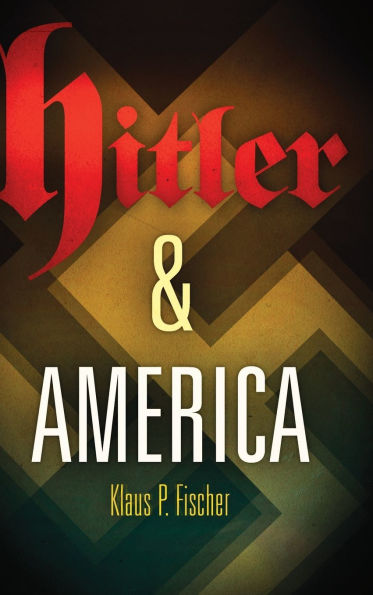
Hitler and America in Chattanooga, TN
Current price: $75.00
Barnes and Noble
Hitler and America in Chattanooga, TN
Current price: $75.00
Loading Inventory...
Size: Hardcover
In February 1942, barely two months after he had declared war on the United States, Adolf Hitler praised America's great industrial achievements and admitted that Germany would need some time to catch up. The Americans, he said, had shown the way in developing the most efficient methods of production—especially in iron and coal, which formed the basis of modern industrial civilization. He also touted America's superiority in the field of transportation, particularly the automobile. He loved automobiles and saw in Henry Ford a great hero of the industrial age. Hitler's personal train was even code-named "Amerika."
In
Hitler and America
, historian Klaus P. Fischer seeks to understand more deeply how Hitler viewed America, the nation that was central to Germany's defeat. He reveals Hitler's split-minded image of America:
America
and
Amerika
. Hitler would loudly call the United States a feeble country while at the same time referring to it as an industrial colossus worthy of imitation. Or he would belittle America in the vilest terms while at the same time looking at the latest photos from the United States, watching American films, and amusing himself with Mickey Mouse cartoons. America was a place that Hitler admired—for the can-do spirit of the American people, which he attributed to their Nordic blood—and envied—for its enormous territorial size, abundant resources, and political power.
, however, was to Hitler a mongrel nation, grown too rich too soon and governed by a capitalist elite with strong ties to the Jews.
Across the Atlantic, President Franklin Delano Roosevelt had his own, far more realistically grounded views of Hitler. Fischer contrasts these with the misconceptions and misunderstandings that caused Hitler, in the end, to see only Amerika, not America, and led to his defeat.
In
Hitler and America
, historian Klaus P. Fischer seeks to understand more deeply how Hitler viewed America, the nation that was central to Germany's defeat. He reveals Hitler's split-minded image of America:
America
and
Amerika
. Hitler would loudly call the United States a feeble country while at the same time referring to it as an industrial colossus worthy of imitation. Or he would belittle America in the vilest terms while at the same time looking at the latest photos from the United States, watching American films, and amusing himself with Mickey Mouse cartoons. America was a place that Hitler admired—for the can-do spirit of the American people, which he attributed to their Nordic blood—and envied—for its enormous territorial size, abundant resources, and political power.
, however, was to Hitler a mongrel nation, grown too rich too soon and governed by a capitalist elite with strong ties to the Jews.
Across the Atlantic, President Franklin Delano Roosevelt had his own, far more realistically grounded views of Hitler. Fischer contrasts these with the misconceptions and misunderstandings that caused Hitler, in the end, to see only Amerika, not America, and led to his defeat.
In February 1942, barely two months after he had declared war on the United States, Adolf Hitler praised America's great industrial achievements and admitted that Germany would need some time to catch up. The Americans, he said, had shown the way in developing the most efficient methods of production—especially in iron and coal, which formed the basis of modern industrial civilization. He also touted America's superiority in the field of transportation, particularly the automobile. He loved automobiles and saw in Henry Ford a great hero of the industrial age. Hitler's personal train was even code-named "Amerika."
In
Hitler and America
, historian Klaus P. Fischer seeks to understand more deeply how Hitler viewed America, the nation that was central to Germany's defeat. He reveals Hitler's split-minded image of America:
America
and
Amerika
. Hitler would loudly call the United States a feeble country while at the same time referring to it as an industrial colossus worthy of imitation. Or he would belittle America in the vilest terms while at the same time looking at the latest photos from the United States, watching American films, and amusing himself with Mickey Mouse cartoons. America was a place that Hitler admired—for the can-do spirit of the American people, which he attributed to their Nordic blood—and envied—for its enormous territorial size, abundant resources, and political power.
, however, was to Hitler a mongrel nation, grown too rich too soon and governed by a capitalist elite with strong ties to the Jews.
Across the Atlantic, President Franklin Delano Roosevelt had his own, far more realistically grounded views of Hitler. Fischer contrasts these with the misconceptions and misunderstandings that caused Hitler, in the end, to see only Amerika, not America, and led to his defeat.
In
Hitler and America
, historian Klaus P. Fischer seeks to understand more deeply how Hitler viewed America, the nation that was central to Germany's defeat. He reveals Hitler's split-minded image of America:
America
and
Amerika
. Hitler would loudly call the United States a feeble country while at the same time referring to it as an industrial colossus worthy of imitation. Or he would belittle America in the vilest terms while at the same time looking at the latest photos from the United States, watching American films, and amusing himself with Mickey Mouse cartoons. America was a place that Hitler admired—for the can-do spirit of the American people, which he attributed to their Nordic blood—and envied—for its enormous territorial size, abundant resources, and political power.
, however, was to Hitler a mongrel nation, grown too rich too soon and governed by a capitalist elite with strong ties to the Jews.
Across the Atlantic, President Franklin Delano Roosevelt had his own, far more realistically grounded views of Hitler. Fischer contrasts these with the misconceptions and misunderstandings that caused Hitler, in the end, to see only Amerika, not America, and led to his defeat.
You May Also Like














More About Barnes and Noble at Hamilton Place
Barnes & Noble is the world’s largest retail bookseller and a leading retailer of content, digital media and educational products. Our Nook Digital business offers a lineup of NOOK® tablets and e-Readers and an expansive collection of digital reading content through the NOOK Store®. Barnes & Noble’s mission is to operate the best omni-channel specialty retail business in America, helping both our customers and booksellers reach their aspirations, while being a credit to the communities we serve.
2100 Hamilton Pl Blvd, Chattanooga, TN 37421, United States
Find Barnes and Noble at Hamilton Place in Chattanooga, TN
Visit Barnes and Noble at Hamilton Place in Chattanooga, TN
