
Home
Histories of Everyday Life: The Making Popular Social History Britain, 1918-1979
Barnes and Noble
Loading Inventory...
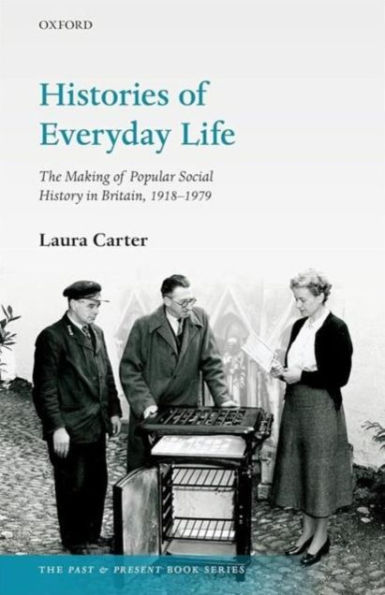
Histories of Everyday Life: The Making Popular Social History Britain, 1918-1979 in Chattanooga, TN
Current price: $110.00
Barnes and Noble
Histories of Everyday Life: The Making Popular Social History Britain, 1918-1979 in Chattanooga, TN
Current price: $110.00
Loading Inventory...
Size: Hardcover
Histories of Everyday Life
is a study of the production and consumption of popular social history in mid-twentieth century Britain. It explores how non-academic historians, many of them women, developed a new breed of social history after the First World War, identified as the 'history of everyday life'. The 'history of everyday life' was a pedagogical construct based on the perceived educational needs of the new, mass democracy that emerged after 1918. It was popularized to ordinary people in educational settings, through books, in classrooms and museums, and on BBC radio. After tracing its development and dissemination between the 1920s and the 1960s, this book argues that 'history of everyday life' declined in the 1970s not because academics invented an alternative 'new' social history, but because bottom-up social change rendered this form of popular social history untenable in the changing context of mass education.
ultimately uses the subject of history to demonstrate how profoundly the advent of mass education shaped popular culture in Britain after 1918, arguing that we should see the twentieth century as Britain's educational century.
is a study of the production and consumption of popular social history in mid-twentieth century Britain. It explores how non-academic historians, many of them women, developed a new breed of social history after the First World War, identified as the 'history of everyday life'. The 'history of everyday life' was a pedagogical construct based on the perceived educational needs of the new, mass democracy that emerged after 1918. It was popularized to ordinary people in educational settings, through books, in classrooms and museums, and on BBC radio. After tracing its development and dissemination between the 1920s and the 1960s, this book argues that 'history of everyday life' declined in the 1970s not because academics invented an alternative 'new' social history, but because bottom-up social change rendered this form of popular social history untenable in the changing context of mass education.
ultimately uses the subject of history to demonstrate how profoundly the advent of mass education shaped popular culture in Britain after 1918, arguing that we should see the twentieth century as Britain's educational century.
Histories of Everyday Life
is a study of the production and consumption of popular social history in mid-twentieth century Britain. It explores how non-academic historians, many of them women, developed a new breed of social history after the First World War, identified as the 'history of everyday life'. The 'history of everyday life' was a pedagogical construct based on the perceived educational needs of the new, mass democracy that emerged after 1918. It was popularized to ordinary people in educational settings, through books, in classrooms and museums, and on BBC radio. After tracing its development and dissemination between the 1920s and the 1960s, this book argues that 'history of everyday life' declined in the 1970s not because academics invented an alternative 'new' social history, but because bottom-up social change rendered this form of popular social history untenable in the changing context of mass education.
ultimately uses the subject of history to demonstrate how profoundly the advent of mass education shaped popular culture in Britain after 1918, arguing that we should see the twentieth century as Britain's educational century.
is a study of the production and consumption of popular social history in mid-twentieth century Britain. It explores how non-academic historians, many of them women, developed a new breed of social history after the First World War, identified as the 'history of everyday life'. The 'history of everyday life' was a pedagogical construct based on the perceived educational needs of the new, mass democracy that emerged after 1918. It was popularized to ordinary people in educational settings, through books, in classrooms and museums, and on BBC radio. After tracing its development and dissemination between the 1920s and the 1960s, this book argues that 'history of everyday life' declined in the 1970s not because academics invented an alternative 'new' social history, but because bottom-up social change rendered this form of popular social history untenable in the changing context of mass education.
ultimately uses the subject of history to demonstrate how profoundly the advent of mass education shaped popular culture in Britain after 1918, arguing that we should see the twentieth century as Britain's educational century.
You May Also Like











More About Barnes and Noble at Hamilton Place
Barnes & Noble is the world’s largest retail bookseller and a leading retailer of content, digital media and educational products. Our Nook Digital business offers a lineup of NOOK® tablets and e-Readers and an expansive collection of digital reading content through the NOOK Store®. Barnes & Noble’s mission is to operate the best omni-channel specialty retail business in America, helping both our customers and booksellers reach their aspirations, while being a credit to the communities we serve.
2100 Hamilton Pl Blvd, Chattanooga, TN 37421, United States
Find Barnes and Noble at Hamilton Place in Chattanooga, TN
Visit Barnes and Noble at Hamilton Place in Chattanooga, TN
