
Home
Historical Archaeologies of Nineteenth-Century Colonial Tanzania: A Comparative Study
Barnes and Noble
Loading Inventory...
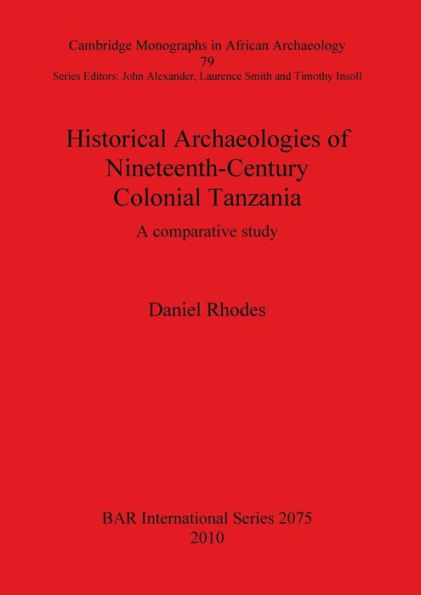
Historical Archaeologies of Nineteenth-Century Colonial Tanzania: A Comparative Study in Chattanooga, TN
Current price: $127.50
Barnes and Noble
Historical Archaeologies of Nineteenth-Century Colonial Tanzania: A Comparative Study in Chattanooga, TN
Current price: $127.50
Loading Inventory...
Size: OS
By conducting a study of archaeology and the built environment within an East African context, this monograph aims to actively promote the conservation of culturally important and endangered environments, and to use archaeology to address fundamental questions of identity within the process of colonialism in East Africa in the nineteenth century. Through a comparison of material remains the study places an emphasis upon Tanzania with comparative analyses drawn from Kenya and in so doing it is proposed that methods of colonial subjugation through landscape and seascape use can be better understood. The work aims to offer an essential insight into the origins of contemporary East African identities and address questions of ideological intent versus practice on the part of colonial powers. By concentrating primarily upon the Tanzanian towns of Tanga, Pangani, Bagamoyo, Dar es Salaam, Chole, Kilwa Kivinje and comparing these to the Kenyan town of Mombasa it is intended that a better understanding of the nineteenth-century colonial experience and its legacy can be achieved. The research adopts a landscape approach, which takes as its lead the interaction between humans and the non-human environment, as well as assessing the development of architecture and town morphology. The study furthers the development of archaeology within the maritime sphere by approaching the physical remains of maritime peoples with regard to their position in the wider landscape and seascape. It also addresses the implications of colonial involvements in the activities of indigenous peoples and the global implications of trade and development of East African states and identities. From a theoretical perspective this research develops further the growing awareness of the important relationship between those periods and practices considered 'historical' and those 'archaeological'. By embracing the multivocality of both and looking more deeply at the context and environment in which different sources are manufactured, the project not only develops further understandings of the East African colonial periods but also adds to the growing development of interdisciplinerary archaeo-historic research.
By conducting a study of archaeology and the built environment within an East African context, this monograph aims to actively promote the conservation of culturally important and endangered environments, and to use archaeology to address fundamental questions of identity within the process of colonialism in East Africa in the nineteenth century. Through a comparison of material remains the study places an emphasis upon Tanzania with comparative analyses drawn from Kenya and in so doing it is proposed that methods of colonial subjugation through landscape and seascape use can be better understood. The work aims to offer an essential insight into the origins of contemporary East African identities and address questions of ideological intent versus practice on the part of colonial powers. By concentrating primarily upon the Tanzanian towns of Tanga, Pangani, Bagamoyo, Dar es Salaam, Chole, Kilwa Kivinje and comparing these to the Kenyan town of Mombasa it is intended that a better understanding of the nineteenth-century colonial experience and its legacy can be achieved. The research adopts a landscape approach, which takes as its lead the interaction between humans and the non-human environment, as well as assessing the development of architecture and town morphology. The study furthers the development of archaeology within the maritime sphere by approaching the physical remains of maritime peoples with regard to their position in the wider landscape and seascape. It also addresses the implications of colonial involvements in the activities of indigenous peoples and the global implications of trade and development of East African states and identities. From a theoretical perspective this research develops further the growing awareness of the important relationship between those periods and practices considered 'historical' and those 'archaeological'. By embracing the multivocality of both and looking more deeply at the context and environment in which different sources are manufactured, the project not only develops further understandings of the East African colonial periods but also adds to the growing development of interdisciplinerary archaeo-historic research.
You May Also Like













More About Barnes and Noble at Hamilton Place
Barnes & Noble is the world’s largest retail bookseller and a leading retailer of content, digital media and educational products. Our Nook Digital business offers a lineup of NOOK® tablets and e-Readers and an expansive collection of digital reading content through the NOOK Store®. Barnes & Noble’s mission is to operate the best omni-channel specialty retail business in America, helping both our customers and booksellers reach their aspirations, while being a credit to the communities we serve.
2100 Hamilton Pl Blvd, Chattanooga, TN 37421, United States
Find Barnes and Noble at Hamilton Place in Chattanooga, TN
Visit Barnes and Noble at Hamilton Place in Chattanooga, TN
