
Home
His Spear Through My Side into Luther: Calvin's Relationship to Luther's Doctrine of the Will
Barnes and Noble
Loading Inventory...
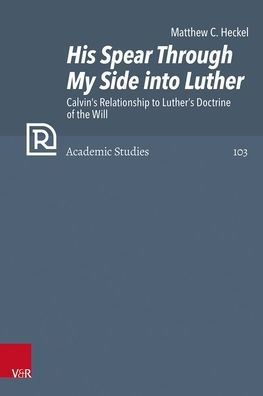
His Spear Through My Side into Luther: Calvin's Relationship to Luther's Doctrine of the Will in Chattanooga, TN
Current price: $150.00
Barnes and Noble
His Spear Through My Side into Luther: Calvin's Relationship to Luther's Doctrine of the Will in Chattanooga, TN
Current price: $150.00
Loading Inventory...
Size: OS
In the Bondage and Liberation of the Will, Calvin claimed full agreement with Luther's doctrine of the unfree will and divine necessity. Some scholars argue however that Calvin was trying to create the appearance of unity and was embarrassed by Luther's teaching. They have also denied any substantial influence from Luther. Others argue that the Reformers discontinued their teaching on necessity in the face of criticism. Matthew Heckel defends Calvin's claim to unity with Luther and that Luther had a formative influence on Calvin. The latter can be seen in the fact that Calvin followed uniquely Lutheran contributions like the denial of free choice as a misleading term, free choice only in what is under human dominion, contingency defined as chance, divine omnipotence as the actuating force of divine necessity, and the distinctions between the hidden and revealed God and law and gospel. Despite what some interpreters have said, both Reformers affirmed necessity because of sin and divine sovereignty throughout their careers. Though the Reformers believed in divine necessity, they were careful to say that God was not the author of sin either before or after the fall of humankind. While Luther and Calvin agreed on necessity imposed by sin and divine sovereignty, they affirmed that the human will is always voluntary and thus responsible for its actions. Concerning predestination, they taught its double nature respecting the elect and the reprobate, while consoling believers by pointing them to grace alone in Christ-the revealed God-and God's preservation of the elect. Differences between the Reformers are noted but true solidarity existed on the will.
In the Bondage and Liberation of the Will, Calvin claimed full agreement with Luther's doctrine of the unfree will and divine necessity. Some scholars argue however that Calvin was trying to create the appearance of unity and was embarrassed by Luther's teaching. They have also denied any substantial influence from Luther. Others argue that the Reformers discontinued their teaching on necessity in the face of criticism. Matthew Heckel defends Calvin's claim to unity with Luther and that Luther had a formative influence on Calvin. The latter can be seen in the fact that Calvin followed uniquely Lutheran contributions like the denial of free choice as a misleading term, free choice only in what is under human dominion, contingency defined as chance, divine omnipotence as the actuating force of divine necessity, and the distinctions between the hidden and revealed God and law and gospel. Despite what some interpreters have said, both Reformers affirmed necessity because of sin and divine sovereignty throughout their careers. Though the Reformers believed in divine necessity, they were careful to say that God was not the author of sin either before or after the fall of humankind. While Luther and Calvin agreed on necessity imposed by sin and divine sovereignty, they affirmed that the human will is always voluntary and thus responsible for its actions. Concerning predestination, they taught its double nature respecting the elect and the reprobate, while consoling believers by pointing them to grace alone in Christ-the revealed God-and God's preservation of the elect. Differences between the Reformers are noted but true solidarity existed on the will.
You May Also Like


















More About Barnes and Noble at Hamilton Place
Barnes & Noble is the world’s largest retail bookseller and a leading retailer of content, digital media and educational products. Our Nook Digital business offers a lineup of NOOK® tablets and e-Readers and an expansive collection of digital reading content through the NOOK Store®. Barnes & Noble’s mission is to operate the best omni-channel specialty retail business in America, helping both our customers and booksellers reach their aspirations, while being a credit to the communities we serve.
2100 Hamilton Pl Blvd, Chattanooga, TN 37421, United States
Find Barnes and Noble at Hamilton Place in Chattanooga, TN
Visit Barnes and Noble at Hamilton Place in Chattanooga, TN
