
Home
Here Lies Jim Crow: Civil Rights in Maryland
Barnes and Noble
Loading Inventory...
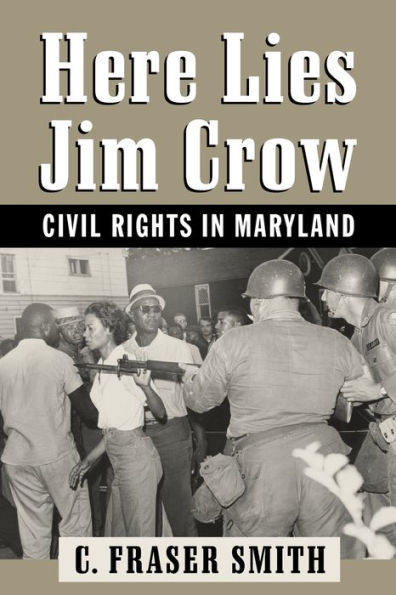
Here Lies Jim Crow: Civil Rights in Maryland in Chattanooga, TN
Current price: $29.95
Barnes and Noble
Here Lies Jim Crow: Civil Rights in Maryland in Chattanooga, TN
Current price: $29.95
Loading Inventory...
Size: OS
Though he lived throughout much of the South--and even worked his way into parts of the North for a time--Jim Crow was conceived and buried in Maryland. From Chief Justice Roger Brooke Taney's infamous decision in the
Dred Scott
case to Thurgood Marshall's eloquent and effective work on
Brown v. Board of Education
, the battle for black equality is very much the story of Free State women and men.
Here,
Baltimore Sun
columnist C. Fraser Smith recounts that tale through the stories, words, and deeds of famous, infamous, and little-known Marylanders. He traces the roots of Jim Crow laws from
to
Plessy v. Ferguson
and describes the parallel and opposite early efforts of those who struggled to establish freedom and basic rights for African Americans. Following the historical trail of evidence, Smith relates latter-day examples of Maryland residents who trod those same steps, from the thrice-failed attempt to deny black people the vote in the early twentieth century to nascent demonstrations for open access to lunch counters, movie theaters, stores, golf courses, and other public and private institutions--struggles that occurred decades before the now-celebrated historical figures strode onto the national civil rights scene. Smith's lively account includes the grand themes and the state's major players in the movement--Frederick Douglass, Harriett Tubman, Thurgood Marshall, and Lillie May Jackson, among others--and also tells the story of the struggle via several of Maryland's important but relatively unknown men and women--such as Gloria Richardson, John Prentiss Poe, William L. "Little Willie" Adams, and Walter Sondheim--who prepared Jim Crow's grave and waited for the nation to deliver the body.
Dred Scott
case to Thurgood Marshall's eloquent and effective work on
Brown v. Board of Education
, the battle for black equality is very much the story of Free State women and men.
Here,
Baltimore Sun
columnist C. Fraser Smith recounts that tale through the stories, words, and deeds of famous, infamous, and little-known Marylanders. He traces the roots of Jim Crow laws from
to
Plessy v. Ferguson
and describes the parallel and opposite early efforts of those who struggled to establish freedom and basic rights for African Americans. Following the historical trail of evidence, Smith relates latter-day examples of Maryland residents who trod those same steps, from the thrice-failed attempt to deny black people the vote in the early twentieth century to nascent demonstrations for open access to lunch counters, movie theaters, stores, golf courses, and other public and private institutions--struggles that occurred decades before the now-celebrated historical figures strode onto the national civil rights scene. Smith's lively account includes the grand themes and the state's major players in the movement--Frederick Douglass, Harriett Tubman, Thurgood Marshall, and Lillie May Jackson, among others--and also tells the story of the struggle via several of Maryland's important but relatively unknown men and women--such as Gloria Richardson, John Prentiss Poe, William L. "Little Willie" Adams, and Walter Sondheim--who prepared Jim Crow's grave and waited for the nation to deliver the body.
Though he lived throughout much of the South--and even worked his way into parts of the North for a time--Jim Crow was conceived and buried in Maryland. From Chief Justice Roger Brooke Taney's infamous decision in the
Dred Scott
case to Thurgood Marshall's eloquent and effective work on
Brown v. Board of Education
, the battle for black equality is very much the story of Free State women and men.
Here,
Baltimore Sun
columnist C. Fraser Smith recounts that tale through the stories, words, and deeds of famous, infamous, and little-known Marylanders. He traces the roots of Jim Crow laws from
to
Plessy v. Ferguson
and describes the parallel and opposite early efforts of those who struggled to establish freedom and basic rights for African Americans. Following the historical trail of evidence, Smith relates latter-day examples of Maryland residents who trod those same steps, from the thrice-failed attempt to deny black people the vote in the early twentieth century to nascent demonstrations for open access to lunch counters, movie theaters, stores, golf courses, and other public and private institutions--struggles that occurred decades before the now-celebrated historical figures strode onto the national civil rights scene. Smith's lively account includes the grand themes and the state's major players in the movement--Frederick Douglass, Harriett Tubman, Thurgood Marshall, and Lillie May Jackson, among others--and also tells the story of the struggle via several of Maryland's important but relatively unknown men and women--such as Gloria Richardson, John Prentiss Poe, William L. "Little Willie" Adams, and Walter Sondheim--who prepared Jim Crow's grave and waited for the nation to deliver the body.
Dred Scott
case to Thurgood Marshall's eloquent and effective work on
Brown v. Board of Education
, the battle for black equality is very much the story of Free State women and men.
Here,
Baltimore Sun
columnist C. Fraser Smith recounts that tale through the stories, words, and deeds of famous, infamous, and little-known Marylanders. He traces the roots of Jim Crow laws from
to
Plessy v. Ferguson
and describes the parallel and opposite early efforts of those who struggled to establish freedom and basic rights for African Americans. Following the historical trail of evidence, Smith relates latter-day examples of Maryland residents who trod those same steps, from the thrice-failed attempt to deny black people the vote in the early twentieth century to nascent demonstrations for open access to lunch counters, movie theaters, stores, golf courses, and other public and private institutions--struggles that occurred decades before the now-celebrated historical figures strode onto the national civil rights scene. Smith's lively account includes the grand themes and the state's major players in the movement--Frederick Douglass, Harriett Tubman, Thurgood Marshall, and Lillie May Jackson, among others--and also tells the story of the struggle via several of Maryland's important but relatively unknown men and women--such as Gloria Richardson, John Prentiss Poe, William L. "Little Willie" Adams, and Walter Sondheim--who prepared Jim Crow's grave and waited for the nation to deliver the body.
You May Also Like








More About Barnes and Noble at Hamilton Place
Barnes & Noble is the world’s largest retail bookseller and a leading retailer of content, digital media and educational products. Our Nook Digital business offers a lineup of NOOK® tablets and e-Readers and an expansive collection of digital reading content through the NOOK Store®. Barnes & Noble’s mission is to operate the best omni-channel specialty retail business in America, helping both our customers and booksellers reach their aspirations, while being a credit to the communities we serve.
2100 Hamilton Pl Blvd, Chattanooga, TN 37421, United States
Find Barnes and Noble at Hamilton Place in Chattanooga, TN
Visit Barnes and Noble at Hamilton Place in Chattanooga, TN
