
Home
Handbook of Environmental Fluid Dynamics, Two-Volume Set
Barnes and Noble
Loading Inventory...
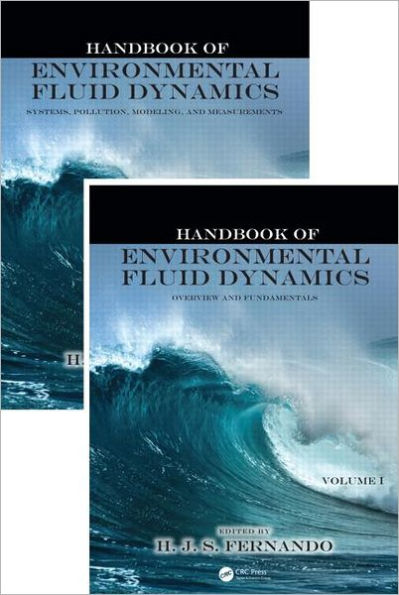
Handbook of Environmental Fluid Dynamics, Two-Volume Set in Chattanooga, TN
Current price: $300.00
Barnes and Noble
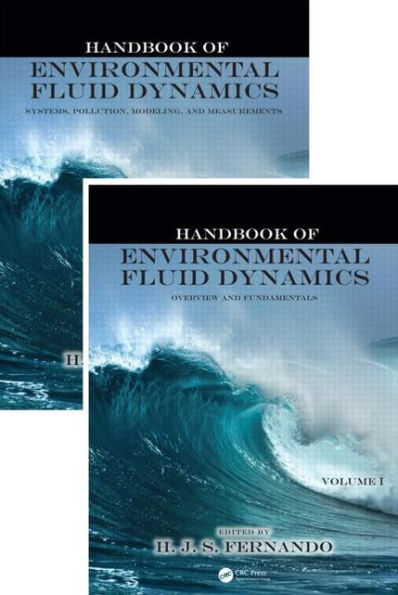
Handbook of Environmental Fluid Dynamics, Two-Volume Set in Chattanooga, TN
Current price: $300.00
Loading Inventory...
Size: OS
With major implications for applied physics, engineering, and the natural and social sciences, the rapidly growing area of environmental fluid dynamics focuses on the interactions of human activities, environment, and fluid motion. A landmark for the field, this two-volume
Handbook of Environmental Fluid Dynamics
presents the basic principles, fundamental flow processes, modeling techniques, and measurement methods used in the study of environmental motions. It also offers critical discussions of environmental sustainability related to engineering.
The handbook features 81 chapters written by 135 renowned researchers from around the world. Covering environmental, policy, biological, and chemical aspects, it tackles important cross-disciplinary topics such as sustainability, ecology, pollution, micrometeorology, and limnology.
Volume One: Overview and Fundamentals
provides a comprehensive overview of the fundamentals, including introductory topics, general principles, and fundamental flow types. It emphasizes the close relevance of environmental fluid dynamics research in society, public policy, infrastructure, quality of life, security, and the law. The book explores established and emerging areas related to environmental fluid dynamics. It also describes sub-mesoscale flow processes and phenomena that form the building blocks of environmental motions.
Volume Two: Systems, Pollution, Modeling, and Measurements
explores the interactions between engineered structures and natural flows. It also discusses the major topic of environmental pollution, with a focus on numerical methods, predictive modeling, and computer infrastructure developments. The book also looks at practical aspects of laboratory experiments and field observations that validate quantitative predictions and help identify new phenomena and processes.
As communities face existential challenges posed by climate change, rapid urbanization, and scarcity of water and energy, the study of environmental fluid dynamics becomes increasingly relevant. This wide-ranging handbook is a valuable resource for students, researchers, and policymakers working to better understand natural motions and how they affect and are influenced by anthropogenic activities.
Handbook of Environmental Fluid Dynamics
presents the basic principles, fundamental flow processes, modeling techniques, and measurement methods used in the study of environmental motions. It also offers critical discussions of environmental sustainability related to engineering.
The handbook features 81 chapters written by 135 renowned researchers from around the world. Covering environmental, policy, biological, and chemical aspects, it tackles important cross-disciplinary topics such as sustainability, ecology, pollution, micrometeorology, and limnology.
Volume One: Overview and Fundamentals
provides a comprehensive overview of the fundamentals, including introductory topics, general principles, and fundamental flow types. It emphasizes the close relevance of environmental fluid dynamics research in society, public policy, infrastructure, quality of life, security, and the law. The book explores established and emerging areas related to environmental fluid dynamics. It also describes sub-mesoscale flow processes and phenomena that form the building blocks of environmental motions.
Volume Two: Systems, Pollution, Modeling, and Measurements
explores the interactions between engineered structures and natural flows. It also discusses the major topic of environmental pollution, with a focus on numerical methods, predictive modeling, and computer infrastructure developments. The book also looks at practical aspects of laboratory experiments and field observations that validate quantitative predictions and help identify new phenomena and processes.
As communities face existential challenges posed by climate change, rapid urbanization, and scarcity of water and energy, the study of environmental fluid dynamics becomes increasingly relevant. This wide-ranging handbook is a valuable resource for students, researchers, and policymakers working to better understand natural motions and how they affect and are influenced by anthropogenic activities.
With major implications for applied physics, engineering, and the natural and social sciences, the rapidly growing area of environmental fluid dynamics focuses on the interactions of human activities, environment, and fluid motion. A landmark for the field, this two-volume
Handbook of Environmental Fluid Dynamics
presents the basic principles, fundamental flow processes, modeling techniques, and measurement methods used in the study of environmental motions. It also offers critical discussions of environmental sustainability related to engineering.
The handbook features 81 chapters written by 135 renowned researchers from around the world. Covering environmental, policy, biological, and chemical aspects, it tackles important cross-disciplinary topics such as sustainability, ecology, pollution, micrometeorology, and limnology.
Volume One: Overview and Fundamentals
provides a comprehensive overview of the fundamentals, including introductory topics, general principles, and fundamental flow types. It emphasizes the close relevance of environmental fluid dynamics research in society, public policy, infrastructure, quality of life, security, and the law. The book explores established and emerging areas related to environmental fluid dynamics. It also describes sub-mesoscale flow processes and phenomena that form the building blocks of environmental motions.
Volume Two: Systems, Pollution, Modeling, and Measurements
explores the interactions between engineered structures and natural flows. It also discusses the major topic of environmental pollution, with a focus on numerical methods, predictive modeling, and computer infrastructure developments. The book also looks at practical aspects of laboratory experiments and field observations that validate quantitative predictions and help identify new phenomena and processes.
As communities face existential challenges posed by climate change, rapid urbanization, and scarcity of water and energy, the study of environmental fluid dynamics becomes increasingly relevant. This wide-ranging handbook is a valuable resource for students, researchers, and policymakers working to better understand natural motions and how they affect and are influenced by anthropogenic activities.
Handbook of Environmental Fluid Dynamics
presents the basic principles, fundamental flow processes, modeling techniques, and measurement methods used in the study of environmental motions. It also offers critical discussions of environmental sustainability related to engineering.
The handbook features 81 chapters written by 135 renowned researchers from around the world. Covering environmental, policy, biological, and chemical aspects, it tackles important cross-disciplinary topics such as sustainability, ecology, pollution, micrometeorology, and limnology.
Volume One: Overview and Fundamentals
provides a comprehensive overview of the fundamentals, including introductory topics, general principles, and fundamental flow types. It emphasizes the close relevance of environmental fluid dynamics research in society, public policy, infrastructure, quality of life, security, and the law. The book explores established and emerging areas related to environmental fluid dynamics. It also describes sub-mesoscale flow processes and phenomena that form the building blocks of environmental motions.
Volume Two: Systems, Pollution, Modeling, and Measurements
explores the interactions between engineered structures and natural flows. It also discusses the major topic of environmental pollution, with a focus on numerical methods, predictive modeling, and computer infrastructure developments. The book also looks at practical aspects of laboratory experiments and field observations that validate quantitative predictions and help identify new phenomena and processes.
As communities face existential challenges posed by climate change, rapid urbanization, and scarcity of water and energy, the study of environmental fluid dynamics becomes increasingly relevant. This wide-ranging handbook is a valuable resource for students, researchers, and policymakers working to better understand natural motions and how they affect and are influenced by anthropogenic activities.
You May Also Like















More About Barnes and Noble at Hamilton Place
Barnes & Noble is the world’s largest retail bookseller and a leading retailer of content, digital media and educational products. Our Nook Digital business offers a lineup of NOOK® tablets and e-Readers and an expansive collection of digital reading content through the NOOK Store®. Barnes & Noble’s mission is to operate the best omni-channel specialty retail business in America, helping both our customers and booksellers reach their aspirations, while being a credit to the communities we serve.
2100 Hamilton Pl Blvd, Chattanooga, TN 37421, United States
Find Barnes and Noble at Hamilton Place in Chattanooga, TN
Visit Barnes and Noble at Hamilton Place in Chattanooga, TN
