
Home
Hamlet's Arab Journey: Shakespeare's Prince and Nasser's Ghost
Barnes and Noble
Loading Inventory...
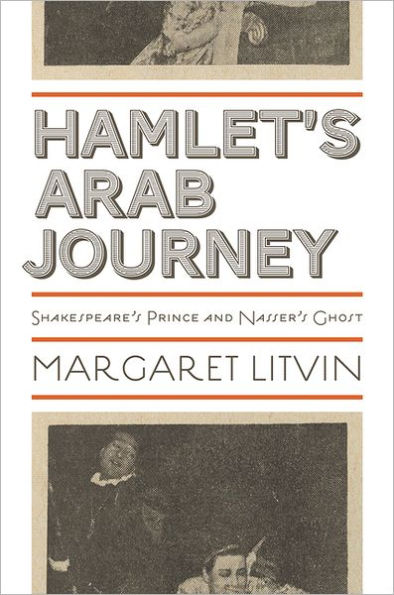
Hamlet's Arab Journey: Shakespeare's Prince and Nasser's Ghost in Chattanooga, TN
Current price: $58.00
Barnes and Noble
Hamlet's Arab Journey: Shakespeare's Prince and Nasser's Ghost in Chattanooga, TN
Current price: $58.00
Loading Inventory...
Size: Hardcover
For the past five decades, Arab intellectuals have seen themselves in Shakespeare's Hamlet: their times "out of joint," their political hopes frustrated by a corrupt older generation.
Hamlet's Arab Journey
traces the uses of
Hamlet
in Arabic theatre and political rhetoric, and asks how Shakespeare's play developed into a musical with a happy ending in 1901 and grew to become the most obsessively quoted literary work in Arab politics today. Explaining the Arab
tradition, Margaret Litvin also illuminates the "to be or not to be" politics that have turned Shakespeare's tragedy into the essential Arab political text, cited by Arab liberals, nationalists, and Islamists alike.
On the Arab stage, Hamlet has been an operetta hero, a firebrand revolutionary, and a muzzled dissident. Analyzing productions from Egypt, Syria, Iraq, Jordan, and Kuwait, Litvin follows the distinct phases of Hamlet's naturalization as an Arab. Her fine-grained theatre history uses personal interviews as well as scripts and videos, reviews, and detailed comparisons with French and Russian
Hamlets
. The result shows Arab theatre in a new light. Litvin identifies the French source of the earliest Arabic
, shows the outsize influence of Soviet and East European Shakespeare, and explores the deep cultural link between Egypt's Gamal Abdel Nasser and the ghost of Hamlet's father.
Documenting how global sources and models helped nurture a distinct Arab
tradition,
represents a new approach to the study of international Shakespeare appropriation.
Hamlet's Arab Journey
traces the uses of
Hamlet
in Arabic theatre and political rhetoric, and asks how Shakespeare's play developed into a musical with a happy ending in 1901 and grew to become the most obsessively quoted literary work in Arab politics today. Explaining the Arab
tradition, Margaret Litvin also illuminates the "to be or not to be" politics that have turned Shakespeare's tragedy into the essential Arab political text, cited by Arab liberals, nationalists, and Islamists alike.
On the Arab stage, Hamlet has been an operetta hero, a firebrand revolutionary, and a muzzled dissident. Analyzing productions from Egypt, Syria, Iraq, Jordan, and Kuwait, Litvin follows the distinct phases of Hamlet's naturalization as an Arab. Her fine-grained theatre history uses personal interviews as well as scripts and videos, reviews, and detailed comparisons with French and Russian
Hamlets
. The result shows Arab theatre in a new light. Litvin identifies the French source of the earliest Arabic
, shows the outsize influence of Soviet and East European Shakespeare, and explores the deep cultural link between Egypt's Gamal Abdel Nasser and the ghost of Hamlet's father.
Documenting how global sources and models helped nurture a distinct Arab
tradition,
represents a new approach to the study of international Shakespeare appropriation.
For the past five decades, Arab intellectuals have seen themselves in Shakespeare's Hamlet: their times "out of joint," their political hopes frustrated by a corrupt older generation.
Hamlet's Arab Journey
traces the uses of
Hamlet
in Arabic theatre and political rhetoric, and asks how Shakespeare's play developed into a musical with a happy ending in 1901 and grew to become the most obsessively quoted literary work in Arab politics today. Explaining the Arab
tradition, Margaret Litvin also illuminates the "to be or not to be" politics that have turned Shakespeare's tragedy into the essential Arab political text, cited by Arab liberals, nationalists, and Islamists alike.
On the Arab stage, Hamlet has been an operetta hero, a firebrand revolutionary, and a muzzled dissident. Analyzing productions from Egypt, Syria, Iraq, Jordan, and Kuwait, Litvin follows the distinct phases of Hamlet's naturalization as an Arab. Her fine-grained theatre history uses personal interviews as well as scripts and videos, reviews, and detailed comparisons with French and Russian
Hamlets
. The result shows Arab theatre in a new light. Litvin identifies the French source of the earliest Arabic
, shows the outsize influence of Soviet and East European Shakespeare, and explores the deep cultural link between Egypt's Gamal Abdel Nasser and the ghost of Hamlet's father.
Documenting how global sources and models helped nurture a distinct Arab
tradition,
represents a new approach to the study of international Shakespeare appropriation.
Hamlet's Arab Journey
traces the uses of
Hamlet
in Arabic theatre and political rhetoric, and asks how Shakespeare's play developed into a musical with a happy ending in 1901 and grew to become the most obsessively quoted literary work in Arab politics today. Explaining the Arab
tradition, Margaret Litvin also illuminates the "to be or not to be" politics that have turned Shakespeare's tragedy into the essential Arab political text, cited by Arab liberals, nationalists, and Islamists alike.
On the Arab stage, Hamlet has been an operetta hero, a firebrand revolutionary, and a muzzled dissident. Analyzing productions from Egypt, Syria, Iraq, Jordan, and Kuwait, Litvin follows the distinct phases of Hamlet's naturalization as an Arab. Her fine-grained theatre history uses personal interviews as well as scripts and videos, reviews, and detailed comparisons with French and Russian
Hamlets
. The result shows Arab theatre in a new light. Litvin identifies the French source of the earliest Arabic
, shows the outsize influence of Soviet and East European Shakespeare, and explores the deep cultural link between Egypt's Gamal Abdel Nasser and the ghost of Hamlet's father.
Documenting how global sources and models helped nurture a distinct Arab
tradition,
represents a new approach to the study of international Shakespeare appropriation.
You May Also Like













More About Barnes and Noble at Hamilton Place
Barnes & Noble is the world’s largest retail bookseller and a leading retailer of content, digital media and educational products. Our Nook Digital business offers a lineup of NOOK® tablets and e-Readers and an expansive collection of digital reading content through the NOOK Store®. Barnes & Noble’s mission is to operate the best omni-channel specialty retail business in America, helping both our customers and booksellers reach their aspirations, while being a credit to the communities we serve.
2100 Hamilton Pl Blvd, Chattanooga, TN 37421, United States
Find Barnes and Noble at Hamilton Place in Chattanooga, TN
Visit Barnes and Noble at Hamilton Place in Chattanooga, TN
