
Home
Hal Hartley
Barnes and Noble
Loading Inventory...
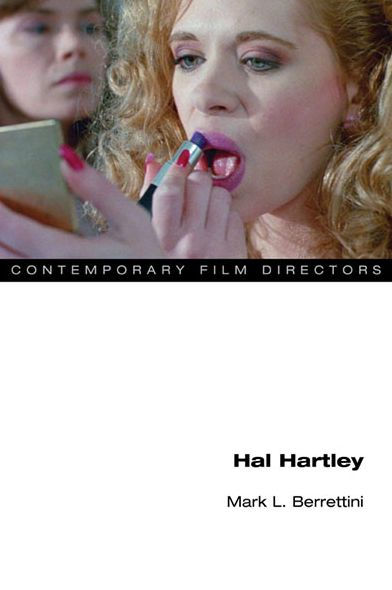
Hal Hartley in Chattanooga, TN
Current price: $22.00
Barnes and Noble
Hal Hartley in Chattanooga, TN
Current price: $22.00
Loading Inventory...
Size: Paperback
Since the late 1980s, Hal Hartley has challenged standards of realist narrative cinema with daring narrative constructions, character development, and the creation of an unconventional visual world. In this pioneering critical overview of his work and its cultural-historical context, Mark L. Berrettini discusses seven of Hartley's feature films, including
The Unbelievable Truth, Trust, Simple Men, Amateur, Henry Fool, Fay Grim,
and
The Book of Life.
Drawing on journalism, theories of representation, narrative and genre, and cinema history, Berrettini discusses the absurdist-comedic representation of serious themes in Hartley's films: impossible love, coincidence and human relations, extreme isolation, and the restrictions posed by gender norms. He looks at the films' consistently absurd tone and notes how these themes reappear within framing narratives that shift from the seemingly mundane in Hartley's earliest works to the vibrantly creative and fantastic in his later films. Employing close analysis and theories related to cinematic narrative and to realism, the book's critical appraisal of Hartley's films considers aspects of American independent cinema and postwar European cinema, antirealism, and minimalism. The volume concludes with a pair of in-depth interviews with the director from two distinct points in his career.
The Unbelievable Truth, Trust, Simple Men, Amateur, Henry Fool, Fay Grim,
and
The Book of Life.
Drawing on journalism, theories of representation, narrative and genre, and cinema history, Berrettini discusses the absurdist-comedic representation of serious themes in Hartley's films: impossible love, coincidence and human relations, extreme isolation, and the restrictions posed by gender norms. He looks at the films' consistently absurd tone and notes how these themes reappear within framing narratives that shift from the seemingly mundane in Hartley's earliest works to the vibrantly creative and fantastic in his later films. Employing close analysis and theories related to cinematic narrative and to realism, the book's critical appraisal of Hartley's films considers aspects of American independent cinema and postwar European cinema, antirealism, and minimalism. The volume concludes with a pair of in-depth interviews with the director from two distinct points in his career.
Since the late 1980s, Hal Hartley has challenged standards of realist narrative cinema with daring narrative constructions, character development, and the creation of an unconventional visual world. In this pioneering critical overview of his work and its cultural-historical context, Mark L. Berrettini discusses seven of Hartley's feature films, including
The Unbelievable Truth, Trust, Simple Men, Amateur, Henry Fool, Fay Grim,
and
The Book of Life.
Drawing on journalism, theories of representation, narrative and genre, and cinema history, Berrettini discusses the absurdist-comedic representation of serious themes in Hartley's films: impossible love, coincidence and human relations, extreme isolation, and the restrictions posed by gender norms. He looks at the films' consistently absurd tone and notes how these themes reappear within framing narratives that shift from the seemingly mundane in Hartley's earliest works to the vibrantly creative and fantastic in his later films. Employing close analysis and theories related to cinematic narrative and to realism, the book's critical appraisal of Hartley's films considers aspects of American independent cinema and postwar European cinema, antirealism, and minimalism. The volume concludes with a pair of in-depth interviews with the director from two distinct points in his career.
The Unbelievable Truth, Trust, Simple Men, Amateur, Henry Fool, Fay Grim,
and
The Book of Life.
Drawing on journalism, theories of representation, narrative and genre, and cinema history, Berrettini discusses the absurdist-comedic representation of serious themes in Hartley's films: impossible love, coincidence and human relations, extreme isolation, and the restrictions posed by gender norms. He looks at the films' consistently absurd tone and notes how these themes reappear within framing narratives that shift from the seemingly mundane in Hartley's earliest works to the vibrantly creative and fantastic in his later films. Employing close analysis and theories related to cinematic narrative and to realism, the book's critical appraisal of Hartley's films considers aspects of American independent cinema and postwar European cinema, antirealism, and minimalism. The volume concludes with a pair of in-depth interviews with the director from two distinct points in his career.
You May Also Like
















More About Barnes and Noble at Hamilton Place
Barnes & Noble is the world’s largest retail bookseller and a leading retailer of content, digital media and educational products. Our Nook Digital business offers a lineup of NOOK® tablets and e-Readers and an expansive collection of digital reading content through the NOOK Store®. Barnes & Noble’s mission is to operate the best omni-channel specialty retail business in America, helping both our customers and booksellers reach their aspirations, while being a credit to the communities we serve.
2100 Hamilton Pl Blvd, Chattanooga, TN 37421, United States
Find Barnes and Noble at Hamilton Place in Chattanooga, TN
Visit Barnes and Noble at Hamilton Place in Chattanooga, TN
