
Home
Growing Stories from India: Religion and the Fate of Agriculture
Barnes and Noble
Loading Inventory...
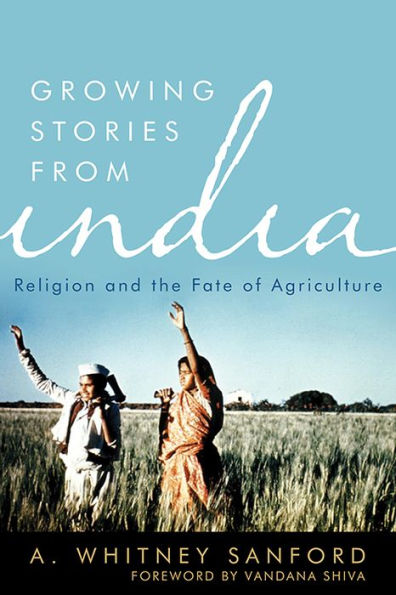
Growing Stories from India: Religion and the Fate of Agriculture in Chattanooga, TN
Current price: $30.00
Barnes and Noble
Growing Stories from India: Religion and the Fate of Agriculture in Chattanooga, TN
Current price: $30.00
Loading Inventory...
Size: Paperback
The costs of industrial agriculture are astonishing in terms of damage to the environment, human health, animal suffering, and social equity, and the situation demands that we expand our ecological imagination to meet this crisis. In response to growing dissatisfaction with the existing food system, farmers and consumers are creating alternate models of production and consumption that are both sustainable and equitable. In
Growing Stories from India: Religion and the Fate of Agriculture
, author A. Whitney Sanford uses the story of the deity Balaram and the Yamuna River as a foundation for discussing the global food crisis and illustrating the Hindu origins of agrarian thought.
By employing narrative as a means of assessing modern agriculture, Sanford encourages us to reconsider our relationship with the earth. Merely creating new stories is not enough—she asserts that each story must lead to changed practices.
Growing Stories from India
demonstrates that conventional agribusiness is only one of many options and engages the work of modern agrarian luminaries to explore how alternative agricultural methods can be implemented.
Growing Stories from India: Religion and the Fate of Agriculture
, author A. Whitney Sanford uses the story of the deity Balaram and the Yamuna River as a foundation for discussing the global food crisis and illustrating the Hindu origins of agrarian thought.
By employing narrative as a means of assessing modern agriculture, Sanford encourages us to reconsider our relationship with the earth. Merely creating new stories is not enough—she asserts that each story must lead to changed practices.
Growing Stories from India
demonstrates that conventional agribusiness is only one of many options and engages the work of modern agrarian luminaries to explore how alternative agricultural methods can be implemented.
The costs of industrial agriculture are astonishing in terms of damage to the environment, human health, animal suffering, and social equity, and the situation demands that we expand our ecological imagination to meet this crisis. In response to growing dissatisfaction with the existing food system, farmers and consumers are creating alternate models of production and consumption that are both sustainable and equitable. In
Growing Stories from India: Religion and the Fate of Agriculture
, author A. Whitney Sanford uses the story of the deity Balaram and the Yamuna River as a foundation for discussing the global food crisis and illustrating the Hindu origins of agrarian thought.
By employing narrative as a means of assessing modern agriculture, Sanford encourages us to reconsider our relationship with the earth. Merely creating new stories is not enough—she asserts that each story must lead to changed practices.
Growing Stories from India
demonstrates that conventional agribusiness is only one of many options and engages the work of modern agrarian luminaries to explore how alternative agricultural methods can be implemented.
Growing Stories from India: Religion and the Fate of Agriculture
, author A. Whitney Sanford uses the story of the deity Balaram and the Yamuna River as a foundation for discussing the global food crisis and illustrating the Hindu origins of agrarian thought.
By employing narrative as a means of assessing modern agriculture, Sanford encourages us to reconsider our relationship with the earth. Merely creating new stories is not enough—she asserts that each story must lead to changed practices.
Growing Stories from India
demonstrates that conventional agribusiness is only one of many options and engages the work of modern agrarian luminaries to explore how alternative agricultural methods can be implemented.
You May Also Like











More About Barnes and Noble at Hamilton Place
Barnes & Noble is the world’s largest retail bookseller and a leading retailer of content, digital media and educational products. Our Nook Digital business offers a lineup of NOOK® tablets and e-Readers and an expansive collection of digital reading content through the NOOK Store®. Barnes & Noble’s mission is to operate the best omni-channel specialty retail business in America, helping both our customers and booksellers reach their aspirations, while being a credit to the communities we serve.
2100 Hamilton Pl Blvd, Chattanooga, TN 37421, United States
Find Barnes and Noble at Hamilton Place in Chattanooga, TN
Visit Barnes and Noble at Hamilton Place in Chattanooga, TN
