
Home
Greek Language, Italian Landscape: Griko and the Re-storying of a Linguistic Minority
Barnes and Noble
Loading Inventory...
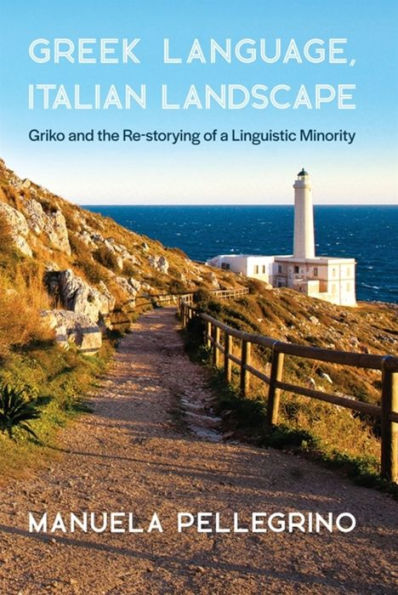
Greek Language, Italian Landscape: Griko and the Re-storying of a Linguistic Minority in Chattanooga, TN
Current price: $24.95
Barnes and Noble
Greek Language, Italian Landscape: Griko and the Re-storying of a Linguistic Minority in Chattanooga, TN
Current price: $24.95
Loading Inventory...
Size: OS
Greek Language, Italian Landscape
traces the transformation of language ideologies and practices of Griko, a variety of Modern Greek used in the southern Italian province of Lecce, in Apulia. Building on ethnographic and linguistic data collected in Grecìa Salentina and Greece, Manuela Pellegrino recounts the story of Griko, highlighting the effects of the interplay of language ideologies and policies promoted by the European Union, Italy, and Greece. She shows how the longstanding concern about language demise has, over time, generated social relationships and fueled moral feelings and political interests that have ultimately shaped the predicament of Griko.
Pellegrino proposes the concept of “the cultural temporality of language” to describe how locals are continually
re-storying
Griko by recounting its multiple pasts, converting what was once considered a “backward language” into a symbolic resource that has reentered their daily lives in multiple ways. Yet the question as to which chapter of Griko’s past best represents the language—and is best represented by it—becomes a discursive struggle for community self-understanding and representation. Griko and its cultural heritage are used to redeem the past, to contest the present, and to envision the future of this land and its people.
traces the transformation of language ideologies and practices of Griko, a variety of Modern Greek used in the southern Italian province of Lecce, in Apulia. Building on ethnographic and linguistic data collected in Grecìa Salentina and Greece, Manuela Pellegrino recounts the story of Griko, highlighting the effects of the interplay of language ideologies and policies promoted by the European Union, Italy, and Greece. She shows how the longstanding concern about language demise has, over time, generated social relationships and fueled moral feelings and political interests that have ultimately shaped the predicament of Griko.
Pellegrino proposes the concept of “the cultural temporality of language” to describe how locals are continually
re-storying
Griko by recounting its multiple pasts, converting what was once considered a “backward language” into a symbolic resource that has reentered their daily lives in multiple ways. Yet the question as to which chapter of Griko’s past best represents the language—and is best represented by it—becomes a discursive struggle for community self-understanding and representation. Griko and its cultural heritage are used to redeem the past, to contest the present, and to envision the future of this land and its people.
Greek Language, Italian Landscape
traces the transformation of language ideologies and practices of Griko, a variety of Modern Greek used in the southern Italian province of Lecce, in Apulia. Building on ethnographic and linguistic data collected in Grecìa Salentina and Greece, Manuela Pellegrino recounts the story of Griko, highlighting the effects of the interplay of language ideologies and policies promoted by the European Union, Italy, and Greece. She shows how the longstanding concern about language demise has, over time, generated social relationships and fueled moral feelings and political interests that have ultimately shaped the predicament of Griko.
Pellegrino proposes the concept of “the cultural temporality of language” to describe how locals are continually
re-storying
Griko by recounting its multiple pasts, converting what was once considered a “backward language” into a symbolic resource that has reentered their daily lives in multiple ways. Yet the question as to which chapter of Griko’s past best represents the language—and is best represented by it—becomes a discursive struggle for community self-understanding and representation. Griko and its cultural heritage are used to redeem the past, to contest the present, and to envision the future of this land and its people.
traces the transformation of language ideologies and practices of Griko, a variety of Modern Greek used in the southern Italian province of Lecce, in Apulia. Building on ethnographic and linguistic data collected in Grecìa Salentina and Greece, Manuela Pellegrino recounts the story of Griko, highlighting the effects of the interplay of language ideologies and policies promoted by the European Union, Italy, and Greece. She shows how the longstanding concern about language demise has, over time, generated social relationships and fueled moral feelings and political interests that have ultimately shaped the predicament of Griko.
Pellegrino proposes the concept of “the cultural temporality of language” to describe how locals are continually
re-storying
Griko by recounting its multiple pasts, converting what was once considered a “backward language” into a symbolic resource that has reentered their daily lives in multiple ways. Yet the question as to which chapter of Griko’s past best represents the language—and is best represented by it—becomes a discursive struggle for community self-understanding and representation. Griko and its cultural heritage are used to redeem the past, to contest the present, and to envision the future of this land and its people.
You May Also Like












More About Barnes and Noble at Hamilton Place
Barnes & Noble is the world’s largest retail bookseller and a leading retailer of content, digital media and educational products. Our Nook Digital business offers a lineup of NOOK® tablets and e-Readers and an expansive collection of digital reading content through the NOOK Store®. Barnes & Noble’s mission is to operate the best omni-channel specialty retail business in America, helping both our customers and booksellers reach their aspirations, while being a credit to the communities we serve.
2100 Hamilton Pl Blvd, Chattanooga, TN 37421, United States
Find Barnes and Noble at Hamilton Place in Chattanooga, TN
Visit Barnes and Noble at Hamilton Place in Chattanooga, TN
