
Home
Greek and Roman Philosophy: A Survey for Students of the New Testament
Barnes and Noble
Loading Inventory...
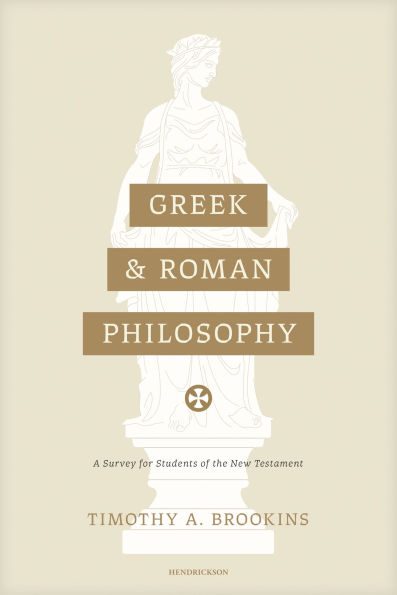
Greek and Roman Philosophy: A Survey for Students of the New Testament in Chattanooga, TN
Current price: $29.95
Barnes and Noble
Greek and Roman Philosophy: A Survey for Students of the New Testament in Chattanooga, TN
Current price: $29.95
Loading Inventory...
Size: Paperback
Enjoy a fascinating exploration of the Greek philosophical tradition from its inception in the Classical period until the final stages of its evolution.
Greek and Roman Philosophy
covers:
The first part of Late Antiquity
Pre-Socratics
Classical philosophers
Major schools of the Hellenistic period (the Stoics, Epicureans, Academics)
Rise of Roman philosophy
Developments and revivals in the post-Hellenistic period
Emergence of Christianity as a philosophy
While making Greek and Roman philosophy its central feature, the book’s underlying interest is the relevance of these traditions to the early Christian movement, especially the New Testament.
For although Christianity is rooted in and ineradicably linked with Judaism, its shoots quickly extended outward into the Greco-Roman world where it was able to flower and propagate only by competing with the intellectual traditions of the Greek-speaking world, above all, the philosophical traditions. A knowledge of these traditions, therefore, is an essential complement to the study of Second Temple Judaism for serious students of the New Testament and early Christianity. It is the purpose of this book to offer such an introduction.
Greek and Roman Philosophy
covers:
The first part of Late Antiquity
Pre-Socratics
Classical philosophers
Major schools of the Hellenistic period (the Stoics, Epicureans, Academics)
Rise of Roman philosophy
Developments and revivals in the post-Hellenistic period
Emergence of Christianity as a philosophy
While making Greek and Roman philosophy its central feature, the book’s underlying interest is the relevance of these traditions to the early Christian movement, especially the New Testament.
For although Christianity is rooted in and ineradicably linked with Judaism, its shoots quickly extended outward into the Greco-Roman world where it was able to flower and propagate only by competing with the intellectual traditions of the Greek-speaking world, above all, the philosophical traditions. A knowledge of these traditions, therefore, is an essential complement to the study of Second Temple Judaism for serious students of the New Testament and early Christianity. It is the purpose of this book to offer such an introduction.
Enjoy a fascinating exploration of the Greek philosophical tradition from its inception in the Classical period until the final stages of its evolution.
Greek and Roman Philosophy
covers:
The first part of Late Antiquity
Pre-Socratics
Classical philosophers
Major schools of the Hellenistic period (the Stoics, Epicureans, Academics)
Rise of Roman philosophy
Developments and revivals in the post-Hellenistic period
Emergence of Christianity as a philosophy
While making Greek and Roman philosophy its central feature, the book’s underlying interest is the relevance of these traditions to the early Christian movement, especially the New Testament.
For although Christianity is rooted in and ineradicably linked with Judaism, its shoots quickly extended outward into the Greco-Roman world where it was able to flower and propagate only by competing with the intellectual traditions of the Greek-speaking world, above all, the philosophical traditions. A knowledge of these traditions, therefore, is an essential complement to the study of Second Temple Judaism for serious students of the New Testament and early Christianity. It is the purpose of this book to offer such an introduction.
Greek and Roman Philosophy
covers:
The first part of Late Antiquity
Pre-Socratics
Classical philosophers
Major schools of the Hellenistic period (the Stoics, Epicureans, Academics)
Rise of Roman philosophy
Developments and revivals in the post-Hellenistic period
Emergence of Christianity as a philosophy
While making Greek and Roman philosophy its central feature, the book’s underlying interest is the relevance of these traditions to the early Christian movement, especially the New Testament.
For although Christianity is rooted in and ineradicably linked with Judaism, its shoots quickly extended outward into the Greco-Roman world where it was able to flower and propagate only by competing with the intellectual traditions of the Greek-speaking world, above all, the philosophical traditions. A knowledge of these traditions, therefore, is an essential complement to the study of Second Temple Judaism for serious students of the New Testament and early Christianity. It is the purpose of this book to offer such an introduction.
You May Also Like











More About Barnes and Noble at Hamilton Place
Barnes & Noble is the world’s largest retail bookseller and a leading retailer of content, digital media and educational products. Our Nook Digital business offers a lineup of NOOK® tablets and e-Readers and an expansive collection of digital reading content through the NOOK Store®. Barnes & Noble’s mission is to operate the best omni-channel specialty retail business in America, helping both our customers and booksellers reach their aspirations, while being a credit to the communities we serve.
2100 Hamilton Pl Blvd, Chattanooga, TN 37421, United States
Find Barnes and Noble at Hamilton Place in Chattanooga, TN
Visit Barnes and Noble at Hamilton Place in Chattanooga, TN
