
Home
Governing Israel: Chosen People, Promised Land and Prophetic Tradition
Barnes and Noble
Loading Inventory...
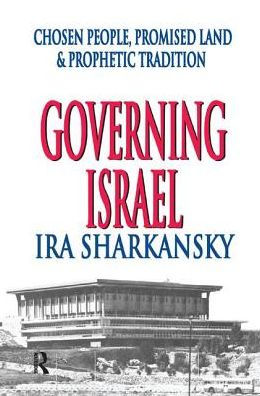
Governing Israel: Chosen People, Promised Land and Prophetic Tradition in Chattanooga, TN
Current price: $190.00
Barnes and Noble
Governing Israel: Chosen People, Promised Land and Prophetic Tradition in Chattanooga, TN
Current price: $190.00
Loading Inventory...
Size: Hardcover
Israeli politics and policymaking reflect themes long imbedded in Jewish culture. The concepts of Chosen People and Promised Land, and their meaning in Christian as well as Jewish religious traditions, assure that Israel is perpetually in the international spotlight. They also impose a sense of distinctiveness on the Israeli population. Some Israelis trumpet their country's accomplishments with unrestrained superlatives. Social critics accuse Israel of having the worst of the world's conditions. In this they reflect another trait that seems to have been inherited from the ancients: the prophetic tradition of extreme self-criticism. In reality, much of what occurs in Israel is similar to what occurs in countries that share its characteristics: democracy, western culture, and an advanced level of economic development. Such an idea may seem bizarre alongside headlines about suicide bombings and the country's aggressive defensive posture. This misses what is normal about Israel. In Israel policymakers weigh benefits and costs of various options, and generally choose something moderate, just as they do elsewhere. But this reality does not dim the rhetoric of politics, where hyperbole frequently seems more evident than rational discourse. Sharkansky discusses three central issues in Israeli public affairs: religion, national security, and social policy. He describes how policymakers relate to these issue and themes. Major problems may not be solved, but they are managed in a way that is tolerable. It is in this trait that Israel resembles other western democracies. In sum, biblical themes affect Israel's political rhetoric more than they affect the way officials actually work out their problems. Pragmatic coping with worldly realities generally overcomes emotional expressions that convey ingredients of spirituality.
Israeli politics and policymaking reflect themes long imbedded in Jewish culture. The concepts of Chosen People and Promised Land, and their meaning in Christian as well as Jewish religious traditions, assure that Israel is perpetually in the international spotlight. They also impose a sense of distinctiveness on the Israeli population. Some Israelis trumpet their country's accomplishments with unrestrained superlatives. Social critics accuse Israel of having the worst of the world's conditions. In this they reflect another trait that seems to have been inherited from the ancients: the prophetic tradition of extreme self-criticism. In reality, much of what occurs in Israel is similar to what occurs in countries that share its characteristics: democracy, western culture, and an advanced level of economic development. Such an idea may seem bizarre alongside headlines about suicide bombings and the country's aggressive defensive posture. This misses what is normal about Israel. In Israel policymakers weigh benefits and costs of various options, and generally choose something moderate, just as they do elsewhere. But this reality does not dim the rhetoric of politics, where hyperbole frequently seems more evident than rational discourse. Sharkansky discusses three central issues in Israeli public affairs: religion, national security, and social policy. He describes how policymakers relate to these issue and themes. Major problems may not be solved, but they are managed in a way that is tolerable. It is in this trait that Israel resembles other western democracies. In sum, biblical themes affect Israel's political rhetoric more than they affect the way officials actually work out their problems. Pragmatic coping with worldly realities generally overcomes emotional expressions that convey ingredients of spirituality.
You May Also Like











More About Barnes and Noble at Hamilton Place
Barnes & Noble is the world’s largest retail bookseller and a leading retailer of content, digital media and educational products. Our Nook Digital business offers a lineup of NOOK® tablets and e-Readers and an expansive collection of digital reading content through the NOOK Store®. Barnes & Noble’s mission is to operate the best omni-channel specialty retail business in America, helping both our customers and booksellers reach their aspirations, while being a credit to the communities we serve.
2100 Hamilton Pl Blvd, Chattanooga, TN 37421, United States
Find Barnes and Noble at Hamilton Place in Chattanooga, TN
Visit Barnes and Noble at Hamilton Place in Chattanooga, TN
