
Home
Going Home: A Walk Through Fifty Years of Occupation
Barnes and Noble
Loading Inventory...
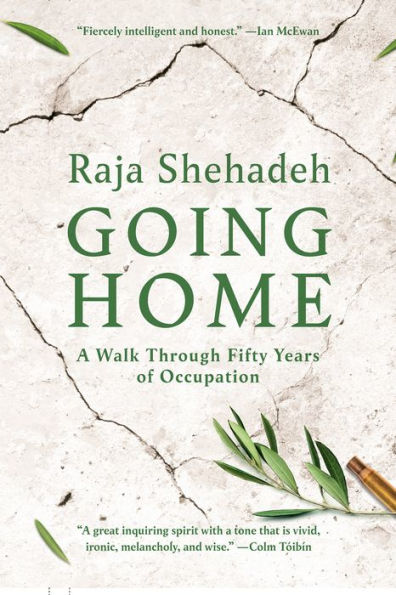
Going Home: A Walk Through Fifty Years of Occupation in Chattanooga, TN
Current price: $16.95
Barnes and Noble
Going Home: A Walk Through Fifty Years of Occupation in Chattanooga, TN
Current price: $16.95
Loading Inventory...
Size: Audiobook
Winner, Moore Prize for Human Rights Writing
In a dazzling mix of reportage, analysis, and memoir, the leading Palestinian writer of our time reflects on aging, failure, the occupation, and the changing face of Ramallah
"Few Palestinians have opened their minds and their hearts with such frankness."
—
The New York Times
In
Going Home
, Raja Shehadeh, the Orwell Prize–winning author of
Palestinian Walks
, takes us on a series of journeys around his hometown of Ramallah. Set in a single day—the day that happens to be the fiftieth anniversary of Israel's occupation of the West Bank—the book is a powerful and moving record and chronicle of the changing face of his city.
Here is a city whose green spaces—gardens and hills crowned with olive trees— have been replaced by tower blocks and concrete lots; where the Israeli occupation has further entrenched itself in every aspect of movement, from the roads that can and cannot be used to the bureaucratic barriers that prevent people leaving the West Bank. Here also is a city that is culturally shifting, where Islam is taking a more prominent role in people's everyday and political lives and in the geography of the city.
A penetrating evocation of memory, pain, and place that is lightened by everyday joys such as delightful accounts of shared meals and gardening,
is perhaps Raja Shehadeh's most moving and painfully visceral addition to his series of personal histories of the occupation, confirming Rachel Kushner's judgment that "Shehadeh is a buoy in a sea of bleakness."
In a dazzling mix of reportage, analysis, and memoir, the leading Palestinian writer of our time reflects on aging, failure, the occupation, and the changing face of Ramallah
"Few Palestinians have opened their minds and their hearts with such frankness."
—
The New York Times
In
Going Home
, Raja Shehadeh, the Orwell Prize–winning author of
Palestinian Walks
, takes us on a series of journeys around his hometown of Ramallah. Set in a single day—the day that happens to be the fiftieth anniversary of Israel's occupation of the West Bank—the book is a powerful and moving record and chronicle of the changing face of his city.
Here is a city whose green spaces—gardens and hills crowned with olive trees— have been replaced by tower blocks and concrete lots; where the Israeli occupation has further entrenched itself in every aspect of movement, from the roads that can and cannot be used to the bureaucratic barriers that prevent people leaving the West Bank. Here also is a city that is culturally shifting, where Islam is taking a more prominent role in people's everyday and political lives and in the geography of the city.
A penetrating evocation of memory, pain, and place that is lightened by everyday joys such as delightful accounts of shared meals and gardening,
is perhaps Raja Shehadeh's most moving and painfully visceral addition to his series of personal histories of the occupation, confirming Rachel Kushner's judgment that "Shehadeh is a buoy in a sea of bleakness."
Winner, Moore Prize for Human Rights Writing
In a dazzling mix of reportage, analysis, and memoir, the leading Palestinian writer of our time reflects on aging, failure, the occupation, and the changing face of Ramallah
"Few Palestinians have opened their minds and their hearts with such frankness."
—
The New York Times
In
Going Home
, Raja Shehadeh, the Orwell Prize–winning author of
Palestinian Walks
, takes us on a series of journeys around his hometown of Ramallah. Set in a single day—the day that happens to be the fiftieth anniversary of Israel's occupation of the West Bank—the book is a powerful and moving record and chronicle of the changing face of his city.
Here is a city whose green spaces—gardens and hills crowned with olive trees— have been replaced by tower blocks and concrete lots; where the Israeli occupation has further entrenched itself in every aspect of movement, from the roads that can and cannot be used to the bureaucratic barriers that prevent people leaving the West Bank. Here also is a city that is culturally shifting, where Islam is taking a more prominent role in people's everyday and political lives and in the geography of the city.
A penetrating evocation of memory, pain, and place that is lightened by everyday joys such as delightful accounts of shared meals and gardening,
is perhaps Raja Shehadeh's most moving and painfully visceral addition to his series of personal histories of the occupation, confirming Rachel Kushner's judgment that "Shehadeh is a buoy in a sea of bleakness."
In a dazzling mix of reportage, analysis, and memoir, the leading Palestinian writer of our time reflects on aging, failure, the occupation, and the changing face of Ramallah
"Few Palestinians have opened their minds and their hearts with such frankness."
—
The New York Times
In
Going Home
, Raja Shehadeh, the Orwell Prize–winning author of
Palestinian Walks
, takes us on a series of journeys around his hometown of Ramallah. Set in a single day—the day that happens to be the fiftieth anniversary of Israel's occupation of the West Bank—the book is a powerful and moving record and chronicle of the changing face of his city.
Here is a city whose green spaces—gardens and hills crowned with olive trees— have been replaced by tower blocks and concrete lots; where the Israeli occupation has further entrenched itself in every aspect of movement, from the roads that can and cannot be used to the bureaucratic barriers that prevent people leaving the West Bank. Here also is a city that is culturally shifting, where Islam is taking a more prominent role in people's everyday and political lives and in the geography of the city.
A penetrating evocation of memory, pain, and place that is lightened by everyday joys such as delightful accounts of shared meals and gardening,
is perhaps Raja Shehadeh's most moving and painfully visceral addition to his series of personal histories of the occupation, confirming Rachel Kushner's judgment that "Shehadeh is a buoy in a sea of bleakness."
You May Also Like














More About Barnes and Noble at Hamilton Place
Barnes & Noble is the world’s largest retail bookseller and a leading retailer of content, digital media and educational products. Our Nook Digital business offers a lineup of NOOK® tablets and e-Readers and an expansive collection of digital reading content through the NOOK Store®. Barnes & Noble’s mission is to operate the best omni-channel specialty retail business in America, helping both our customers and booksellers reach their aspirations, while being a credit to the communities we serve.
2100 Hamilton Pl Blvd, Chattanooga, TN 37421, United States
Find Barnes and Noble at Hamilton Place in Chattanooga, TN
Visit Barnes and Noble at Hamilton Place in Chattanooga, TN
