
Home
God, Slavery and Early Christianity
Barnes and Noble
Loading Inventory...
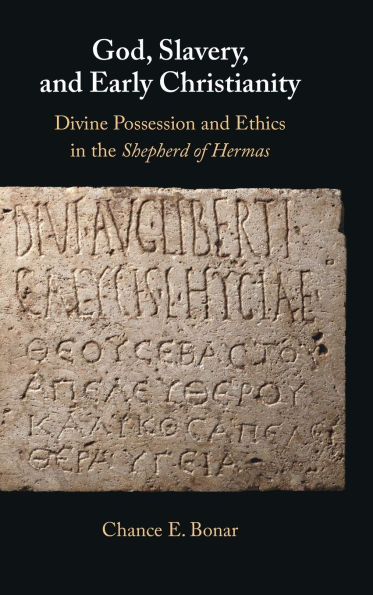
God, Slavery and Early Christianity in Chattanooga, TN
Current price: $120.00
Barnes and Noble
God, Slavery and Early Christianity in Chattanooga, TN
Current price: $120.00
Loading Inventory...
Size: OS
Ancient Christians understood themselves to be enslaved to God, an attitude that affected their ethics, theology, and self-understanding. This widespread belief is made especially clear in the Shepherd of Hermas, an overlooked early Christian text written by an enslaved person, which was nearly included in the New Testament. In this book, Chance Bonar provides a robust analysis of the ancient discourses and practices of slavery found in the Shepherd of Hermas. He shows how the text characterizes God's enslaved persons as useful, loyal property who could be put to work, surveilled, and disciplined throughout their lives – and the afterlife. Bonar also investigates the notion that God enslaved believers, which allowed the Shepherd to theorize key early Christian concepts more deeply and in light of ancient Mediterranean slavery. Bonar's study clarifies the depth to which early Christians were entrenched – intellectually, practically, and theologically – in Roman slave society. It also demonstrates how the Shepherd offers new approaches to early Christian literary and historical interpretation.
Ancient Christians understood themselves to be enslaved to God, an attitude that affected their ethics, theology, and self-understanding. This widespread belief is made especially clear in the Shepherd of Hermas, an overlooked early Christian text written by an enslaved person, which was nearly included in the New Testament. In this book, Chance Bonar provides a robust analysis of the ancient discourses and practices of slavery found in the Shepherd of Hermas. He shows how the text characterizes God's enslaved persons as useful, loyal property who could be put to work, surveilled, and disciplined throughout their lives – and the afterlife. Bonar also investigates the notion that God enslaved believers, which allowed the Shepherd to theorize key early Christian concepts more deeply and in light of ancient Mediterranean slavery. Bonar's study clarifies the depth to which early Christians were entrenched – intellectually, practically, and theologically – in Roman slave society. It also demonstrates how the Shepherd offers new approaches to early Christian literary and historical interpretation.
You May Also Like










More About Barnes and Noble at Hamilton Place
Barnes & Noble is the world’s largest retail bookseller and a leading retailer of content, digital media and educational products. Our Nook Digital business offers a lineup of NOOK® tablets and e-Readers and an expansive collection of digital reading content through the NOOK Store®. Barnes & Noble’s mission is to operate the best omni-channel specialty retail business in America, helping both our customers and booksellers reach their aspirations, while being a credit to the communities we serve.
2100 Hamilton Pl Blvd, Chattanooga, TN 37421, United States
Find Barnes and Noble at Hamilton Place in Chattanooga, TN
Visit Barnes and Noble at Hamilton Place in Chattanooga, TN
