
Home
Global Security Governance: Competing Perceptions of the Twenty-First Century
Barnes and Noble
Loading Inventory...
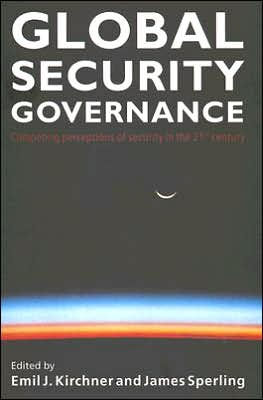
Global Security Governance: Competing Perceptions of the Twenty-First Century in Chattanooga, TN
Current price: $250.00
Barnes and Noble
Global Security Governance: Competing Perceptions of the Twenty-First Century in Chattanooga, TN
Current price: $250.00
Loading Inventory...
Size: Hardcover
This book demarcates the barriers and pathways to major power security cooperation and provides an empirical analysis of threat perception among the world’s major powers.
Divided into three parts, Emil Kirchner and James Sperling use a common analytical framework for the changing security agenda in Canada, France, Germany, Italy, Japan, the Russian Federation, the United States, the United Kingdom, and the EU. Each chapter features:
an examination of national ‘exceptionalism’ that accounts for foreign and security policy idiosyncrasies
definitions of the range of threats preoccupying the government, foreign policy elites and the public
assessments of the institutional and instrumental preferences shaping national security policies
investigations on the allocation of resources between the various categories of security expenditure
details on the elements of the national security culture and its consequences for security cooperation.
Global Security Governance
combines a coherent theoretical framework with strong comparative case studies, making it ideal reading for all students of security studies.
Divided into three parts, Emil Kirchner and James Sperling use a common analytical framework for the changing security agenda in Canada, France, Germany, Italy, Japan, the Russian Federation, the United States, the United Kingdom, and the EU. Each chapter features:
an examination of national ‘exceptionalism’ that accounts for foreign and security policy idiosyncrasies
definitions of the range of threats preoccupying the government, foreign policy elites and the public
assessments of the institutional and instrumental preferences shaping national security policies
investigations on the allocation of resources between the various categories of security expenditure
details on the elements of the national security culture and its consequences for security cooperation.
Global Security Governance
combines a coherent theoretical framework with strong comparative case studies, making it ideal reading for all students of security studies.
This book demarcates the barriers and pathways to major power security cooperation and provides an empirical analysis of threat perception among the world’s major powers.
Divided into three parts, Emil Kirchner and James Sperling use a common analytical framework for the changing security agenda in Canada, France, Germany, Italy, Japan, the Russian Federation, the United States, the United Kingdom, and the EU. Each chapter features:
an examination of national ‘exceptionalism’ that accounts for foreign and security policy idiosyncrasies
definitions of the range of threats preoccupying the government, foreign policy elites and the public
assessments of the institutional and instrumental preferences shaping national security policies
investigations on the allocation of resources between the various categories of security expenditure
details on the elements of the national security culture and its consequences for security cooperation.
Global Security Governance
combines a coherent theoretical framework with strong comparative case studies, making it ideal reading for all students of security studies.
Divided into three parts, Emil Kirchner and James Sperling use a common analytical framework for the changing security agenda in Canada, France, Germany, Italy, Japan, the Russian Federation, the United States, the United Kingdom, and the EU. Each chapter features:
an examination of national ‘exceptionalism’ that accounts for foreign and security policy idiosyncrasies
definitions of the range of threats preoccupying the government, foreign policy elites and the public
assessments of the institutional and instrumental preferences shaping national security policies
investigations on the allocation of resources between the various categories of security expenditure
details on the elements of the national security culture and its consequences for security cooperation.
Global Security Governance
combines a coherent theoretical framework with strong comparative case studies, making it ideal reading for all students of security studies.
You May Also Like

















More About Barnes and Noble at Hamilton Place
Barnes & Noble is the world’s largest retail bookseller and a leading retailer of content, digital media and educational products. Our Nook Digital business offers a lineup of NOOK® tablets and e-Readers and an expansive collection of digital reading content through the NOOK Store®. Barnes & Noble’s mission is to operate the best omni-channel specialty retail business in America, helping both our customers and booksellers reach their aspirations, while being a credit to the communities we serve.
2100 Hamilton Pl Blvd, Chattanooga, TN 37421, United States
Find Barnes and Noble at Hamilton Place in Chattanooga, TN
Visit Barnes and Noble at Hamilton Place in Chattanooga, TN
