
Home
Global Perspectives on Early Medieval England
Barnes and Noble
Loading Inventory...
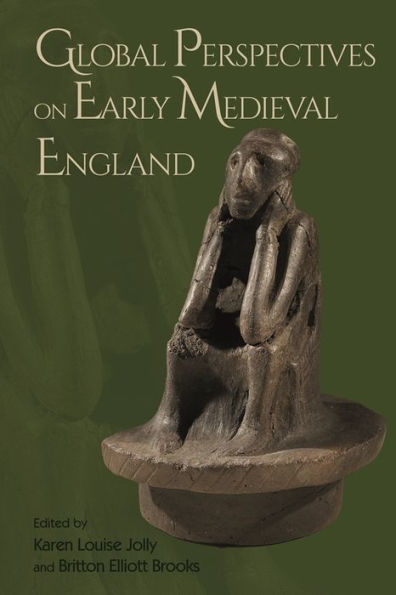
Global Perspectives on Early Medieval England in Chattanooga, TN
Current price: $110.00
Barnes and Noble
Global Perspectives on Early Medieval England in Chattanooga, TN
Current price: $110.00
Loading Inventory...
Size: OS
Interrogations of materiality and geography, narrative framework and boundaries, and the ways these scholarly pursuits ripple out into the wider cultural sphere.
Early medieval England as seen through the lens of comparative and interconnected histories is the subject of this volume. Drawn from a range of disciplines, its chapters examine artistic, archaeological, literary, and historical artifacts, converging around the idea that the period may not only define itself, but is often defined from other perspectives, specifically here by modern scholarship.
The first part considers the transmission of material culture across borders, while querying the possibilities and limits of comparative and transnational approaches, taking in the spread of bread wheat, the collapse of the arthistorical "decorative" and "functional", and the unknowns about daily life in an early medieval English hall. The volume then moves on to reimagine the permeable boundaries of early medieval England, with perspectives from the Baltic, Byzantium, and the Islamic world, including an examination of Vercelli Homily VII (from John Chrysostom's Greek Homily XXIX), Hārūn ibn Yaḥyā's Arabic descriptions of Barṭīniyah ("Britain"), and an consideration of the Old English
Orosius
. The final chapters address the construction of and responses to "AngloSaxon" narratives, past and present: they look at early medieval England within a Eurasian perspective, the historical origins of racialized AngloSaxonism(s), and views from Oceania, comparing HibernoSaxon and Anglican Melanesian missions, as well as contemporary reactions to exhibitions of AngloSaxon kingdoms and Pacific Island cultures.
Contributors: Debby Banham, Britton Elliott Brooks, Caitlin Green, Jane Hawkes, John Hines, Karen Louise Jolly, Kazutomo Karasawa, Carol Neuman de Vegvar, John D. Niles, Michael W. Scott, Jonathan Wilcox
Early medieval England as seen through the lens of comparative and interconnected histories is the subject of this volume. Drawn from a range of disciplines, its chapters examine artistic, archaeological, literary, and historical artifacts, converging around the idea that the period may not only define itself, but is often defined from other perspectives, specifically here by modern scholarship.
The first part considers the transmission of material culture across borders, while querying the possibilities and limits of comparative and transnational approaches, taking in the spread of bread wheat, the collapse of the arthistorical "decorative" and "functional", and the unknowns about daily life in an early medieval English hall. The volume then moves on to reimagine the permeable boundaries of early medieval England, with perspectives from the Baltic, Byzantium, and the Islamic world, including an examination of Vercelli Homily VII (from John Chrysostom's Greek Homily XXIX), Hārūn ibn Yaḥyā's Arabic descriptions of Barṭīniyah ("Britain"), and an consideration of the Old English
Orosius
. The final chapters address the construction of and responses to "AngloSaxon" narratives, past and present: they look at early medieval England within a Eurasian perspective, the historical origins of racialized AngloSaxonism(s), and views from Oceania, comparing HibernoSaxon and Anglican Melanesian missions, as well as contemporary reactions to exhibitions of AngloSaxon kingdoms and Pacific Island cultures.
Contributors: Debby Banham, Britton Elliott Brooks, Caitlin Green, Jane Hawkes, John Hines, Karen Louise Jolly, Kazutomo Karasawa, Carol Neuman de Vegvar, John D. Niles, Michael W. Scott, Jonathan Wilcox
Interrogations of materiality and geography, narrative framework and boundaries, and the ways these scholarly pursuits ripple out into the wider cultural sphere.
Early medieval England as seen through the lens of comparative and interconnected histories is the subject of this volume. Drawn from a range of disciplines, its chapters examine artistic, archaeological, literary, and historical artifacts, converging around the idea that the period may not only define itself, but is often defined from other perspectives, specifically here by modern scholarship.
The first part considers the transmission of material culture across borders, while querying the possibilities and limits of comparative and transnational approaches, taking in the spread of bread wheat, the collapse of the arthistorical "decorative" and "functional", and the unknowns about daily life in an early medieval English hall. The volume then moves on to reimagine the permeable boundaries of early medieval England, with perspectives from the Baltic, Byzantium, and the Islamic world, including an examination of Vercelli Homily VII (from John Chrysostom's Greek Homily XXIX), Hārūn ibn Yaḥyā's Arabic descriptions of Barṭīniyah ("Britain"), and an consideration of the Old English
Orosius
. The final chapters address the construction of and responses to "AngloSaxon" narratives, past and present: they look at early medieval England within a Eurasian perspective, the historical origins of racialized AngloSaxonism(s), and views from Oceania, comparing HibernoSaxon and Anglican Melanesian missions, as well as contemporary reactions to exhibitions of AngloSaxon kingdoms and Pacific Island cultures.
Contributors: Debby Banham, Britton Elliott Brooks, Caitlin Green, Jane Hawkes, John Hines, Karen Louise Jolly, Kazutomo Karasawa, Carol Neuman de Vegvar, John D. Niles, Michael W. Scott, Jonathan Wilcox
Early medieval England as seen through the lens of comparative and interconnected histories is the subject of this volume. Drawn from a range of disciplines, its chapters examine artistic, archaeological, literary, and historical artifacts, converging around the idea that the period may not only define itself, but is often defined from other perspectives, specifically here by modern scholarship.
The first part considers the transmission of material culture across borders, while querying the possibilities and limits of comparative and transnational approaches, taking in the spread of bread wheat, the collapse of the arthistorical "decorative" and "functional", and the unknowns about daily life in an early medieval English hall. The volume then moves on to reimagine the permeable boundaries of early medieval England, with perspectives from the Baltic, Byzantium, and the Islamic world, including an examination of Vercelli Homily VII (from John Chrysostom's Greek Homily XXIX), Hārūn ibn Yaḥyā's Arabic descriptions of Barṭīniyah ("Britain"), and an consideration of the Old English
Orosius
. The final chapters address the construction of and responses to "AngloSaxon" narratives, past and present: they look at early medieval England within a Eurasian perspective, the historical origins of racialized AngloSaxonism(s), and views from Oceania, comparing HibernoSaxon and Anglican Melanesian missions, as well as contemporary reactions to exhibitions of AngloSaxon kingdoms and Pacific Island cultures.
Contributors: Debby Banham, Britton Elliott Brooks, Caitlin Green, Jane Hawkes, John Hines, Karen Louise Jolly, Kazutomo Karasawa, Carol Neuman de Vegvar, John D. Niles, Michael W. Scott, Jonathan Wilcox
You May Also Like









More About Barnes and Noble at Hamilton Place
Barnes & Noble is the world’s largest retail bookseller and a leading retailer of content, digital media and educational products. Our Nook Digital business offers a lineup of NOOK® tablets and e-Readers and an expansive collection of digital reading content through the NOOK Store®. Barnes & Noble’s mission is to operate the best omni-channel specialty retail business in America, helping both our customers and booksellers reach their aspirations, while being a credit to the communities we serve.
2100 Hamilton Pl Blvd, Chattanooga, TN 37421, United States
Find Barnes and Noble at Hamilton Place in Chattanooga, TN
Visit Barnes and Noble at Hamilton Place in Chattanooga, TN
