
Home
German Ways of War: The Affective Geographies and Generic Transformations War Films
Barnes and Noble
Loading Inventory...
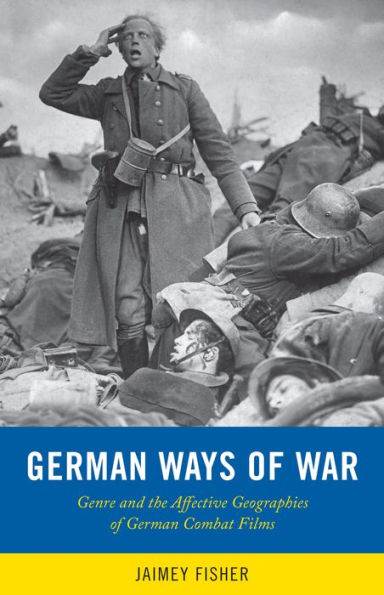
German Ways of War: The Affective Geographies and Generic Transformations War Films in Chattanooga, TN
Current price: $150.00
Barnes and Noble
German Ways of War: The Affective Geographies and Generic Transformations War Films in Chattanooga, TN
Current price: $150.00
Loading Inventory...
Size: Hardcover
German Ways of War
deploys theories of space, mobility, and affect to investigate how war films realize their political projects. Analyzing films across the decades, from the 1910s to 2000s,
addresses an important lacuna in media studies: while scholars have tended to focus on the similarities between cinematic looking and weaponized targeting between shooting a camera and discharging a gun - this book argues that war films negotiate spaces throughout that frame their violence in ways more revealing than their battle scenes. Beyond that wellknown intersection of visuality and violence,
explores how the genre frames violence within spatioaffective operations. The production of novel spaces and evocation of new affects transform war films, including the genre’s manipulation of mobility, landscape, territory, scales, and topological networks. Such effects amount to what author Jaimey Fisher terms the films’ “affective geographies” that interweave narrativegenerated affects, spatial depictions, and political processes.
deploys theories of space, mobility, and affect to investigate how war films realize their political projects. Analyzing films across the decades, from the 1910s to 2000s,
addresses an important lacuna in media studies: while scholars have tended to focus on the similarities between cinematic looking and weaponized targeting between shooting a camera and discharging a gun - this book argues that war films negotiate spaces throughout that frame their violence in ways more revealing than their battle scenes. Beyond that wellknown intersection of visuality and violence,
explores how the genre frames violence within spatioaffective operations. The production of novel spaces and evocation of new affects transform war films, including the genre’s manipulation of mobility, landscape, territory, scales, and topological networks. Such effects amount to what author Jaimey Fisher terms the films’ “affective geographies” that interweave narrativegenerated affects, spatial depictions, and political processes.
German Ways of War
deploys theories of space, mobility, and affect to investigate how war films realize their political projects. Analyzing films across the decades, from the 1910s to 2000s,
addresses an important lacuna in media studies: while scholars have tended to focus on the similarities between cinematic looking and weaponized targeting between shooting a camera and discharging a gun - this book argues that war films negotiate spaces throughout that frame their violence in ways more revealing than their battle scenes. Beyond that wellknown intersection of visuality and violence,
explores how the genre frames violence within spatioaffective operations. The production of novel spaces and evocation of new affects transform war films, including the genre’s manipulation of mobility, landscape, territory, scales, and topological networks. Such effects amount to what author Jaimey Fisher terms the films’ “affective geographies” that interweave narrativegenerated affects, spatial depictions, and political processes.
deploys theories of space, mobility, and affect to investigate how war films realize their political projects. Analyzing films across the decades, from the 1910s to 2000s,
addresses an important lacuna in media studies: while scholars have tended to focus on the similarities between cinematic looking and weaponized targeting between shooting a camera and discharging a gun - this book argues that war films negotiate spaces throughout that frame their violence in ways more revealing than their battle scenes. Beyond that wellknown intersection of visuality and violence,
explores how the genre frames violence within spatioaffective operations. The production of novel spaces and evocation of new affects transform war films, including the genre’s manipulation of mobility, landscape, territory, scales, and topological networks. Such effects amount to what author Jaimey Fisher terms the films’ “affective geographies” that interweave narrativegenerated affects, spatial depictions, and political processes.
You May Also Like













More About Barnes and Noble at Hamilton Place
Barnes & Noble is the world’s largest retail bookseller and a leading retailer of content, digital media and educational products. Our Nook Digital business offers a lineup of NOOK® tablets and e-Readers and an expansive collection of digital reading content through the NOOK Store®. Barnes & Noble’s mission is to operate the best omni-channel specialty retail business in America, helping both our customers and booksellers reach their aspirations, while being a credit to the communities we serve.
2100 Hamilton Pl Blvd, Chattanooga, TN 37421, United States
Find Barnes and Noble at Hamilton Place in Chattanooga, TN
Visit Barnes and Noble at Hamilton Place in Chattanooga, TN
