
Home
Geology and Nonfuel Mineral Deposits of Greenland, Europe, Russia, Northern Central Asia
Barnes and Noble
Loading Inventory...
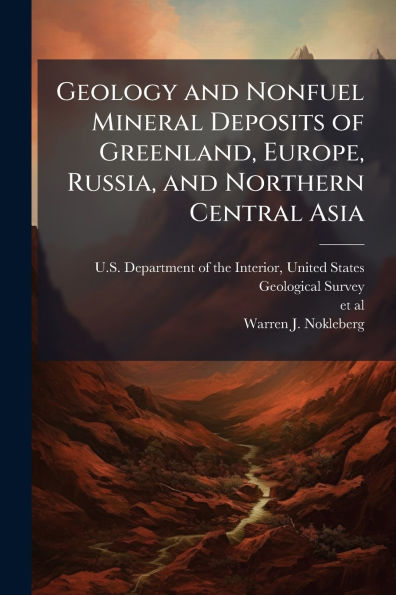
Geology and Nonfuel Mineral Deposits of Greenland, Europe, Russia, Northern Central Asia in Chattanooga, TN
Current price: $31.95
Barnes and Noble
Geology and Nonfuel Mineral Deposits of Greenland, Europe, Russia, Northern Central Asia in Chattanooga, TN
Current price: $31.95
Loading Inventory...
Size: Hardcover
This report summarizes the geology and nonfuel mineral resources of Greenland, Europe, Russia, and Northern Central Asia and is a preliminary part of a major U.S. Geological Survey study called the Global Mineral Resource Assessment Project. This report is one of a series of regional reports covering the world and provides basic data on the identified resources and geologic setting, together with a brief appraisal of the potential for undiscovered mineral resources. The data in the regional report are derived from published information. An important source of data on production statistics, economic factors that affect the mineral industries, and historical information, is available in U.S. Geological Survey (USGS) publications Minerals Yearbook and the annual Mineral Commodity Summaries (available at http: //minerals.usgs.gov/minerals).
In terms of production of metallic commodities and industrial minerals in recent years (U.S. Geological Survey, 2003, 2004, 2005), Greenland, the countries comprising Europe and Northern Central Asia, and Russia were major or moderate producers of aluminum, antimony, arsenic, asbestos, barite, bentonite boron, chromium, cobalt, copper, diamond, diatomite, feldspar, fluorspar, gemstones, gold, graphite, gypsum indium, iron ore, iron ore, kaolin, kyanite, lead, lithium, magnesium, mercury, mica (sheet), molybdenum, nickel, perlite, phosphate, platinum-group metals, potash, pumice, rare-earth metals, salt, silicon, silver, sulfur, tin, titanium, and zinc. A recurrent theme of this report is that mineral resources are associated with large-scale geologic processes that reoccur in time and space. The geologic distribution of mineral resources is intimately related to the geologic history of host rocks and structures. Increased knowledge about the geologic fabric around deposits and the processes that control the regional and local distribution of mineral resources will lead to improvement in predicting the location of new deposits.
This work has been selected by scholars as being culturally important, and is part of the knowledge base of civilization as we know it. This work was reproduced from the original artifact, and remains as true to the original work as possible. Therefore, you will see the original copyright references, library stamps (as most of these works have been housed in our most important libraries around the world), and other notations in the work.
This work is in the public domain in the United States of America, and possibly other nations. Within the United States, you may freely copy and distribute this work, as no entity (individual or corporate) has a copyright on the body of the work.
As a reproduction of a historical artifact, this work may contain missing or blurred pages, poor pictures, errant marks, etc. Scholars believe, and we concur, that this work is important enough to be preserved, reproduced, and made generally available to the public. We appreciate your support of the preservation process, and thank you for being an important part of keeping this knowledge alive and relevant.
In terms of production of metallic commodities and industrial minerals in recent years (U.S. Geological Survey, 2003, 2004, 2005), Greenland, the countries comprising Europe and Northern Central Asia, and Russia were major or moderate producers of aluminum, antimony, arsenic, asbestos, barite, bentonite boron, chromium, cobalt, copper, diamond, diatomite, feldspar, fluorspar, gemstones, gold, graphite, gypsum indium, iron ore, iron ore, kaolin, kyanite, lead, lithium, magnesium, mercury, mica (sheet), molybdenum, nickel, perlite, phosphate, platinum-group metals, potash, pumice, rare-earth metals, salt, silicon, silver, sulfur, tin, titanium, and zinc. A recurrent theme of this report is that mineral resources are associated with large-scale geologic processes that reoccur in time and space. The geologic distribution of mineral resources is intimately related to the geologic history of host rocks and structures. Increased knowledge about the geologic fabric around deposits and the processes that control the regional and local distribution of mineral resources will lead to improvement in predicting the location of new deposits.
This work has been selected by scholars as being culturally important, and is part of the knowledge base of civilization as we know it. This work was reproduced from the original artifact, and remains as true to the original work as possible. Therefore, you will see the original copyright references, library stamps (as most of these works have been housed in our most important libraries around the world), and other notations in the work.
This work is in the public domain in the United States of America, and possibly other nations. Within the United States, you may freely copy and distribute this work, as no entity (individual or corporate) has a copyright on the body of the work.
As a reproduction of a historical artifact, this work may contain missing or blurred pages, poor pictures, errant marks, etc. Scholars believe, and we concur, that this work is important enough to be preserved, reproduced, and made generally available to the public. We appreciate your support of the preservation process, and thank you for being an important part of keeping this knowledge alive and relevant.
This report summarizes the geology and nonfuel mineral resources of Greenland, Europe, Russia, and Northern Central Asia and is a preliminary part of a major U.S. Geological Survey study called the Global Mineral Resource Assessment Project. This report is one of a series of regional reports covering the world and provides basic data on the identified resources and geologic setting, together with a brief appraisal of the potential for undiscovered mineral resources. The data in the regional report are derived from published information. An important source of data on production statistics, economic factors that affect the mineral industries, and historical information, is available in U.S. Geological Survey (USGS) publications Minerals Yearbook and the annual Mineral Commodity Summaries (available at http: //minerals.usgs.gov/minerals).
In terms of production of metallic commodities and industrial minerals in recent years (U.S. Geological Survey, 2003, 2004, 2005), Greenland, the countries comprising Europe and Northern Central Asia, and Russia were major or moderate producers of aluminum, antimony, arsenic, asbestos, barite, bentonite boron, chromium, cobalt, copper, diamond, diatomite, feldspar, fluorspar, gemstones, gold, graphite, gypsum indium, iron ore, iron ore, kaolin, kyanite, lead, lithium, magnesium, mercury, mica (sheet), molybdenum, nickel, perlite, phosphate, platinum-group metals, potash, pumice, rare-earth metals, salt, silicon, silver, sulfur, tin, titanium, and zinc. A recurrent theme of this report is that mineral resources are associated with large-scale geologic processes that reoccur in time and space. The geologic distribution of mineral resources is intimately related to the geologic history of host rocks and structures. Increased knowledge about the geologic fabric around deposits and the processes that control the regional and local distribution of mineral resources will lead to improvement in predicting the location of new deposits.
This work has been selected by scholars as being culturally important, and is part of the knowledge base of civilization as we know it. This work was reproduced from the original artifact, and remains as true to the original work as possible. Therefore, you will see the original copyright references, library stamps (as most of these works have been housed in our most important libraries around the world), and other notations in the work.
This work is in the public domain in the United States of America, and possibly other nations. Within the United States, you may freely copy and distribute this work, as no entity (individual or corporate) has a copyright on the body of the work.
As a reproduction of a historical artifact, this work may contain missing or blurred pages, poor pictures, errant marks, etc. Scholars believe, and we concur, that this work is important enough to be preserved, reproduced, and made generally available to the public. We appreciate your support of the preservation process, and thank you for being an important part of keeping this knowledge alive and relevant.
In terms of production of metallic commodities and industrial minerals in recent years (U.S. Geological Survey, 2003, 2004, 2005), Greenland, the countries comprising Europe and Northern Central Asia, and Russia were major or moderate producers of aluminum, antimony, arsenic, asbestos, barite, bentonite boron, chromium, cobalt, copper, diamond, diatomite, feldspar, fluorspar, gemstones, gold, graphite, gypsum indium, iron ore, iron ore, kaolin, kyanite, lead, lithium, magnesium, mercury, mica (sheet), molybdenum, nickel, perlite, phosphate, platinum-group metals, potash, pumice, rare-earth metals, salt, silicon, silver, sulfur, tin, titanium, and zinc. A recurrent theme of this report is that mineral resources are associated with large-scale geologic processes that reoccur in time and space. The geologic distribution of mineral resources is intimately related to the geologic history of host rocks and structures. Increased knowledge about the geologic fabric around deposits and the processes that control the regional and local distribution of mineral resources will lead to improvement in predicting the location of new deposits.
This work has been selected by scholars as being culturally important, and is part of the knowledge base of civilization as we know it. This work was reproduced from the original artifact, and remains as true to the original work as possible. Therefore, you will see the original copyright references, library stamps (as most of these works have been housed in our most important libraries around the world), and other notations in the work.
This work is in the public domain in the United States of America, and possibly other nations. Within the United States, you may freely copy and distribute this work, as no entity (individual or corporate) has a copyright on the body of the work.
As a reproduction of a historical artifact, this work may contain missing or blurred pages, poor pictures, errant marks, etc. Scholars believe, and we concur, that this work is important enough to be preserved, reproduced, and made generally available to the public. We appreciate your support of the preservation process, and thank you for being an important part of keeping this knowledge alive and relevant.
You May Also Like







More About Barnes and Noble at Hamilton Place
Barnes & Noble is the world’s largest retail bookseller and a leading retailer of content, digital media and educational products. Our Nook Digital business offers a lineup of NOOK® tablets and e-Readers and an expansive collection of digital reading content through the NOOK Store®. Barnes & Noble’s mission is to operate the best omni-channel specialty retail business in America, helping both our customers and booksellers reach their aspirations, while being a credit to the communities we serve.
2100 Hamilton Pl Blvd, Chattanooga, TN 37421, United States
Find Barnes and Noble at Hamilton Place in Chattanooga, TN
Visit Barnes and Noble at Hamilton Place in Chattanooga, TN
