
Home
Generous Enemies: Patriots and Loyalists in Revolutionary New York
Barnes and Noble
Loading Inventory...
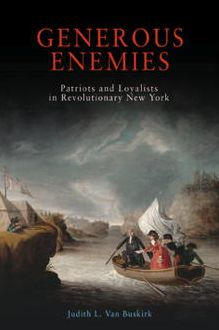
Generous Enemies: Patriots and Loyalists in Revolutionary New York in Chattanooga, TN
Current price: $29.95
Barnes and Noble
Generous Enemies: Patriots and Loyalists in Revolutionary New York in Chattanooga, TN
Current price: $29.95
Loading Inventory...
Size: OS
In July 1776, the final group of more than 130 ships of the Royal Navy sailed into the waters surrounding New York City, marking the start of seven years of British occupation that spanned the American Revolution. What military and political leaders characterized as an impenetrable "Fortress Britannia"—a bastion of solid opposition to the American cause—was actually very different.
As Judith L. Van Buskirk reveals, the military standoff produced civilian communities that were forced to operate in close, sustained proximity, each testing the limits of political and military authority. Conflicting loyalties blurred relationships between the two sides: John Jay, a delegate to the Continental Congresses, had a brother whose political loyalties leaned toward the Crown, while one of the daughters of Continental Army general William Alexander lived in occupied New York City with her husband, a prominent Loyalist. Indeed, the texture of everyday life during the Revolution was much more complex than historians have recognized.
Generous Enemies
challenges many long-held assumptions about wartime experience during the American Revolution by demonstrating that communities conventionally depicted as hostile opponents were, in fact, in frequent contact. Living in two clearly delineated zones of military occupation—the British occupying the islands of New York Bay and the Americans in the surrounding countryside—the people of the New York City region often reached across military lines to help friends and family members, pay social calls, conduct business, or pursue a better life. Examining the movement of Loyalist and rebel families, British and American soldiers, free blacks, slaves, and businessmen, Van Buskirk shows how personal concerns often triumphed over political ideology.
Making use of family letters, diaries, memoirs, soldier pensions, Loyalist claims, committee and church records, and newspapers, this compelling social history tells the story of the American Revolution with a richness of human detail.
As Judith L. Van Buskirk reveals, the military standoff produced civilian communities that were forced to operate in close, sustained proximity, each testing the limits of political and military authority. Conflicting loyalties blurred relationships between the two sides: John Jay, a delegate to the Continental Congresses, had a brother whose political loyalties leaned toward the Crown, while one of the daughters of Continental Army general William Alexander lived in occupied New York City with her husband, a prominent Loyalist. Indeed, the texture of everyday life during the Revolution was much more complex than historians have recognized.
Generous Enemies
challenges many long-held assumptions about wartime experience during the American Revolution by demonstrating that communities conventionally depicted as hostile opponents were, in fact, in frequent contact. Living in two clearly delineated zones of military occupation—the British occupying the islands of New York Bay and the Americans in the surrounding countryside—the people of the New York City region often reached across military lines to help friends and family members, pay social calls, conduct business, or pursue a better life. Examining the movement of Loyalist and rebel families, British and American soldiers, free blacks, slaves, and businessmen, Van Buskirk shows how personal concerns often triumphed over political ideology.
Making use of family letters, diaries, memoirs, soldier pensions, Loyalist claims, committee and church records, and newspapers, this compelling social history tells the story of the American Revolution with a richness of human detail.
In July 1776, the final group of more than 130 ships of the Royal Navy sailed into the waters surrounding New York City, marking the start of seven years of British occupation that spanned the American Revolution. What military and political leaders characterized as an impenetrable "Fortress Britannia"—a bastion of solid opposition to the American cause—was actually very different.
As Judith L. Van Buskirk reveals, the military standoff produced civilian communities that were forced to operate in close, sustained proximity, each testing the limits of political and military authority. Conflicting loyalties blurred relationships between the two sides: John Jay, a delegate to the Continental Congresses, had a brother whose political loyalties leaned toward the Crown, while one of the daughters of Continental Army general William Alexander lived in occupied New York City with her husband, a prominent Loyalist. Indeed, the texture of everyday life during the Revolution was much more complex than historians have recognized.
Generous Enemies
challenges many long-held assumptions about wartime experience during the American Revolution by demonstrating that communities conventionally depicted as hostile opponents were, in fact, in frequent contact. Living in two clearly delineated zones of military occupation—the British occupying the islands of New York Bay and the Americans in the surrounding countryside—the people of the New York City region often reached across military lines to help friends and family members, pay social calls, conduct business, or pursue a better life. Examining the movement of Loyalist and rebel families, British and American soldiers, free blacks, slaves, and businessmen, Van Buskirk shows how personal concerns often triumphed over political ideology.
Making use of family letters, diaries, memoirs, soldier pensions, Loyalist claims, committee and church records, and newspapers, this compelling social history tells the story of the American Revolution with a richness of human detail.
As Judith L. Van Buskirk reveals, the military standoff produced civilian communities that were forced to operate in close, sustained proximity, each testing the limits of political and military authority. Conflicting loyalties blurred relationships between the two sides: John Jay, a delegate to the Continental Congresses, had a brother whose political loyalties leaned toward the Crown, while one of the daughters of Continental Army general William Alexander lived in occupied New York City with her husband, a prominent Loyalist. Indeed, the texture of everyday life during the Revolution was much more complex than historians have recognized.
Generous Enemies
challenges many long-held assumptions about wartime experience during the American Revolution by demonstrating that communities conventionally depicted as hostile opponents were, in fact, in frequent contact. Living in two clearly delineated zones of military occupation—the British occupying the islands of New York Bay and the Americans in the surrounding countryside—the people of the New York City region often reached across military lines to help friends and family members, pay social calls, conduct business, or pursue a better life. Examining the movement of Loyalist and rebel families, British and American soldiers, free blacks, slaves, and businessmen, Van Buskirk shows how personal concerns often triumphed over political ideology.
Making use of family letters, diaries, memoirs, soldier pensions, Loyalist claims, committee and church records, and newspapers, this compelling social history tells the story of the American Revolution with a richness of human detail.
You May Also Like














More About Barnes and Noble at Hamilton Place
Barnes & Noble is the world’s largest retail bookseller and a leading retailer of content, digital media and educational products. Our Nook Digital business offers a lineup of NOOK® tablets and e-Readers and an expansive collection of digital reading content through the NOOK Store®. Barnes & Noble’s mission is to operate the best omni-channel specialty retail business in America, helping both our customers and booksellers reach their aspirations, while being a credit to the communities we serve.
2100 Hamilton Pl Blvd, Chattanooga, TN 37421, United States
Find Barnes and Noble at Hamilton Place in Chattanooga, TN
Visit Barnes and Noble at Hamilton Place in Chattanooga, TN
