
Home
Gender, Theory, and the Canon
Barnes and Noble
Loading Inventory...
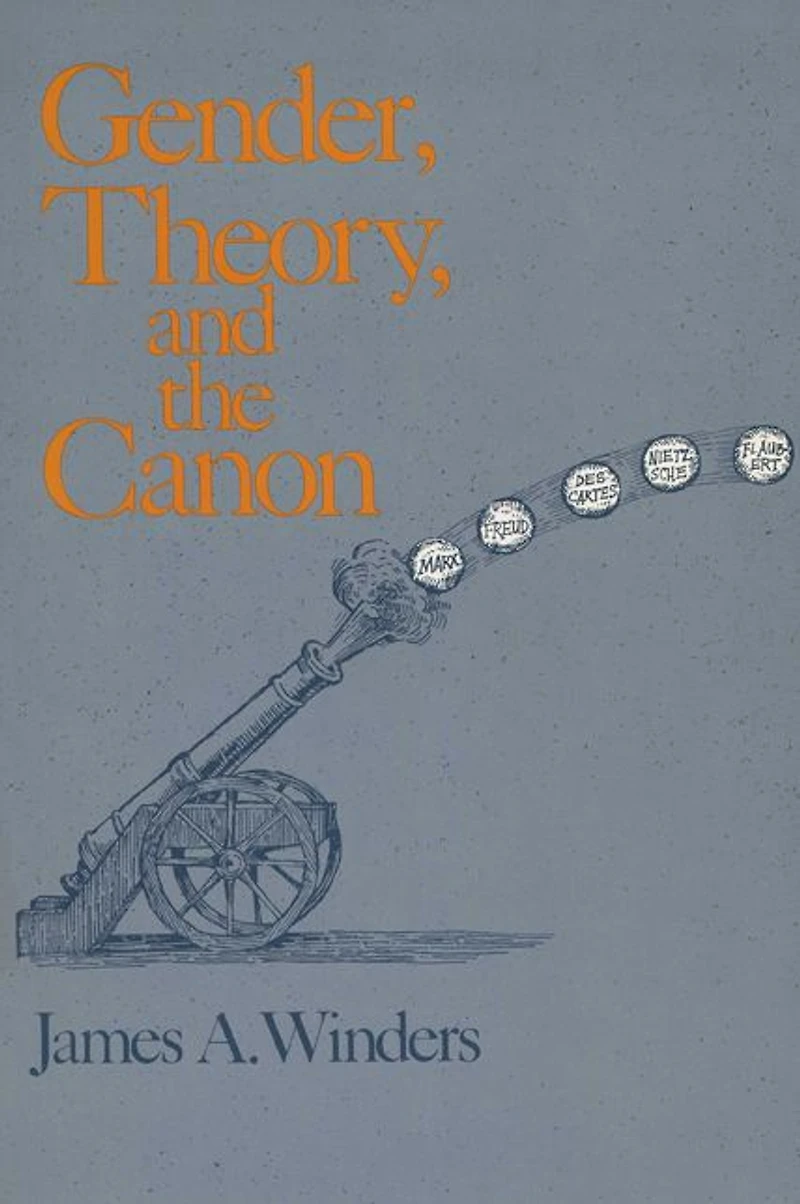
Gender, Theory, and the Canon in Chattanooga, TN
By Barnes & Noble
Current price: $14.95
Barnes and Noble
Gender, Theory, and the Canon in Chattanooga, TN
By Barnes & Noble
Current price: $14.95
Loading Inventory...
Size: Paperback
The author of this witty, forthright book takes to the battlefield of current debates about humanities education with impressive intellectual armament and a clear strategic goal: to reread five texts canonical to modern European intellectual history from a perspective that is profoundly informed by an awareness of gender issues. James Winders’ close readings of Descartes’s Meditations, Marx’s Economic and Philosophic Manuscripts of 1844, Flaubert’s Madame Bovary, Freud’s Beyond the Pleasure Principle, and Nietzsche’s The Gay Science give specificity to a debate that has too often remained at the level of pompous generalization or airy abstraction. These works from the canon, Winders demonstrates, either present striking representations of femininity or are conspicuously silent on the question of gender at precisely those junctures where their arguments or stylistic effects depend heavily on unstated gender assumptions and prejudices. To grasp this is to understand how values central to our cultural inheritancetruth, reason, the self, work, pleasure, and desirehave been constructed by a predominantly white male intellectual tradition. An intellectual historian with a serious commitment to the humanities in undergraduate teaching, Winders ranges easily over Western culture, equally comfortable with its arcane and popular manifestations. He juxtaposes Nietzsche and Bob Dylan and illuminates both. He does not pull any punches: “Feminism, often only grudgingly tolerated in literary studies, . . . has been the great unmentionable in intellectual history . . . because to take feminist arguments seriously would be to say farewell to the canon that has been the heart, soul, and viscera of the field of intellectual history.” Winders does not argue, however, that we should abandon the canonical texts. “I want to show what will happen,”he says,“when a more genuinely democratic academic culture, one that will continue to question the canon and to forge new ones, turns its attention to the traditional canon.” He constructs a powerful argument for an intellectual approach to the reading of texts that is truly interdisciplinary, in contrast to present practice, where scholars “proclaim the interdisciplinary implications of the theoretical issues that confront them while continuing to conduct business as usual within their departmental enclaves.”
The author of this witty, forthright book takes to the battlefield of current debates about humanities education with impressive intellectual armament and a clear strategic goal: to reread five texts canonical to modern European intellectual history from a perspective that is profoundly informed by an awareness of gender issues. James Winders’ close readings of Descartes’s Meditations, Marx’s Economic and Philosophic Manuscripts of 1844, Flaubert’s Madame Bovary, Freud’s Beyond the Pleasure Principle, and Nietzsche’s The Gay Science give specificity to a debate that has too often remained at the level of pompous generalization or airy abstraction. These works from the canon, Winders demonstrates, either present striking representations of femininity or are conspicuously silent on the question of gender at precisely those junctures where their arguments or stylistic effects depend heavily on unstated gender assumptions and prejudices. To grasp this is to understand how values central to our cultural inheritancetruth, reason, the self, work, pleasure, and desirehave been constructed by a predominantly white male intellectual tradition. An intellectual historian with a serious commitment to the humanities in undergraduate teaching, Winders ranges easily over Western culture, equally comfortable with its arcane and popular manifestations. He juxtaposes Nietzsche and Bob Dylan and illuminates both. He does not pull any punches: “Feminism, often only grudgingly tolerated in literary studies, . . . has been the great unmentionable in intellectual history . . . because to take feminist arguments seriously would be to say farewell to the canon that has been the heart, soul, and viscera of the field of intellectual history.” Winders does not argue, however, that we should abandon the canonical texts. “I want to show what will happen,”he says,“when a more genuinely democratic academic culture, one that will continue to question the canon and to forge new ones, turns its attention to the traditional canon.” He constructs a powerful argument for an intellectual approach to the reading of texts that is truly interdisciplinary, in contrast to present practice, where scholars “proclaim the interdisciplinary implications of the theoretical issues that confront them while continuing to conduct business as usual within their departmental enclaves.”
You May Also Like













More About Barnes and Noble at Hamilton Place
Barnes & Noble is the world’s largest retail bookseller and a leading retailer of content, digital media and educational products. Our Nook Digital business offers a lineup of NOOK® tablets and e-Readers and an expansive collection of digital reading content through the NOOK Store®. Barnes & Noble’s mission is to operate the best omni-channel specialty retail business in America, helping both our customers and booksellers reach their aspirations, while being a credit to the communities we serve.
2100 Hamilton Pl Blvd, Chattanooga, TN 37421, United States
Find Barnes and Noble at Hamilton Place in Chattanooga, TN
Visit Barnes and Noble at Hamilton Place in Chattanooga, TN
