
Home
Gender, Space and Illicit Economies Eighteenth-Century Europe: Uncontrolled Crossings
Barnes and Noble
Loading Inventory...
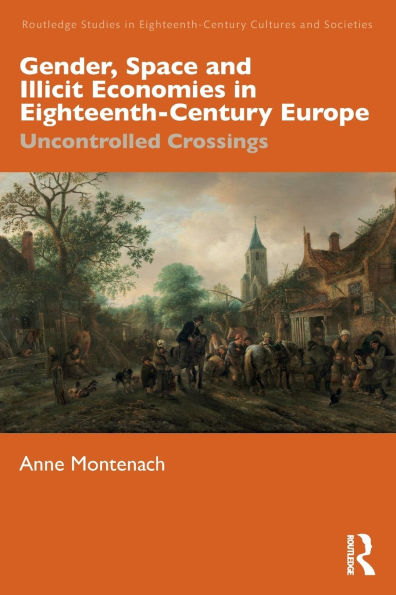
Gender, Space and Illicit Economies Eighteenth-Century Europe: Uncontrolled Crossings in Chattanooga, TN
Current price: $190.00
Barnes and Noble
Gender, Space and Illicit Economies Eighteenth-Century Europe: Uncontrolled Crossings in Chattanooga, TN
Current price: $190.00
Loading Inventory...
Size: Hardcover
This book seeks to contribute a multi-dimensional, multi-layered and gendered approach to the illicit economy in the historiography of early modern Europe.
Using original source material from several countries, this volume concentrates on a border and transnational area—approximately the Lyon-Geneva-Turin triangle—located at the heart of European trade. It focuses on three products—salt, cotton and silk—all of which fuelled the black market between the last decades of the seventeenth century and the French Revolution. This volume offers an original contribution to wider studies of smuggling, illicit markets and women’s economic roles by taking into account the economic life of remote mountain communities and industrious cities.
Showing that irregular practices were a structural characteristic of early modern economies, it provides insight into the opportunities offered to women in a highly flexible economy where licit and illicit activities were intermingled in a very complex way.
This research monograph is aimed at a historical audience and constitutes a useful resource for students and scholars interested in gender history, social and economic history, urban history and French studies.
Using original source material from several countries, this volume concentrates on a border and transnational area—approximately the Lyon-Geneva-Turin triangle—located at the heart of European trade. It focuses on three products—salt, cotton and silk—all of which fuelled the black market between the last decades of the seventeenth century and the French Revolution. This volume offers an original contribution to wider studies of smuggling, illicit markets and women’s economic roles by taking into account the economic life of remote mountain communities and industrious cities.
Showing that irregular practices were a structural characteristic of early modern economies, it provides insight into the opportunities offered to women in a highly flexible economy where licit and illicit activities were intermingled in a very complex way.
This research monograph is aimed at a historical audience and constitutes a useful resource for students and scholars interested in gender history, social and economic history, urban history and French studies.
This book seeks to contribute a multi-dimensional, multi-layered and gendered approach to the illicit economy in the historiography of early modern Europe.
Using original source material from several countries, this volume concentrates on a border and transnational area—approximately the Lyon-Geneva-Turin triangle—located at the heart of European trade. It focuses on three products—salt, cotton and silk—all of which fuelled the black market between the last decades of the seventeenth century and the French Revolution. This volume offers an original contribution to wider studies of smuggling, illicit markets and women’s economic roles by taking into account the economic life of remote mountain communities and industrious cities.
Showing that irregular practices were a structural characteristic of early modern economies, it provides insight into the opportunities offered to women in a highly flexible economy where licit and illicit activities were intermingled in a very complex way.
This research monograph is aimed at a historical audience and constitutes a useful resource for students and scholars interested in gender history, social and economic history, urban history and French studies.
Using original source material from several countries, this volume concentrates on a border and transnational area—approximately the Lyon-Geneva-Turin triangle—located at the heart of European trade. It focuses on three products—salt, cotton and silk—all of which fuelled the black market between the last decades of the seventeenth century and the French Revolution. This volume offers an original contribution to wider studies of smuggling, illicit markets and women’s economic roles by taking into account the economic life of remote mountain communities and industrious cities.
Showing that irregular practices were a structural characteristic of early modern economies, it provides insight into the opportunities offered to women in a highly flexible economy where licit and illicit activities were intermingled in a very complex way.
This research monograph is aimed at a historical audience and constitutes a useful resource for students and scholars interested in gender history, social and economic history, urban history and French studies.
You May Also Like













More About Barnes and Noble at Hamilton Place
Barnes & Noble is the world’s largest retail bookseller and a leading retailer of content, digital media and educational products. Our Nook Digital business offers a lineup of NOOK® tablets and e-Readers and an expansive collection of digital reading content through the NOOK Store®. Barnes & Noble’s mission is to operate the best omni-channel specialty retail business in America, helping both our customers and booksellers reach their aspirations, while being a credit to the communities we serve.
2100 Hamilton Pl Blvd, Chattanooga, TN 37421, United States
Find Barnes and Noble at Hamilton Place in Chattanooga, TN
Visit Barnes and Noble at Hamilton Place in Chattanooga, TN
