
Home
Gazette, Vol. 2
Barnes and Noble
Loading Inventory...
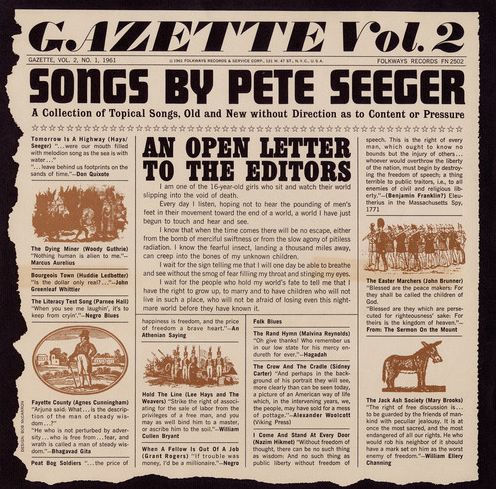
Gazette, Vol. 2 in Chattanooga, TN
Current price: $19.99
Barnes and Noble
Gazette, Vol. 2 in Chattanooga, TN
Current price: $19.99
Loading Inventory...
Size: OS
A follow-up to
Pete Seeger'
s 1958 album
Gazette
, the 1961 second volume presents 13 more topical songs written over the last 25 years and expressing left-wing political sentiments, some of them directly related to the singer.
Seeger
, as usual, casts back to his primary mentors, reviving
Woody Guthrie'
s
"The Dying Miner,"
the tale of a coal mine disaster told from the inside, and
Leadbelly'
"Bourgeois Blues,"
a criticism of the segregationist policies of Washington, D.C., in the '40s. He examines Nazism in
"Moorsoldaten (Peat Bog Soldiers),"
corporatism in
Malvina Reynolds'
"The Rand Hymn,"
and unemployment in
"When a Fellow Is Out of a Job."
"I Come and Stand at Every Door"
is an indictment of the atomic bombing of Hiroshima sung in the voice of a dead child, and
"The Easter Marchers"
deals with the same subject from the standpoint of contemporary non-proliferation activists. One of the most recent selections is
"The Literacy Test Song,"
which references the 1960 presidential election and satirizes the tests used in Southern states to deny voting rights to blacks. But the most personal songs on the disc are
"Hold the Line"
and
"The Jack Ash Society."
The former, written and first recorded by the
Weavers
,
's old group, tells the story of the stoning of departing audience members from an open-air
Paul Robeson
concert by right-wing extremists in Peekskill, NY, in September 1949, one of those audience members being
himself.
"Jack Ash,"
meanwhile, should be read not only "Jackass," but also as a euphemism for the far-right John Birch Society, and the song gives
a forum for criticizing various conservative political elements, including the House Un-American Activities Committee, which had bedeviled him for half-a-dozen years at this point. As this recording demonstrates, he remains unbowed, telling his side while vigorously strumming his banjo. ~ William Ruhlmann
Pete Seeger'
s 1958 album
Gazette
, the 1961 second volume presents 13 more topical songs written over the last 25 years and expressing left-wing political sentiments, some of them directly related to the singer.
Seeger
, as usual, casts back to his primary mentors, reviving
Woody Guthrie'
s
"The Dying Miner,"
the tale of a coal mine disaster told from the inside, and
Leadbelly'
"Bourgeois Blues,"
a criticism of the segregationist policies of Washington, D.C., in the '40s. He examines Nazism in
"Moorsoldaten (Peat Bog Soldiers),"
corporatism in
Malvina Reynolds'
"The Rand Hymn,"
and unemployment in
"When a Fellow Is Out of a Job."
"I Come and Stand at Every Door"
is an indictment of the atomic bombing of Hiroshima sung in the voice of a dead child, and
"The Easter Marchers"
deals with the same subject from the standpoint of contemporary non-proliferation activists. One of the most recent selections is
"The Literacy Test Song,"
which references the 1960 presidential election and satirizes the tests used in Southern states to deny voting rights to blacks. But the most personal songs on the disc are
"Hold the Line"
and
"The Jack Ash Society."
The former, written and first recorded by the
Weavers
,
's old group, tells the story of the stoning of departing audience members from an open-air
Paul Robeson
concert by right-wing extremists in Peekskill, NY, in September 1949, one of those audience members being
himself.
"Jack Ash,"
meanwhile, should be read not only "Jackass," but also as a euphemism for the far-right John Birch Society, and the song gives
a forum for criticizing various conservative political elements, including the House Un-American Activities Committee, which had bedeviled him for half-a-dozen years at this point. As this recording demonstrates, he remains unbowed, telling his side while vigorously strumming his banjo. ~ William Ruhlmann
A follow-up to
Pete Seeger'
s 1958 album
Gazette
, the 1961 second volume presents 13 more topical songs written over the last 25 years and expressing left-wing political sentiments, some of them directly related to the singer.
Seeger
, as usual, casts back to his primary mentors, reviving
Woody Guthrie'
s
"The Dying Miner,"
the tale of a coal mine disaster told from the inside, and
Leadbelly'
"Bourgeois Blues,"
a criticism of the segregationist policies of Washington, D.C., in the '40s. He examines Nazism in
"Moorsoldaten (Peat Bog Soldiers),"
corporatism in
Malvina Reynolds'
"The Rand Hymn,"
and unemployment in
"When a Fellow Is Out of a Job."
"I Come and Stand at Every Door"
is an indictment of the atomic bombing of Hiroshima sung in the voice of a dead child, and
"The Easter Marchers"
deals with the same subject from the standpoint of contemporary non-proliferation activists. One of the most recent selections is
"The Literacy Test Song,"
which references the 1960 presidential election and satirizes the tests used in Southern states to deny voting rights to blacks. But the most personal songs on the disc are
"Hold the Line"
and
"The Jack Ash Society."
The former, written and first recorded by the
Weavers
,
's old group, tells the story of the stoning of departing audience members from an open-air
Paul Robeson
concert by right-wing extremists in Peekskill, NY, in September 1949, one of those audience members being
himself.
"Jack Ash,"
meanwhile, should be read not only "Jackass," but also as a euphemism for the far-right John Birch Society, and the song gives
a forum for criticizing various conservative political elements, including the House Un-American Activities Committee, which had bedeviled him for half-a-dozen years at this point. As this recording demonstrates, he remains unbowed, telling his side while vigorously strumming his banjo. ~ William Ruhlmann
Pete Seeger'
s 1958 album
Gazette
, the 1961 second volume presents 13 more topical songs written over the last 25 years and expressing left-wing political sentiments, some of them directly related to the singer.
Seeger
, as usual, casts back to his primary mentors, reviving
Woody Guthrie'
s
"The Dying Miner,"
the tale of a coal mine disaster told from the inside, and
Leadbelly'
"Bourgeois Blues,"
a criticism of the segregationist policies of Washington, D.C., in the '40s. He examines Nazism in
"Moorsoldaten (Peat Bog Soldiers),"
corporatism in
Malvina Reynolds'
"The Rand Hymn,"
and unemployment in
"When a Fellow Is Out of a Job."
"I Come and Stand at Every Door"
is an indictment of the atomic bombing of Hiroshima sung in the voice of a dead child, and
"The Easter Marchers"
deals with the same subject from the standpoint of contemporary non-proliferation activists. One of the most recent selections is
"The Literacy Test Song,"
which references the 1960 presidential election and satirizes the tests used in Southern states to deny voting rights to blacks. But the most personal songs on the disc are
"Hold the Line"
and
"The Jack Ash Society."
The former, written and first recorded by the
Weavers
,
's old group, tells the story of the stoning of departing audience members from an open-air
Paul Robeson
concert by right-wing extremists in Peekskill, NY, in September 1949, one of those audience members being
himself.
"Jack Ash,"
meanwhile, should be read not only "Jackass," but also as a euphemism for the far-right John Birch Society, and the song gives
a forum for criticizing various conservative political elements, including the House Un-American Activities Committee, which had bedeviled him for half-a-dozen years at this point. As this recording demonstrates, he remains unbowed, telling his side while vigorously strumming his banjo. ~ William Ruhlmann
You May Also Like




![Best of, Vol. 2 [2 LP]](https://prodimage.images-bn.com/pimages/0810202530119_p0_v1_s600x595.jpg)











More About Barnes and Noble at Hamilton Place
Barnes & Noble is the world’s largest retail bookseller and a leading retailer of content, digital media and educational products. Our Nook Digital business offers a lineup of NOOK® tablets and e-Readers and an expansive collection of digital reading content through the NOOK Store®. Barnes & Noble’s mission is to operate the best omni-channel specialty retail business in America, helping both our customers and booksellers reach their aspirations, while being a credit to the communities we serve.
2100 Hamilton Pl Blvd, Chattanooga, TN 37421, United States
Find Barnes and Noble at Hamilton Place in Chattanooga, TN
Visit Barnes and Noble at Hamilton Place in Chattanooga, TN