
Home
G K Chesterton: A Reappraisal
Barnes and Noble
Loading Inventory...
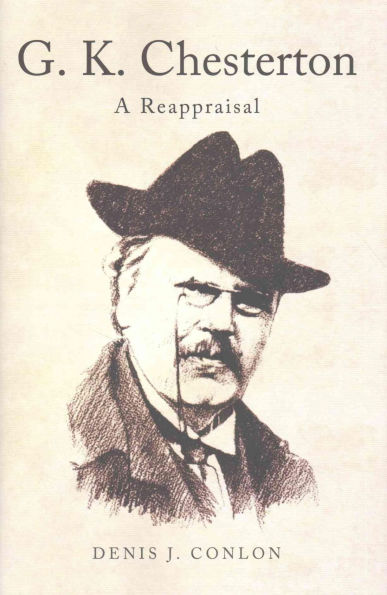
G K Chesterton: A Reappraisal in Chattanooga, TN
Current price: $46.95
Barnes and Noble
G K Chesterton: A Reappraisal in Chattanooga, TN
Current price: $46.95
Loading Inventory...
Size: OS
Gilbert Keith Chesterton, one of the most controversial literary figures of the early 20th century, is attracting renewed attention as the proposal of his name for canonization is met with accusations of anti-Semitism. His reaction to being raised to the altars as St. Gilbert would undoubtedly have been to roar with laughter at the joke. It would have been the same if he had known that he was nominated, as he was, for the Nobel Literary Prize in 1935, and he certainly would have appreciated the fact that 1935 was the year in which the prize was not awarded, leaving him to join many another distinguished author. Nonetheless, he was the leading Christian apologist of his generation, and an author whose fecundity in every literary field has clouded perceptions of his standing. Anthony Burgess's assessment was that "to teach and please at the same time is given to few. In the 20th century perhaps only Shaw, Wells, Aldous Huxley and Chesterton have had the faculty." His poems, essays, and stories, especially those featuring his clerical detective Father Brown, form an insidious part of the bric a brac of the minds of English-speakers across the globe. In this study Denis Conlon has focused on Chesterton both as a writer and as an artist, and has met the anti-Semitism charge head on by including in part three a complete anthology of his writings on Jewish matters, which, while occasionally sounding offensive in post-Holocaust times, do compare well with those of most of his contemporaries.
Gilbert Keith Chesterton, one of the most controversial literary figures of the early 20th century, is attracting renewed attention as the proposal of his name for canonization is met with accusations of anti-Semitism. His reaction to being raised to the altars as St. Gilbert would undoubtedly have been to roar with laughter at the joke. It would have been the same if he had known that he was nominated, as he was, for the Nobel Literary Prize in 1935, and he certainly would have appreciated the fact that 1935 was the year in which the prize was not awarded, leaving him to join many another distinguished author. Nonetheless, he was the leading Christian apologist of his generation, and an author whose fecundity in every literary field has clouded perceptions of his standing. Anthony Burgess's assessment was that "to teach and please at the same time is given to few. In the 20th century perhaps only Shaw, Wells, Aldous Huxley and Chesterton have had the faculty." His poems, essays, and stories, especially those featuring his clerical detective Father Brown, form an insidious part of the bric a brac of the minds of English-speakers across the globe. In this study Denis Conlon has focused on Chesterton both as a writer and as an artist, and has met the anti-Semitism charge head on by including in part three a complete anthology of his writings on Jewish matters, which, while occasionally sounding offensive in post-Holocaust times, do compare well with those of most of his contemporaries.
You May Also Like








More About Barnes and Noble at Hamilton Place
Barnes & Noble is the world’s largest retail bookseller and a leading retailer of content, digital media and educational products. Our Nook Digital business offers a lineup of NOOK® tablets and e-Readers and an expansive collection of digital reading content through the NOOK Store®. Barnes & Noble’s mission is to operate the best omni-channel specialty retail business in America, helping both our customers and booksellers reach their aspirations, while being a credit to the communities we serve.
2100 Hamilton Pl Blvd, Chattanooga, TN 37421, United States
Find Barnes and Noble at Hamilton Place in Chattanooga, TN
Visit Barnes and Noble at Hamilton Place in Chattanooga, TN
