
Home
From the Bronx to Bosphorus: Klezmer and Other Displaced Musics of New York
Barnes and Noble
Loading Inventory...
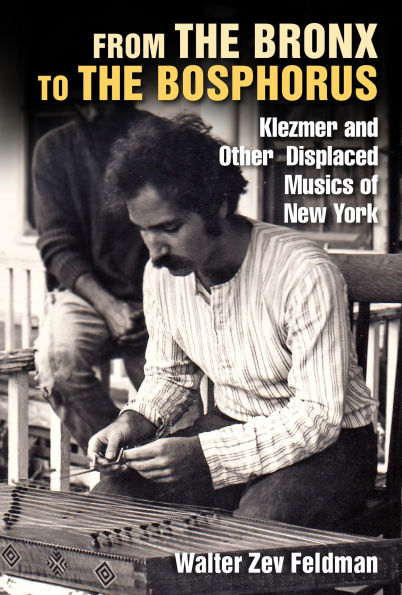
From the Bronx to Bosphorus: Klezmer and Other Displaced Musics of New York in Chattanooga, TN
Current price: $34.95
Barnes and Noble
From the Bronx to Bosphorus: Klezmer and Other Displaced Musics of New York in Chattanooga, TN
Current price: $34.95
Loading Inventory...
Size: Hardcover
Discover the vibrant journey of music from New York’s melting pot to the mystical shores of the Bosphorus
From the Bronx to the Bosphorus
explores the vibrant, yet largely concealed, musical culture of New York, tracing its origins to a period when the city served as a crucible for immigrants and their diverse musical expressions. Walter Zev Feldman chronicles his journey through the musical landscapes of post–WWII New York—from the declining world of East European immigrant klezmorim to the dynamic environments of Greek, Armenian, and Caucasian musicians.
These experiences culminate in the klezmer revitalization movement of the late 1970s. Feldman, whose father emigrated from Bessarabia—a region known for its rich interactions among Jewish, Roma, and Greek musicians—connects various musical worlds. From the local Turkish Sephardi synagogue and the Greek Orthodox cathedral in Washington Heights to the lively Armenian and Greek nightclubs of Manhattan, his interactions with a diverse group of musicians, including an Armenian virtuoso who once performed for Stalin and the Shah of Iran, enhance his understanding and appreciation of these interconnected cultures.
Finally, at age twentyfive, in a sense he returned to his father’s shtetl and studied with Dave Tarras, the greatest living klezmer in America, who had learned his key musical lessons in that very same Bessarabian town following World War I.
is not just a chronicle of music but a poignant examination of the power of music to connect cultures, transcend borders, and preserve the echoes of a nearly vanished world.
From the Bronx to the Bosphorus
explores the vibrant, yet largely concealed, musical culture of New York, tracing its origins to a period when the city served as a crucible for immigrants and their diverse musical expressions. Walter Zev Feldman chronicles his journey through the musical landscapes of post–WWII New York—from the declining world of East European immigrant klezmorim to the dynamic environments of Greek, Armenian, and Caucasian musicians.
These experiences culminate in the klezmer revitalization movement of the late 1970s. Feldman, whose father emigrated from Bessarabia—a region known for its rich interactions among Jewish, Roma, and Greek musicians—connects various musical worlds. From the local Turkish Sephardi synagogue and the Greek Orthodox cathedral in Washington Heights to the lively Armenian and Greek nightclubs of Manhattan, his interactions with a diverse group of musicians, including an Armenian virtuoso who once performed for Stalin and the Shah of Iran, enhance his understanding and appreciation of these interconnected cultures.
Finally, at age twentyfive, in a sense he returned to his father’s shtetl and studied with Dave Tarras, the greatest living klezmer in America, who had learned his key musical lessons in that very same Bessarabian town following World War I.
is not just a chronicle of music but a poignant examination of the power of music to connect cultures, transcend borders, and preserve the echoes of a nearly vanished world.
Discover the vibrant journey of music from New York’s melting pot to the mystical shores of the Bosphorus
From the Bronx to the Bosphorus
explores the vibrant, yet largely concealed, musical culture of New York, tracing its origins to a period when the city served as a crucible for immigrants and their diverse musical expressions. Walter Zev Feldman chronicles his journey through the musical landscapes of post–WWII New York—from the declining world of East European immigrant klezmorim to the dynamic environments of Greek, Armenian, and Caucasian musicians.
These experiences culminate in the klezmer revitalization movement of the late 1970s. Feldman, whose father emigrated from Bessarabia—a region known for its rich interactions among Jewish, Roma, and Greek musicians—connects various musical worlds. From the local Turkish Sephardi synagogue and the Greek Orthodox cathedral in Washington Heights to the lively Armenian and Greek nightclubs of Manhattan, his interactions with a diverse group of musicians, including an Armenian virtuoso who once performed for Stalin and the Shah of Iran, enhance his understanding and appreciation of these interconnected cultures.
Finally, at age twentyfive, in a sense he returned to his father’s shtetl and studied with Dave Tarras, the greatest living klezmer in America, who had learned his key musical lessons in that very same Bessarabian town following World War I.
is not just a chronicle of music but a poignant examination of the power of music to connect cultures, transcend borders, and preserve the echoes of a nearly vanished world.
From the Bronx to the Bosphorus
explores the vibrant, yet largely concealed, musical culture of New York, tracing its origins to a period when the city served as a crucible for immigrants and their diverse musical expressions. Walter Zev Feldman chronicles his journey through the musical landscapes of post–WWII New York—from the declining world of East European immigrant klezmorim to the dynamic environments of Greek, Armenian, and Caucasian musicians.
These experiences culminate in the klezmer revitalization movement of the late 1970s. Feldman, whose father emigrated from Bessarabia—a region known for its rich interactions among Jewish, Roma, and Greek musicians—connects various musical worlds. From the local Turkish Sephardi synagogue and the Greek Orthodox cathedral in Washington Heights to the lively Armenian and Greek nightclubs of Manhattan, his interactions with a diverse group of musicians, including an Armenian virtuoso who once performed for Stalin and the Shah of Iran, enhance his understanding and appreciation of these interconnected cultures.
Finally, at age twentyfive, in a sense he returned to his father’s shtetl and studied with Dave Tarras, the greatest living klezmer in America, who had learned his key musical lessons in that very same Bessarabian town following World War I.
is not just a chronicle of music but a poignant examination of the power of music to connect cultures, transcend borders, and preserve the echoes of a nearly vanished world.
You May Also Like
















More About Barnes and Noble at Hamilton Place
Barnes & Noble is the world’s largest retail bookseller and a leading retailer of content, digital media and educational products. Our Nook Digital business offers a lineup of NOOK® tablets and e-Readers and an expansive collection of digital reading content through the NOOK Store®. Barnes & Noble’s mission is to operate the best omni-channel specialty retail business in America, helping both our customers and booksellers reach their aspirations, while being a credit to the communities we serve.
2100 Hamilton Pl Blvd, Chattanooga, TN 37421, United States
Find Barnes and Noble at Hamilton Place in Chattanooga, TN
Visit Barnes and Noble at Hamilton Place in Chattanooga, TN
